
Your kid just said it. "I want to race."
Maybe it came after a go-kart birthday party. Maybe after a sim session that ran three hours past bedtime. Either way, you're now standing in the kitchen with a question that has a lot of dollar signs hiding behind it.
Here's what I'd do in the next week. Notice that none of it involves buying anything.
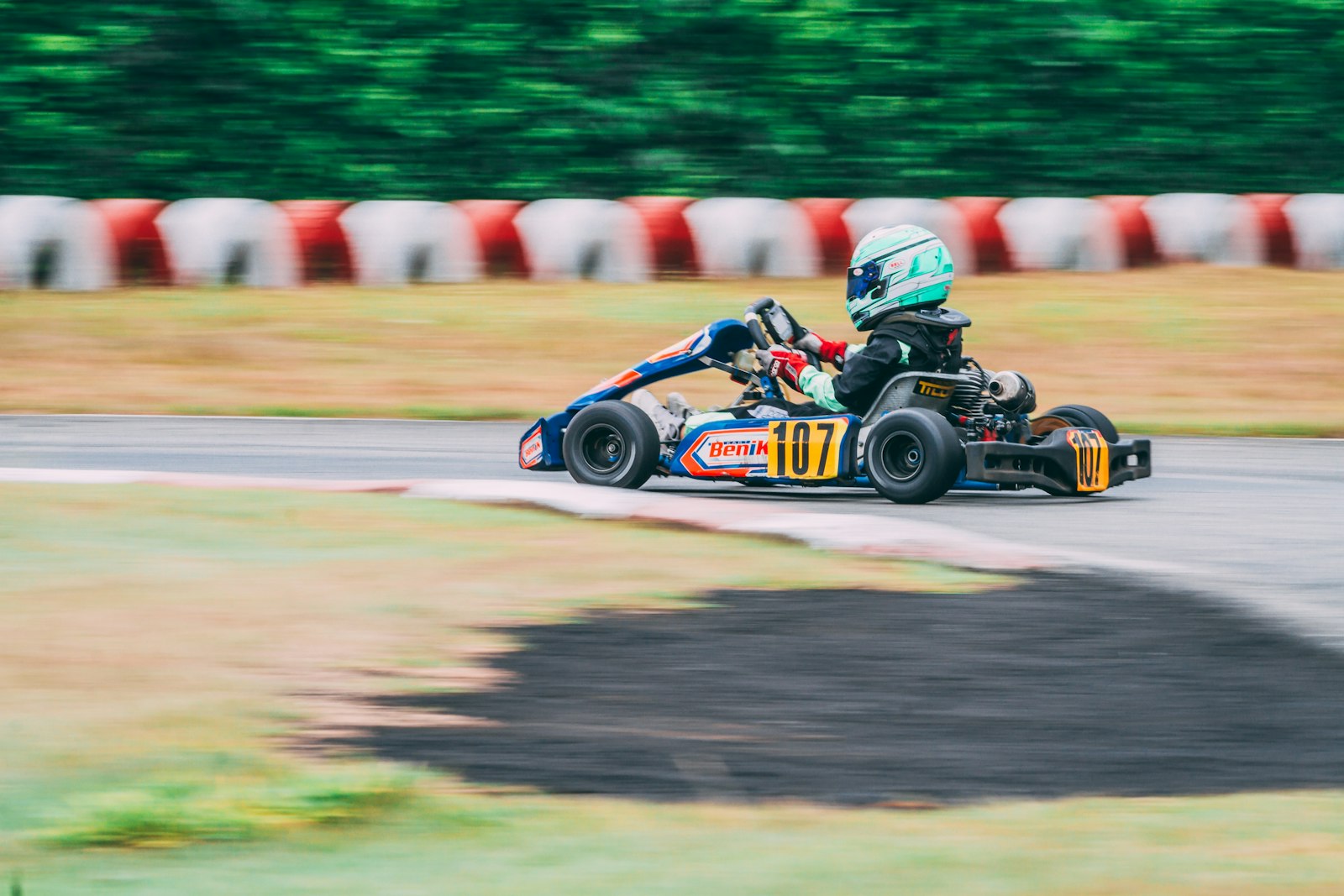 Photo by Diego Gavilanez on Unsplash.
Don't answer yes or no yet
The first reaction is usually one of two. Either you light up and start pricing karts, or you shut it down because it sounds expensive and dangerous.
Both skip the useful part. You don't know yet what your kid is actually asking for.
"I want to race" can mean a dozen things. It can mean they love speed. It can mean they want to be like a driver they watched. It can mean a friend does it. It can mean they want something that's theirs.
So your first job is to listen. Say something like, "Tell me what you picture." Then be quiet and let them talk.
Ask better questions
Open questions get real answers. Yes-or-no questions get "yeah."
Try these:
- What do you love about it? The driving? The cars? Winning? Being around people at the track?
- What did you watch or try that made you want this? This tells you whether the interest is new or has been building.
- What part of it sounds hard? A kid who has thought about the hard parts is more serious than one who only imagines the podium.
- What would you give up for it? Weekends, other activities, screen time. You're not trying to scare them. You're finding out if they've thought about it.
Write the answers down. You'll want them in three months.
Test it cheap before you commit
Interest and fit are different things. The cheapest way to learn the difference is a low-stakes try.
A few honest options, all well short of buying a kart:
- Rent a kart session at a local track. You find out if they like the speed, the noise, and the physical effort.
- Watch a real race day together. Walk the paddock. See the long waits, the dirt, and the repairs. If they still light up, that's a good sign.
- Try sim racing. It costs far less than a race weekend and shows whether they'll practice when nobody's watching.
- Talk to a family already doing it. Ask what year one looked like. Our post on what karting parents wish they'd known in year one is a start.
Watch what they do afterward. Do they ask when they can go again? Do they watch videos on their own? That's your data.
Talk about the real stuff: money, time, and safety
Don't hide the hard parts from yourself or from your kid.
Money. Racing costs real money, and it grows as the cars get faster. Better to see the whole path now than get surprised at the first big step. We laid out the stages in the karting-to-cars guide for parents. If cost is your biggest worry, know that there are programs built for families without deep pockets. Our scholarship exists for exactly that reason.
Time. Race weekends are long days, and the travel adds up. Ask yourself honestly whether your family's schedule can carry it.
Safety. Motorsport has risk. You should ask any team or track how they handle safety, who coaches your child, and what happens when something goes wrong. We put the list together in questions every racing parent should ask a race team.
Also check the age floors for what your kid wants to do. They vary a lot between karts, quarter midgets, and cars. What age can a kid start racing cars has the real minimums.
Keep it fun
Here's the part parents tend to skip.
A 2024 clinical report from the American Academy of Pediatrics says roughly 7 in 10 children leave youth sports by age 13. The main reasons it names are injury, overtraining, and burnout. The report also points to pressure to measure success only by performance, and to kids having no free-play time.
Its recommendations are simple. Measure success by effort and participation, not just results. Keep training fun. Let them step back when they're burned out.
That applies to racing as much as soccer. If you turn your kid's curiosity into a job before they're ready, you can lose the spark that made them ask.
So give it room. Let them be a kid who likes cars before they become a kid with a race schedule.
What to do this week
Keep it small:
- Have the listening conversation. Write down what they say.
- Pick one cheap test: a rental session, a race day visit, or a sim.
- Talk with one family who's racing.
- Set a date to talk again in a month.
That's it. No kart purchase, no trailer, no deposit.
If it still sparks after a month, you've got something real. If it doesn't, you saved your family a lot of money and your kid kept their curiosity.
If your kid is ready for the next step, Kart to Car is the path we built for drivers 13 to 25. It's a good place to see what a real pathway looks like before you commit to anything.
Do you believe? Start by listening.
Sources: HealthDay, coverage of the American Academy of Pediatrics 2024 clinical report on youth sports dropout, ENEWSPF, coverage of the AAP report on sports specialization in young athletes, NASA Speed News, Teen Mazda Challenge age range. Statistics verified as of October 2026. Everything else is advice from my own experience in racing.