
Your kid has spent a few seasons in a kart. They're winning some races. And now they've said the thing you've been half-dreading, half-expecting: "I want to race cars."
I've had this exact conversation with a lot of parents. It usually comes with a mix of pride and quiet panic. Is it safe? Is it too soon? How much is this going to cost us? Where do we even start?
This guide answers all of that honestly. No hype, no glossing over the hard parts.
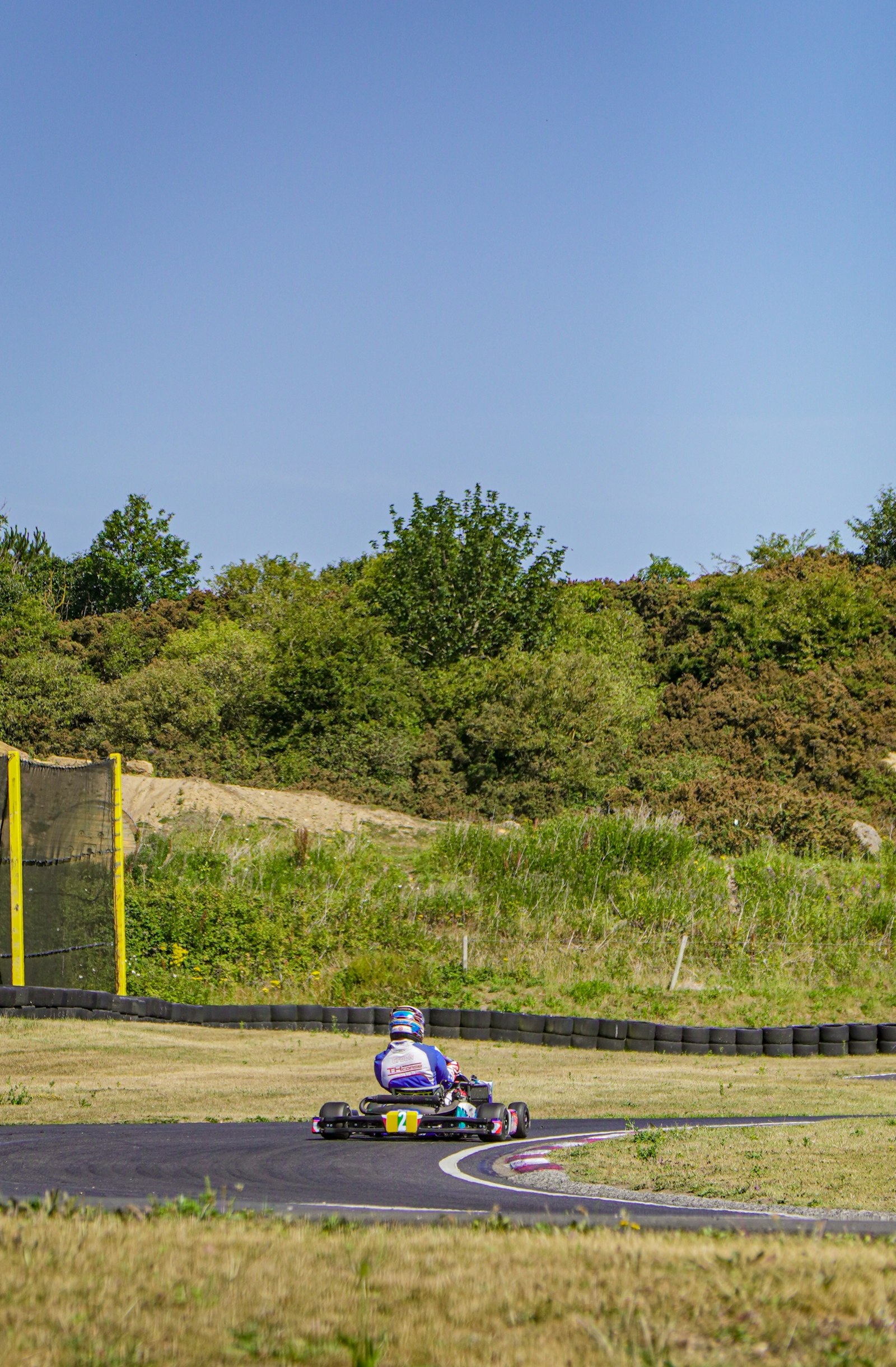 Photo by James Becker on Unsplash.
When Is a Kid Ready to Move to Cars?
The honest answer is that age matters less than readiness. But there's a real floor.
In the U.S., the most common structured entry point for young drivers is Spec Miata through NASA's Teen Mazda Challenge. Drivers can compete in it from age 13 up to 25. That's a huge window. If your driver is under 18, you'll sign a parental release form, and that's normal.
So a 13-year-old can legally start. Whether they should depends on three things:
- Kart experience. Have they run real wheel-to-wheel races, not just arrive-and-drive laps? Do they understand racecraft, flags, and passing rules?
- Physical size. They need to reach the pedals and see over the wheel comfortably, and hold their head up under load for a full session.
- Maturity under pressure. A car carries more speed and more consequence than a kart. Calm beats fearless.
Most kids I've worked with are ready somewhere between 14 and 16. If yours is 13 and mature, don't rule it out. If yours is 16 and still throwing the kart around on instinct, that's fine too. Readiness isn't a birthday.
The kids who move up around 15 and get real seat time pull ahead fast. Time in the car compounds.
What Skills Actually Transfer (and What Doesn't)
Here's the part that surprises a lot of parents. Karting builds the right foundation, but cars ask for a different touch.
What transfers: race awareness, line-reading, competitiveness, and the instinct for where other cars are. Those are gold, and you can't teach them quickly. A karter walks in with years of that already wired in.
What has to be re-learned: smoothness. In a kart, quick, sharp inputs work because there's no suspension and almost no weight transfer. In a car, that same aggression unsettles the chassis and scrubs speed. Your driver has to learn to be smooth, because a car rewards patience.
Braking changes too. In a kart it's mostly ankle. In a car you brake with your whole leg, and you learn to modulate — trailing off the brake as you turn in, feeling the weight move over the front tires. That's a real skill, and it takes seat time.
The good news: a karter usually picks this up faster than someone starting from zero. The foundation is already there. They just have to recalibrate.
The Cost Conversation (The Honest Version)
This is the question every parent really wants answered, so let me be straight.
Cars cost more than karts. There's no way around it. But the gap is smaller than most people fear, and there are paths that keep it sane.
Spec Miata is popular for exactly this reason. It's one of the most affordable ways into real wheel-to-wheel car racing, with a deep field, spec rules that stop the money arms race, and parts you can actually find. A used, race-prepped Spec Miata is a realistic first car. I break the full-season math down in what Spec Miata racing actually costs if you want the line items.
Beyond the car itself, budget for:
- Entry fees — per race weekend
- Tires — the biggest recurring cost, no matter the class
- Consumables — brake pads, fluids, fuel
- Safety gear — helmet, HANS device, suit, gloves, shoes
- Getting to the track — trailer or tow, or a program that handles it
That last line is where a lot of families get stuck. Buying and maintaining a car, plus a truck and trailer, plus learning to prep it, is a second job. That's exactly why arrive-and-drive and structured programs exist — you skip the garage and the hauler and just show up to drive.
How to Start Without Buying a Car
You don't have to buy a race car to find out if your kid loves this.
The lowest-risk first step is a program that puts them in a proven car with coaching, tires, and crew already handled. Your driver gets real seat time. You get to watch how they respond to the step up — before you spend on a car and a trailer. If they thrive, great, now you know it's worth investing. If it's not their thing, you found out for a fraction of the cost.
That's the whole idea behind our Kart to Car program here at LeadFoot Racing. We're in Colorado, running NASA's Rocky Mountain region at High Plains Raceway near Byers and Pueblo Motorsports Park. We built the program specifically for the driver making this jump — coaching, sim work, and a race-ready car, so a family doesn't have to buy the whole operation on day one.
Whatever program you choose, look for three things: real coaching (not just a car handoff), a car that's actually competitive, and people who treat a 15-year-old like a driver, not a customer.
What This Move Really Means for Your Family
Let me be honest about the part nobody puts in the brochure.
This is a bigger commitment than karting. More travel, more money, more weekends at the track. But it's also one of the best environments I know for a young person. Motorsports teaches accountability, working under pressure, handling failure, and showing up prepared. Those lessons stick long after the racing does.
The barrier that stops most families isn't talent. It's money and fear of the unknown. We built our whole approach around chipping away at both — including a scholarship path, because we believe the only barrier to racing should be belief, not budget.
Start small. Get your driver seat time. See how they respond. You'll know pretty quickly whether this is a phase or a path.
Ready to see if your driver is ready for the step up? Take a look at our Kart to Car program — it's built for exactly this moment, coaching and car included, so you don't have to buy the whole operation to find out.
Do you believe?
Sources: NASA Teen Mazda Challenge, NASA Spec Miata, Shift Up Now — From Karting to Cars, Focus Driver — How to Transition From Karts to Cars. Age rules and program details verified against NASA's published Teen Mazda Challenge page as of July 2026. Cost ranges reflect current market and our own experience running Spec Miata in NASA's Rocky Mountain region.