
The average American family spends $1,016 a year on their kid's main sport. A first year of karting runs $7,000 to $12,000.
That's a big gap, and parents deserve to see exactly where it comes from before they decide. Some of it is real and permanent. Some of it is a kart you can sell later.
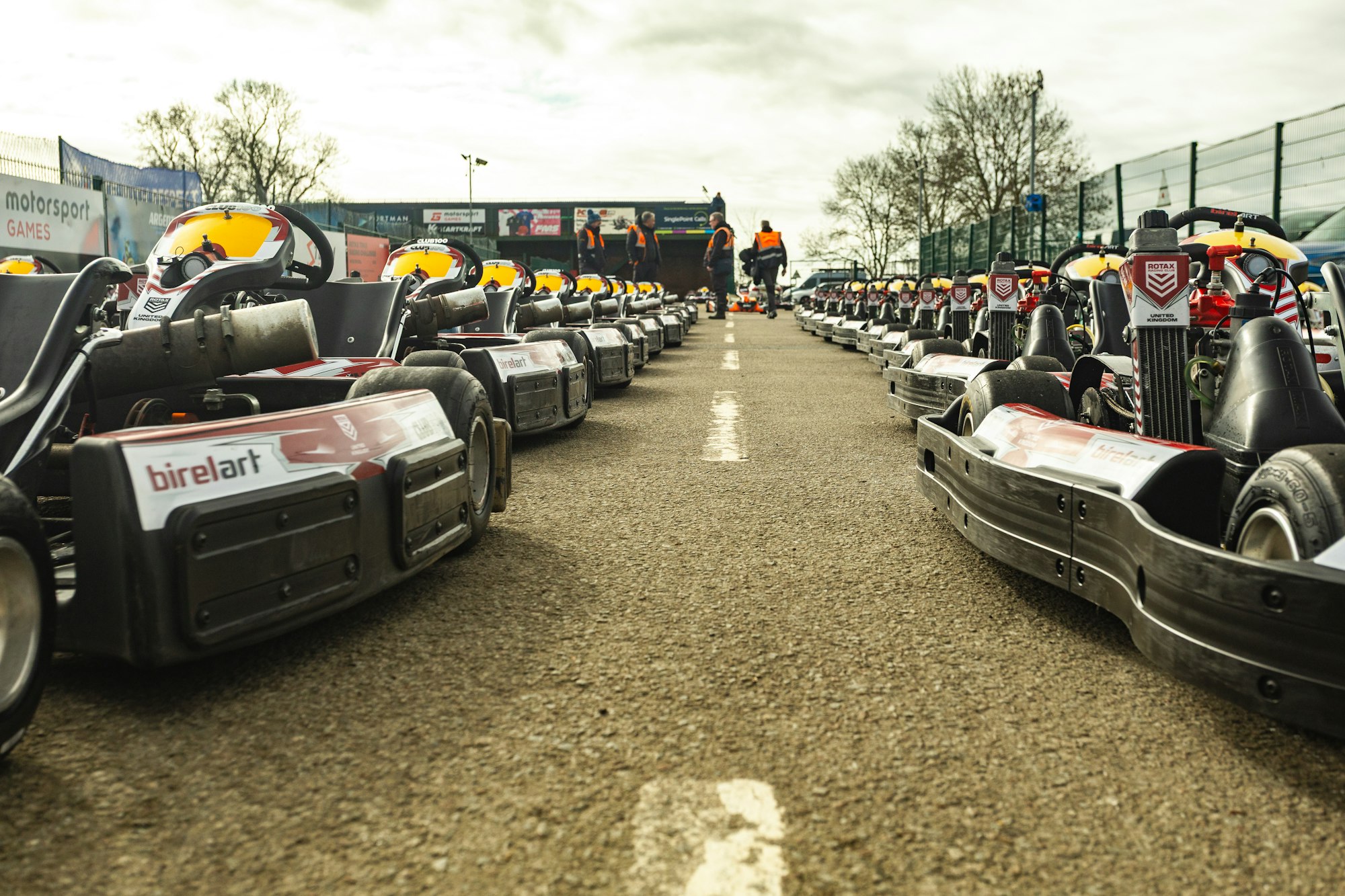 Photo by Owen Sellwood on Unsplash.
What most youth sports actually cost
Start with the national baseline. The Aspen Institute's Project Play surveyed 1,848 parents in late 2024. The average family spent $1,016 on a child's primary sport, up 46% since 2019. Add other sports on top and the yearly total lands near $1,500.
Averages hide a lot, though. The same survey found spending anywhere from nothing to almost $25,000 for one child. News coverage of the survey names ice hockey as the most expensive sport, at more than $2,500 a year on average.
Travel and elite teams pull the top end way up. One hockey-rink guide puts house league at $800 to $2,500 a year, and travel teams at $4,000 to $10,000. That's one commercial source, so treat it as a rough range. It matches what the survey's spread suggests.
Youth sports aren't cheap or expensive. They're a ladder, and the price climbs with every rung.
Karting is a ladder too. The honest comparison is rung against rung.
What karting costs, rung by rung
Here are published 2026 estimates for LO206, the most common entry-level engine class. They come from Word Racing, a kart racing supplier. Their numbers are for club racing in the Pacific Northwest, so your local track will differ.
| Item | Estimate |
|---|---|
| Used complete kart with engine | $2,500 to $4,500 |
| New chassis (no engine, no tires) | $4,000 to $6,000 |
| Safety gear | $800 to $1,500 |
| Tools and kart stand | $350 to $800 |
| Per race weekend (entry, fuel, tires, upkeep) | $200 to $400 |
| Full season, about 10 races | $2,300 to $4,700 |
| Year one, kart and gear included | $7,000 to $12,000 |
The same source says most first-year racers spend less than that. Running a tire set across two weekends, skipping a few races, and doing your own wrenching can cut costs by 20 to 40 percent. We covered the parent side of this in what karting parents wish they'd known in year one.
And you don't have to buy anything to start. Some tracks rent race karts. Music City Kart Plex in Tennessee lists rental race karts from $65. Check what your nearest track offers before you write a check for a chassis.
Where the gap really comes from
Put the two side by side and the difference is mostly one thing: equipment you own.
A soccer family pays registration and buys cleats. A karting family buys a vehicle, a helmet, a race suit, tools and tires. That's why year one looks so heavy.
Here's the honest breakdown of the gap:
- Capital that holds some value. A used kart usually sells for something. A registration fee never does.
- Consumables that don't. Tires, fuel, entry fees and engine upkeep are gone the second the weekend ends.
- Time and travel. Kart tracks are often farther away than the rec field, and race days start early.
Compare apples to apples and the picture changes. Karting year one sits closer to a travel-hockey season than to a rec soccer season. After year one, a season of $2,300 to $4,700 is in the same neighborhood as a competitive travel team.
It is still more expensive. I'm not going to tell you otherwise. A kid who plays basketball at the Y is cheaper than a kid who races karts, every time.
How to keep karting from becoming the most expensive thing you do
If you decide to go, these moves matter more than any single purchase.
Rent first. One or two rental races will tell you if your kid loves it, for a tiny fraction of the buy-in. Our post on choosing your kid's first kart track covers what to check at the gate.
Buy used, and ask a mechanic to look. A kart with a tired engine can turn a bargain into a season of repairs. Get an itemized quote for anything you buy.
Plan for the second year now. Year two costs less than year one, but the jump to cars costs more than both. We broke that out in the karting-to-cars money cliff.
Fund part of it. Local businesses sponsor kids at small amounts all the time. We built The Karting Parents Pack for exactly this: local-sponsor strategies built around the $200 to $500 deals a family business can say yes to without a board meeting.
Be honest at the kitchen table. Before you buy anything, read the first conversation to have when your kid wants to race. Your kid should hear the real number too.
So is karting worth it?
Only you can answer that. Here's how I'd think about it.
If your kid is happy with one practice a week and a rec league, you don't need a kart. That's a good, cheap life.
If your kid is lit up by speed, by machines, by the grind of getting 0.1 seconds faster, karting teaches things few other sports can. They learn to read a track, to handle a mechanical problem, and to lose a race and come back the next morning. Those are the same skills that carry into cars later.
But set the budget before the first purchase, not after the third. A plan you can afford for three years beats a perfect season you can't finish.
If you're already looking past the kart, Kart to Car is how we help young drivers make the jump into a real race car without the guesswork.
Sources: Project Play: Family spending on youth sports rises 46% over five years, Spectrum News: Youth sports costs on the rise, PW Ice: How Much Does Youth Hockey Cost Per Year, Word Racing: How Much Does It Cost to Race Karts, Music City Kart Plex: Cost of Kart Racing. Numbers verified against current published figures as of October 2026. Karting costs vary by region, class and track, so use these as a range and get local quotes before you buy.
Do you believe?