
Tell someone you can't afford to go racing and you'll hear the same four words back. Just get sponsored.
It's the most repeated advice in motorsports. It's also why a lot of new racers spend their first year writing emails instead of turning laps.
Sponsorship is real. Our team runs on it. But handing it to a beginner as step one is like telling someone with no job to just get a mortgage.
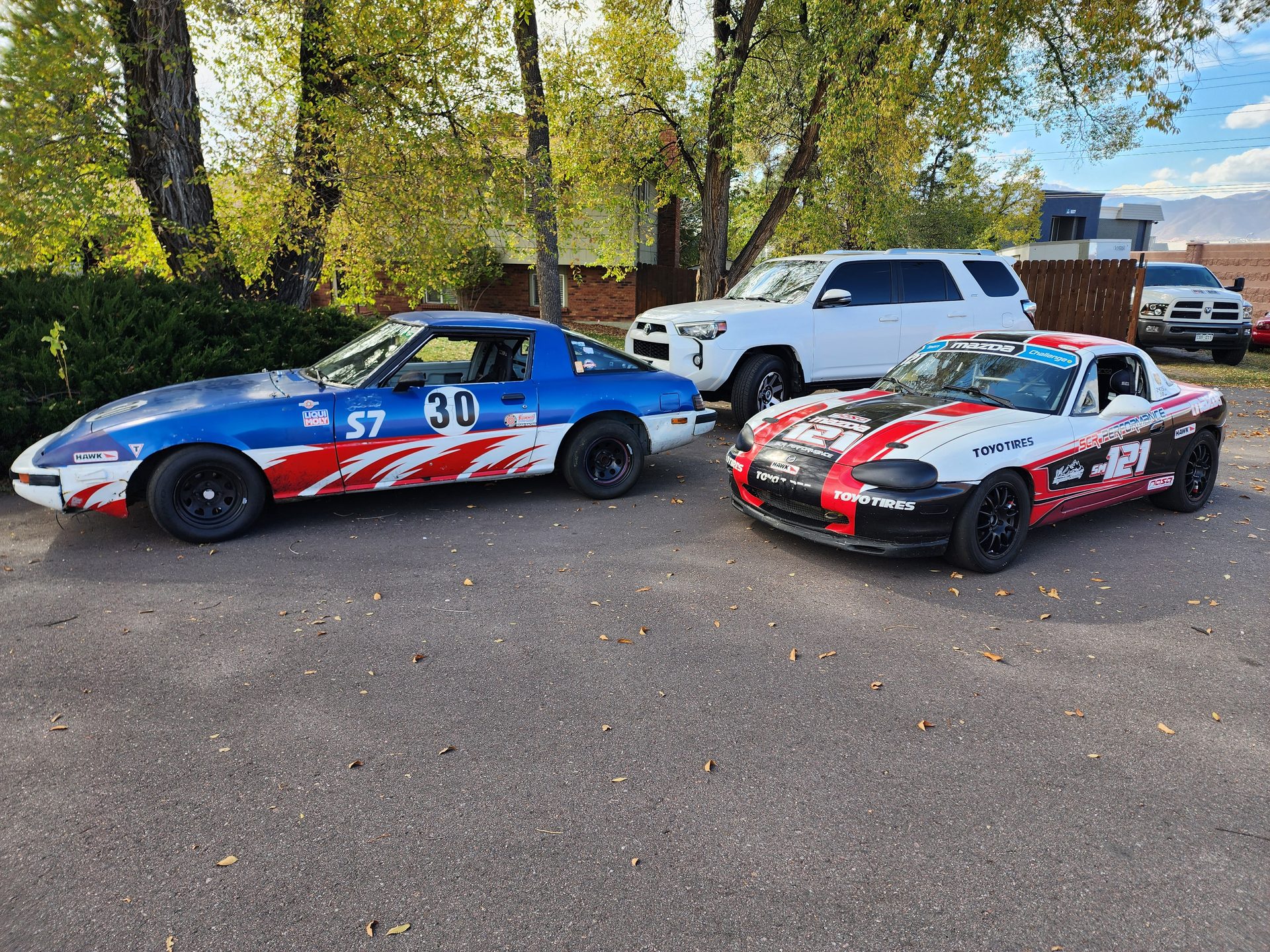 The paddock at a club weekend. Almost none of these cars are funded the way people assume they are.
Sponsorship Is a Trade, Not a Rescue
A sponsor is not a donor. They're a business buying attention and association, and they're buying it with money that has to come back.
The sponsorship pros say this more bluntly than racers like to hear. The pitch isn't "I need $20,000 for my season." The pitch is "here's what this generates for you." Your budget is your problem. Their return is the conversation.
So the real question isn't whether you deserve support. It's what you're putting on the table.
A first-year racer usually has three things to sell: a small audience, a logo spot nobody photographs yet, and a promise. That's not nothing. It's just not much, and it's definitely not worth a check that covers a season.
This is different from being slow. You don't have to be fast to get sponsored, and we've made that case before. Speed isn't the currency. Attention is. Most beginners are short on both, and only one of them can be fixed in a month.
The Math Nobody Runs Before They Start Emailing
Here's the part that gets skipped.
A competitive Spec Miata race weekend costs a minimum of about $2,500 in consumables alone. Fresh tires run around $1,200 a set. Entry is roughly $500. Then fuel, pads, fluids, and the small stuff. Doing your own wrenching, a realistic weekend lands between $2,000 and $3,500. A race-ready car is $10,000 to $35,000 before you own a trailer or something to pull it with.
Now put a first sponsorship next to those numbers.
At the club level, most first deals I've seen aren't cash at all. They're product, discounts, or services. Free mounting and balancing. Parts at cost. A few hundred dollars from a shop that likes you. Real money, real help, genuinely worth having.
A first sponsorship is a discount on your season. It is not your season.
That's not pessimism. That's the shape of the thing. Racers who understand it early stay in the sport. Racers who plan a season around a check that never arrives quit in March. If you want the honest breakdown of how grassroots drivers actually pay for this, we went deep on how amateur racers afford racing.
The Money That Doesn't Require a Pitch
Before you write a single email, go get the money that doesn't need a deck.
Contingency. Manufacturer contingency programs pay you for results, not for pitching. Mazda's 2026 program is the obvious one for anyone in a Miata, and payouts start as low as $100 for a fifth-place autocross finish and climb from there. The catch isn't a proposal. It's paperwork: register beforehand, run the required decals, hold the right memberships. Racers leave this money on the table every single season because nobody told them it existed.
Work-trade. Shops, tracks, and teams all need hands. Corner work, prep help, trailer loading, tire mounting. It rarely pays cash, but it buys seat time, relationships, and the education you'd otherwise pay a school for.
Splitting the car. Two drivers on one car cuts the fixed costs roughly in half. So does an endurance team seat.
Not owning the car. Ownership is where the money actually disappears. Rent the thing, run it, hand back the keys.
None of this requires a sponsor to say yes. All of it puts you on track, which is where the stuff you'll eventually sell gets made.
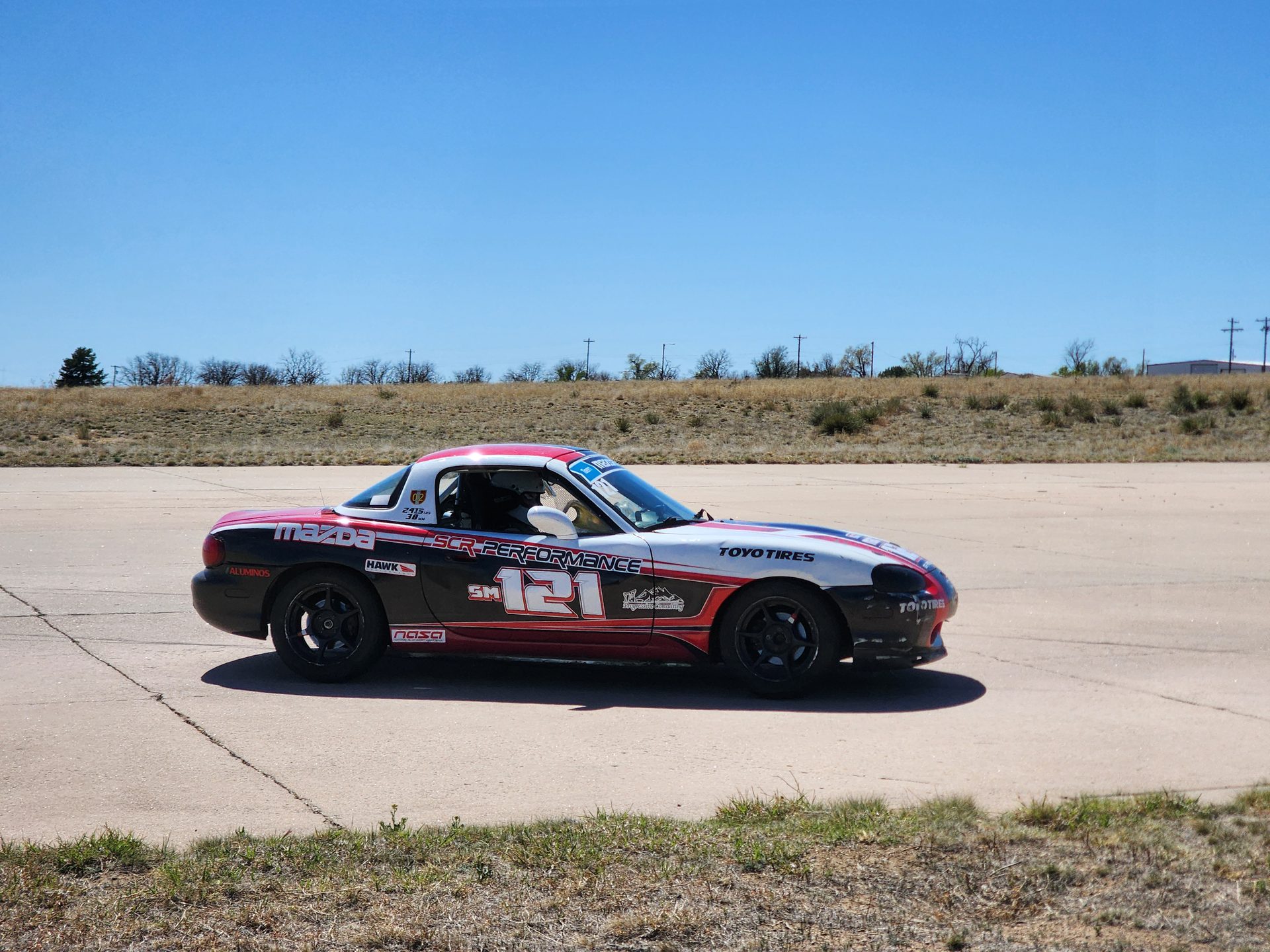 Every asset a sponsor buys — photos, results, stories, video — gets made here. Not in your inbox.
What to Build in Your First 12 Months Instead
Give yourself a year of building the thing that's worth sponsoring. Four assets, in this order.
1. Proof you actually race. Entries, finishes, a comp license, in-car video, real photos of your car at a real track. A brand isn't sponsoring an intention. Sponsors want to see a person who's already going, with or without them.
2. An audience with a face on it. Pick one platform. Post the honest version — the cold mornings, the broken parts, the results you're not proud of. A thousand people who care beats ten thousand who scrolled past. Track your numbers as you go, because you'll be asked for them.
3. A content habit you can repeat. This is the actual product. A sponsor is buying a certain number of posts, photos, videos, and mentions between now and the end of the season. If you can't produce those consistently for yourself, you can't promise them to somebody else.
4. Thirty local relationships. Not thirty email addresses. Relationships. The gym you train at, your dad's supplier, the shop that aligned your car, the restaurant you eat at every Friday. Local businesses say yes far more often than national brands do, and we broke down why local beats big-brand for a first deal.
That last one is where most people freeze, so we built the Local-Business Workbook and gave it away free. It walks you through finding the businesses near you that are actually reachable and figuring out what you can offer each one. It's the cheapest possible way to test whether you're ready to pitch anybody.
When "Get Sponsored" Becomes Good Advice
It's good advice the day you can answer these without flinching:
- Can you name what a sponsor gets, in specifics, without using the word "exposure"?
- Do you have photos and video from a real event this year?
- Can you tell someone your audience size and who those people are?
- Have you delivered something for a brand already, even unpaid, even small?
- Can you keep racing if every sponsor says no?
That last question is the one that matters most. Sponsorship should accelerate a program that already exists. It's a terrible foundation and a great multiplier.
When you can check those boxes, the process gets a lot less mysterious. We laid out a realistic 30-day plan for landing a first sponsor for exactly that moment.
Until then, go race. Even badly. Even cheaply. The story you'll eventually sell doesn't exist yet, and no email is going to write it for you.
When you're genuinely ready to pitch, The Get-Funded System is the $67 kit we built for that stage — prospect list, templates, pricing, and the follow-up sequence in one place. Skip it until you've got something worth pitching. It'll still be here.
Do you believe?
Sources: Mazda Motorsports — 2026 Contingency Awards Program, CHARGE — Expert Tips for Getting a Racing Sponsorship, Racing Mentor — Grassroots Racing Sponsorship Inspiration, Motorsport Prospects — Motorsport Sponsorship Advice to Start 2026. Contingency figures verified against Mazda's published 2026 program as of August 2026. Spec Miata cost ranges are LFR's own operating numbers, cross-checked against published club racing budgets. Descriptions of typical first-deal structures come from my own experience in the NASA Rocky Mountain paddock, not from survey data.