
A competitive Spec Miata weekend burns roughly $2,650 in consumables before you've driven a mile toward the track. Tires, entry, a test day, fuel, brake pads. Run six of those and you're past $15,000 for the year — and you still haven't paid for the car.
So how does somebody with a normal job do this? It's almost never one big check. It's four or five smaller ones stacked on top of each other, plus a cost structure most people never bother to cut.
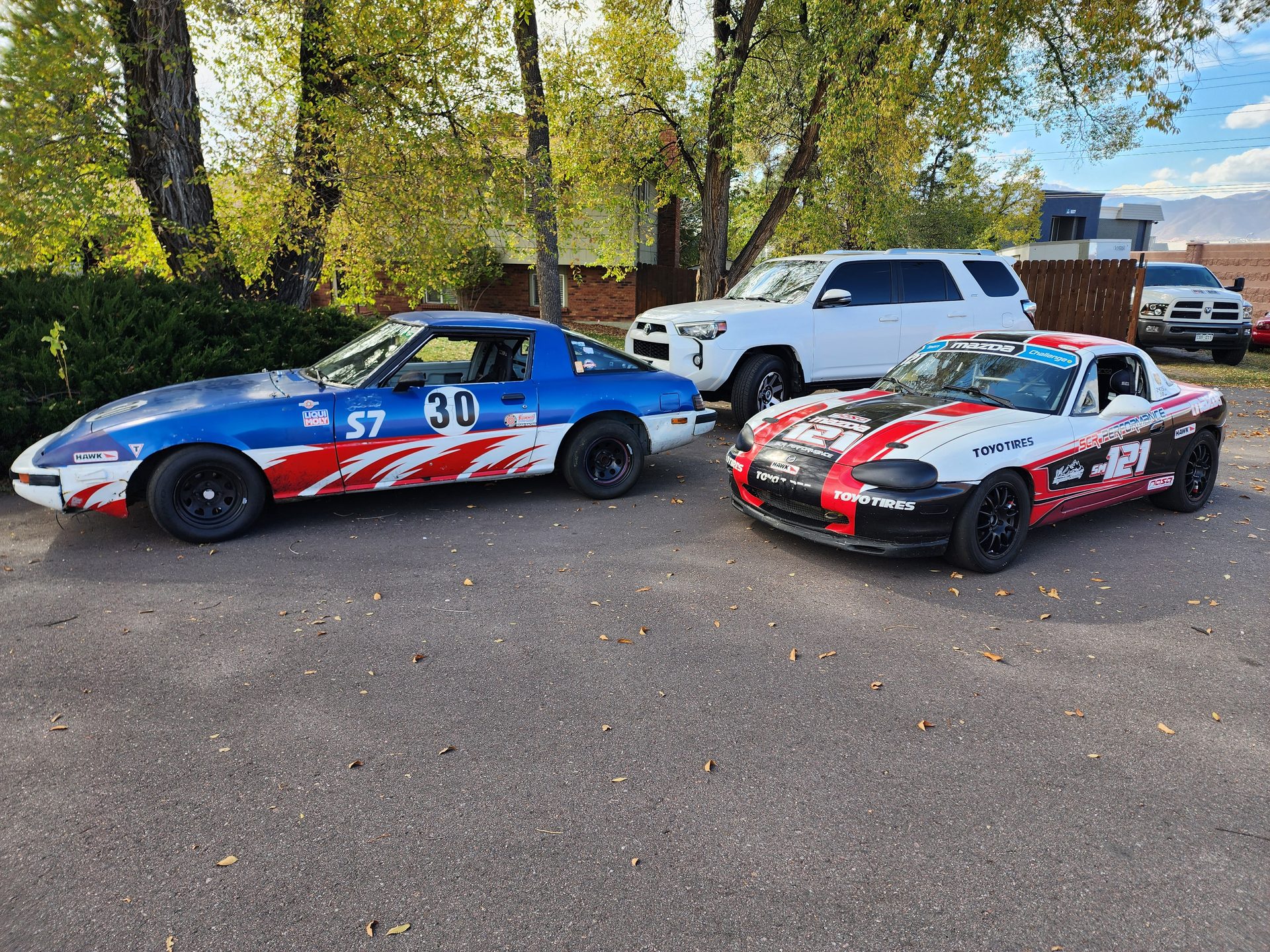 Our paddock at a NASA weekend. Every car here is funded a little differently.
First, the real number
Nobody can answer "how do they afford it" until you know what "it" costs. Here's what a single competitive weekend looks like, using the published numbers from spec-miata.com — which line up with what we actually spend running our own cars in Colorado.
| Line item | Per weekend |
|---|---|
| Tires (fresh set) | ~$1,250 |
| Entry fee (SCCA or NASA) | ~$500 |
| Test day | ~$300 |
| Fuel and fluids | ~$250 |
| Brake pads | ~$350 |
| Consumables total | ~$2,650 |
That's before towing, hotels, food, or anything breaking. It also assumes you turn your own wrenches.
There's a floor below that. If you run heat-cycled take-off tires, skip the test day, do all your own work, and tow with a truck you already own, a weekend can land closer to $1,000 to $1,500. That's the floor, not the norm. And there's no ceiling — drivers running at the front with fresh tires every event and a shop prepping the car spend multiples of the table above.
Then there's buy-in. A used race-ready Spec Miata runs $10,000 to $45,000 depending on prep. The parts list for a basic new build is about $15,000 before labor and a donor car, and a front-of-the-pack pro build is $55,000 to $60,000. Add a trailer, a tow vehicle, and somewhere to keep it all.
We broke the ownership side down further in what it really costs to race Spec Miata for a season if you want the full ledger.
Where the money actually comes from
Here's the part nobody says out loud: most amateur racers self-fund the majority of their season. Sponsorship helps. It rarely covers everything, and it almost never covers everything in year one.
The racers who keep showing up year after year all do a version of the same thing. They stack sources so no single one has to carry the whole load:
- Their own income, budgeted on purpose — a set amount every month, not whatever's left over
- A cost structure they've cut hard — own labor, smart tire strategy, shared equipment
- Sponsorship, usually starting local and small
- Contingency money they claw back from finishing well
- Grants and scholarships, which are real but competitive
Miss any one of those and racing gets fragile. Stack four of them and a season stops depending on one good year at work.
Cut the cost before you chase the funding
New racers always start at the funding end. That's backwards. Every dollar you cut is a dollar you don't have to raise, and cutting is entirely under your control.
Do your own work. Shop labor is the biggest invisible line item in this sport. Learning to change your own pads, bleed your own brakes, and do your own corner balancing saves thousands a season and makes you a better driver because you understand the car.
Get smart about tires. Fresh rubber is the single biggest weekend expense. Practice and test days on heat-cycled take-offs, fresh sets saved for the races that matter, is how experienced racers cut a four-figure line in half.
Run fewer weekends, properly. Three well-prepared events beat six broke ones. You learn more, you break less, and you don't spend the winter paying off the season.
Share the load. Co-driving a car, splitting a trailer, sharing a paddock spot and a set of tools with another racer — all of it is normal in club racing and all of it cuts your number.
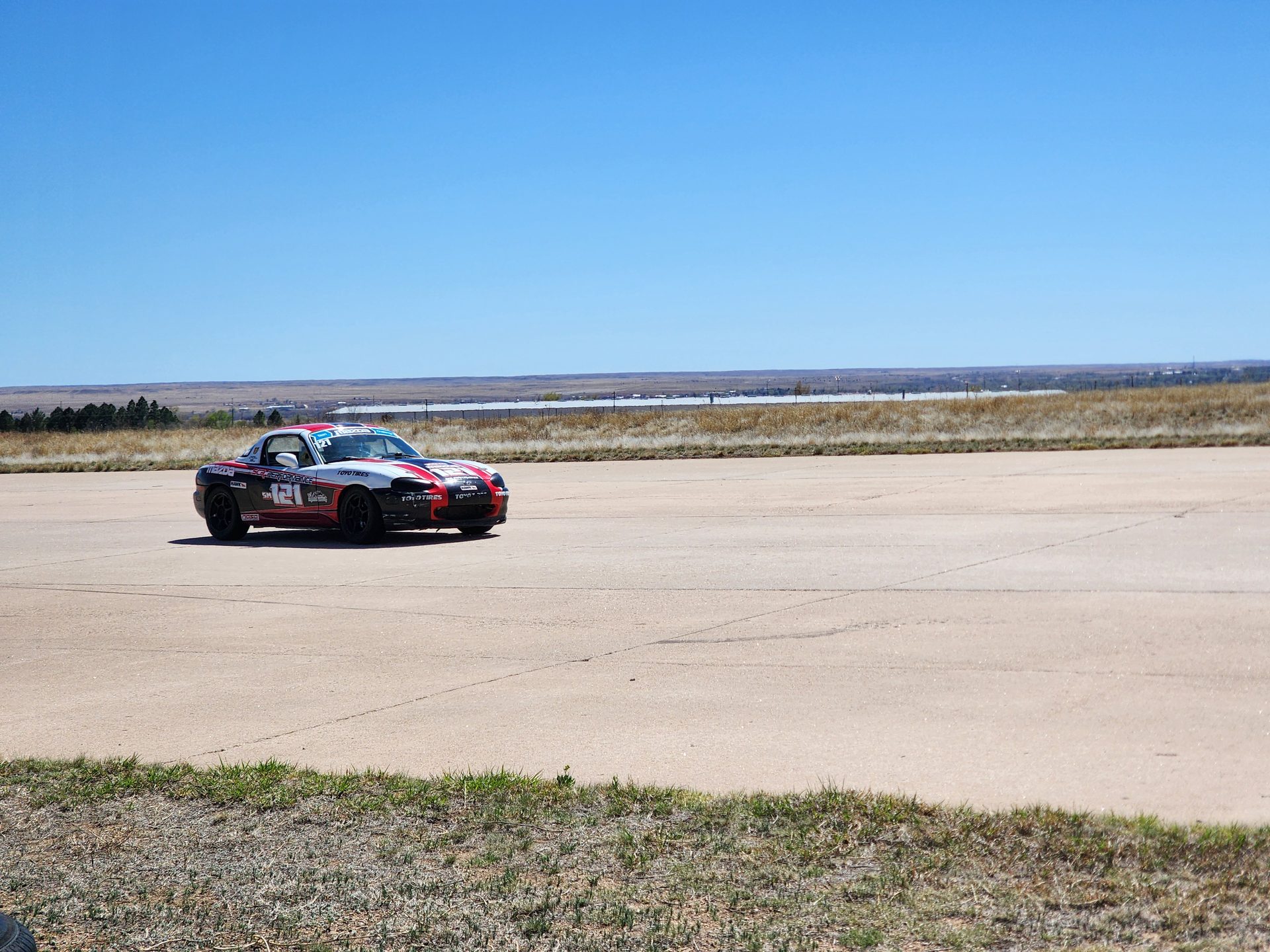 The cheapest race car is the one you don't own.
Or skip ownership entirely. This is the one people forget. If you don't own a car, you don't own a trailer, a tow rig, a spares inventory, or a repair bill. Our arrive and drive weekends are $5,000 with the car, crew, coaching, and data included — more than a DIY weekend's consumables, and far less than the five-figure buy-in it takes to get to your first green flag as an owner. For someone running two or three weekends a year, renting the seat is honestly the cheaper math.
The money most racers leave on the table
Contingency is free prize money for doing what you were already doing, and a shocking number of club racers never sign up.
Manufacturers and industry partners post contingency programs each season. You register in advance, run the required decals, and submit your results. SCCA lists its 2026 road racing programs publicly, and registration costs nothing — Toyota Racing Development, for example, posts $300 cash for a first-place road racing finish, and there are programs that pay well below the podium. Mazda runs one of the biggest programs in the country for club racers, with payouts starting around $100.
Contingency won't fund a season. But turning down free money because you didn't fill out a form in February is a bad reason to sit out in October.
The catch is the deadline. You almost always have to register before you compete, and claims have a submission window. Check your sanctioning body's contingency page in the offseason, not in the paddock.
Sponsorship and grants: what's actually realistic
Sponsorship is the only funding source built to renew, which is why it's worth learning. But the honest picture for a first-year racer is local businesses writing checks in the hundreds to low thousands, not a national brand funding your program.
That's still real money. Four local sponsors at $1,000 each covers a weekend and a half.
Grants are the other half of this. They're competitive, they usually pay once, and they're worth the application anyway. We won a $50,000 grant through Spark the Springs as a small Colorado race team — I wrote up exactly how that application worked, because a grant application is just a sponsorship pitch with a due date.
If you want the full ranking of every funding option, we tiered them all out here.
What this looks like in Colorado
Our region has one genuine financial advantage: the travel is nothing. NASA Rocky Mountain runs its season between High Plains Raceway in Byers and Pueblo Motorsports Park. Both are in-state. No flights, no two-day tows, no week-long hotel bills.
Racers in other regions routinely spend more on travel than we spend on tires.
The paperwork side is cheap too. SCCA national dues run $85 a year plus a small regional fee, and NASA membership is around $70. Weekend entries in our region land in the $400 to $500 range depending on how early you register — confirm current pricing when you sign up, since it moves year to year.
Add it up and a modest Colorado season — three weekends, own the car, own labor, sensible tires — is genuinely reachable on a normal salary. That's not marketing. That's just what living an hour from two road courses does to a budget.
So how do they afford it?
They budget on purpose, they cut what they can control, they sign up for the free money, and they slowly build a sponsor base while doing all of it. Nobody in your paddock got there on one lucky check.
And some of them don't afford it at all yet. That's the whole reason we're building a scholarship — a fully funded season for a driver whose only real barrier is money. If that's you, or your kid, get on the scholarship waitlist so you hear about it first.
Sources: spec-miata.com — Costs, SCCA — 2026 Road Racing Contingency Programs, SCCA — Road Racing Contingency, Mazda Motorsports — Contingency Programs, NASA. Costs and fees verified against published sources as of August 2026 — always confirm current pricing before you register. LFR's own pricing, the Spark the Springs grant, and the Colorado season details are our first-hand numbers.
Do you believe?