
Most first-year karting parents don't overspend on the kart. They overspend on everything around it.
The catalog makes it look like you need all of it on day one. You don't. Some gear the rulebook requires before your kid turns a lap. Some of it just makes you feel ready. Here's how to tell them apart.
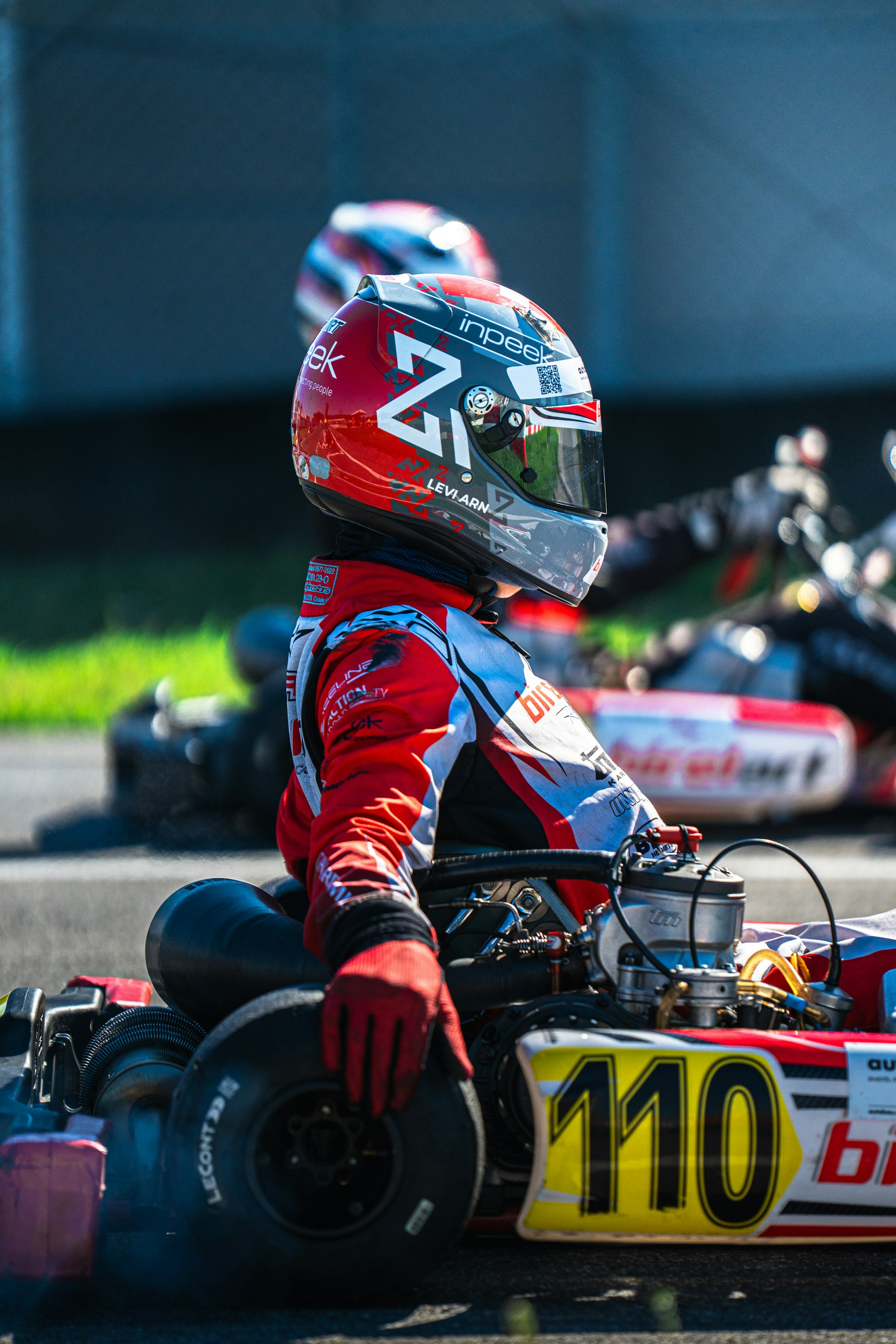 Photo by Levi Arn on Unsplash.
Start with the rulebook, not the catalog
Every kart club and series writes its own safety rules. Before you buy anything, get the rules for the track where your kid will actually race. Our guide to choosing your kid's first kart track covers how to find that track first.
The rules are pretty consistent across the big US series, though. Here's a real example. The Road America Karting Club's 2026 pre-tech form asks for:
- An unaltered neck collar
- A racing suit, or a jacket with abrasion-resistant pants
- Gloves and shoes in good condition
- A chest or rib protector for Kid Kart, Cadet and Sportsman classes
- A full-face helmet with a hard shield that meets a current standard
Fail that check and your kid doesn't race. That's the list that matters. Everything else is a choice.
The must-haves: five pieces of gear
These are the items that get checked at tech. Buy them before your kid's first race day.
1. A helmet that fits a kid
This is the one piece of gear I'd never buy used. Snell's own guidance says to replace a helmet after any impact while in use. With a used helmet, you have no idea what it's been through.
For younger drivers, look at helmets certified to Snell CMR2016. That's the youth karting standard. It's still current, even with 2016 in the name. These helmets use a smaller, lighter shell built for kids' necks. One retailer listing describes them as designed mainly for drivers under 15.
Price check: Zamp's RZ-42Y youth helmet is certified to CMR2016. FAST RACER listed it at $237.45 on sale ($249.95 regular) in October 2026.
Older or bigger kids can wear a regular Snell K or SA helmet. Road America's form accepts K and SA 2020 and 2025 ratings. Most major series accept 2020-rated helmets through the end of 2030. If you're unsure how long gear stays legal, our post on when racing gear expires walks through it.
2. A rib protector
Karts have no suspension. The seat does a lot of the work, and your kid's ribs take the load in every corner.
The big series mandate rib protection for young drivers. SKUSA requires it for drivers 12 and under. USPKS requires it under 13. Both want it certified to SFI 20.1 or homologated by the FIA, according to FAST RACER's 2026 rules roundup.
Size matters more than brand here. One example: the Valhalla Armadillo youth vest sizes by chest measurement. It runs from Kid Kart (about ages 5 to 8) up to a Junior II size. It was listed at $138 at OG Racing. (Full disclosure: OG Racing is one of our partners.)
3. A neck collar
Most junior classes require one. SKUSA requires it for every junior category, and the brace has to be unaltered with its original foam. Don't cut it down to make it fit. Buy the right size.
4. A suit (or jacket and pants)
Here's where the rules split by series. SKUSA requires a CIK Level 2 kart suit. WKA accepts a one-piece abrasion-resistant suit, or a racing jacket with long pants. Club racing is often closer to the WKA rule.
So check your series before you pay for a homologated suit your club doesn't require.
5. Gloves and shoes
Gloves are required everywhere. Closed-toe shoes with socks are too. WKA strongly recommends high-top racing shoes, because ankles get banged around in a kart.
One more rule that catches people: long hair has to be fully contained. If it hangs below the helmet, your kid needs a head sock or balaclava.
Everything above is a pass-or-fail item at tech. Nothing below it is.
The kart: used beats new in year one
Now the big purchase. Word Racing, a kart supplier, publishes 2026 numbers for LO206. That's the most common entry-level engine class:
| Item | Published estimate |
|---|---|
| Used complete kart with engine | $2,500 to $4,500 |
| New chassis (no engine, no tires) | $4,000 to $6,000 |
| Complete LO206 engine package | About $1,500 |
| One set of tires | About $262 |
| Safety gear, all of it | $800 to $1,500 |
| Tools and a rolling kart stand | $350 to $800 |
Look at the first two rows. A used complete kart costs less than a bare new chassis. For a first-year kid who's still learning to hit an apex, a new chassis won't make them faster. Seat time will.
Two tips if you buy used. First, the same source notes that brands like Tony Kart and Italkart hold resale value better. That matters when your kid outgrows the kart or moves up a class. Second, get someone who knows karts to look at it before you pay. A tired engine turns a bargain into a season of repairs.
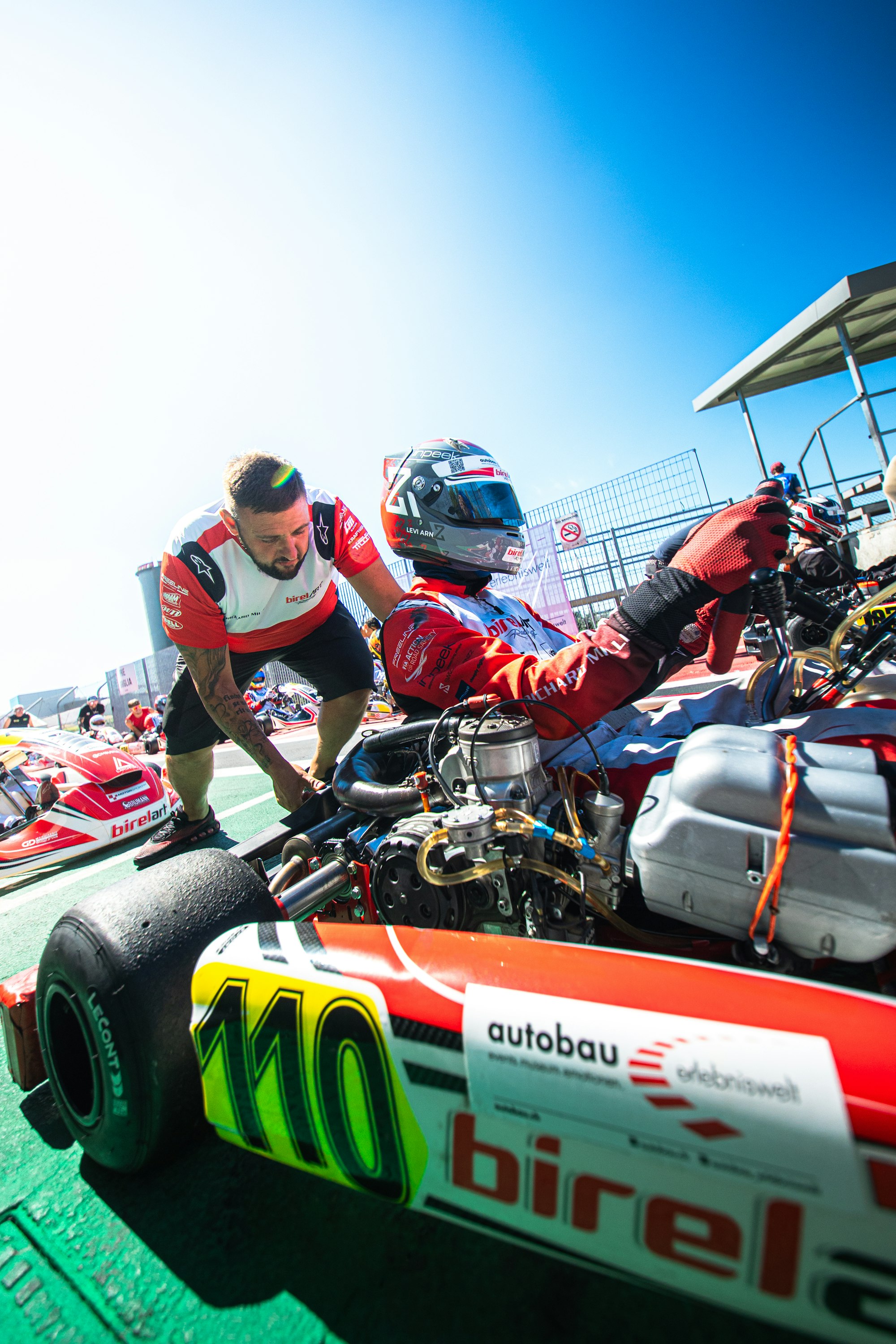 Photo by Levi Arn on Unsplash.
The tools that actually come to the track
You don't need a shop. You need a short list that fits in the back of the car.
- A rolling kart stand. You'll use it every single session. It saves your back and makes everything else possible.
- Basic hand tools. Sockets, wrenches and hex keys in the sizes your kart uses. Ask the seller which sizes before you buy a giant set.
- A tire pressure gauge. Tire pressure is one of the few setup changes a first-year family should be making. A good gauge is cheap compared to everything else.
- Fuel jug and a way to mix or measure. Your class rules decide what fuel and oil you run.
- A notebook. Write down tire pressures, gearing, lap times and what your kid said after each session.
Word Racing puts tools and the stand together at $350 to $800. Start at the low end. Buy the rest when you actually need it at the track.
What can wait until year two
This is the list that saves real money. None of it is a safety item, and none of it is checked at tech.
A brand-new chassis. We covered this above. Year one is about laps, not equipment.
Multiple sets of tires. The same Word Racing estimate says plenty of families run one set across two weekends. A first-year kid won't feel the difference yet.
A data system. Lap timers and data loggers are great tools. They're also wasted on a kid who's still learning where the track goes. Watching from the fence and talking after each session teaches more at this stage.
Spare everything. Buy spares when something breaks, or when an experienced racer at your track tells you what fails most. Don't buy a crate of parts on day one.
A matching team look. Custom suits and painted helmets are fun. They're also the first thing your kid outgrows.
The goal of year one is simple. A safe kid, a reliable kart and as many laps as you can afford. We wrote more about that mindset in what karting parents wish they'd known in year one.
How to pay for the gear
Here's the part most parents don't think about. That helmet and rib protector are exactly the kind of thing a local business will happily cover.
A $200 to $500 ask is small enough for a family shop to say yes on the spot. And "help us buy a safe helmet for a 9-year-old" is an easy story to tell. The parent chapter of The First Sponsor System is built around exactly that kind of small local deal. It includes the pitch templates to ask for it.
Want to see how the whole year adds up? Our karting vs other youth sports cost comparison puts the full first-year number next to hockey and soccer.
Your next step
Make one list tonight: the five tech items above, plus a used kart and a stand. That's year one. Everything else can wait.
Then find the first business to help you pay for it. Our free Local-Business Workbook walks you through who to ask in your own town. It also covers what to say when you walk in the door.
Sources: Road America Karting Club 2026 Pre-Tech Form, FAST RACER: Official Karting Safety Gear Rules for Every Major USA League (2026), FAST RACER: Zamp RZ-42Y Youth Snell CMR2016 Helmet, OG Racing: Valhalla Armadillo Youth SFI Rib/Chest Protector, Word Racing: How Much Does It Cost to Race Karts, Snell Memorial Foundation FAQ. Prices verified against current published listings as of October 2026. Rules vary by club and series, so confirm your own track's rulebook before you buy. Any specific cost or rule claims in this post are based on these sources plus my own racing experience.
Do you believe your kid's first season can start with the right gear, and nothing extra? I do.