
Session one goes great. You come in, hand off the car, grab some water, and quietly replay that clean lap through the sweeper in your head. Session two goes out twenty minutes later — same car, same tires, same track — and you're slower. Not by a tenth. By seconds.
That happens to almost everyone at some point, and it's not because you got worse at driving over lunch. Something physical changed under you, and something mental changed inside you. Both are fixable, and neither one means your first session was a fluke.
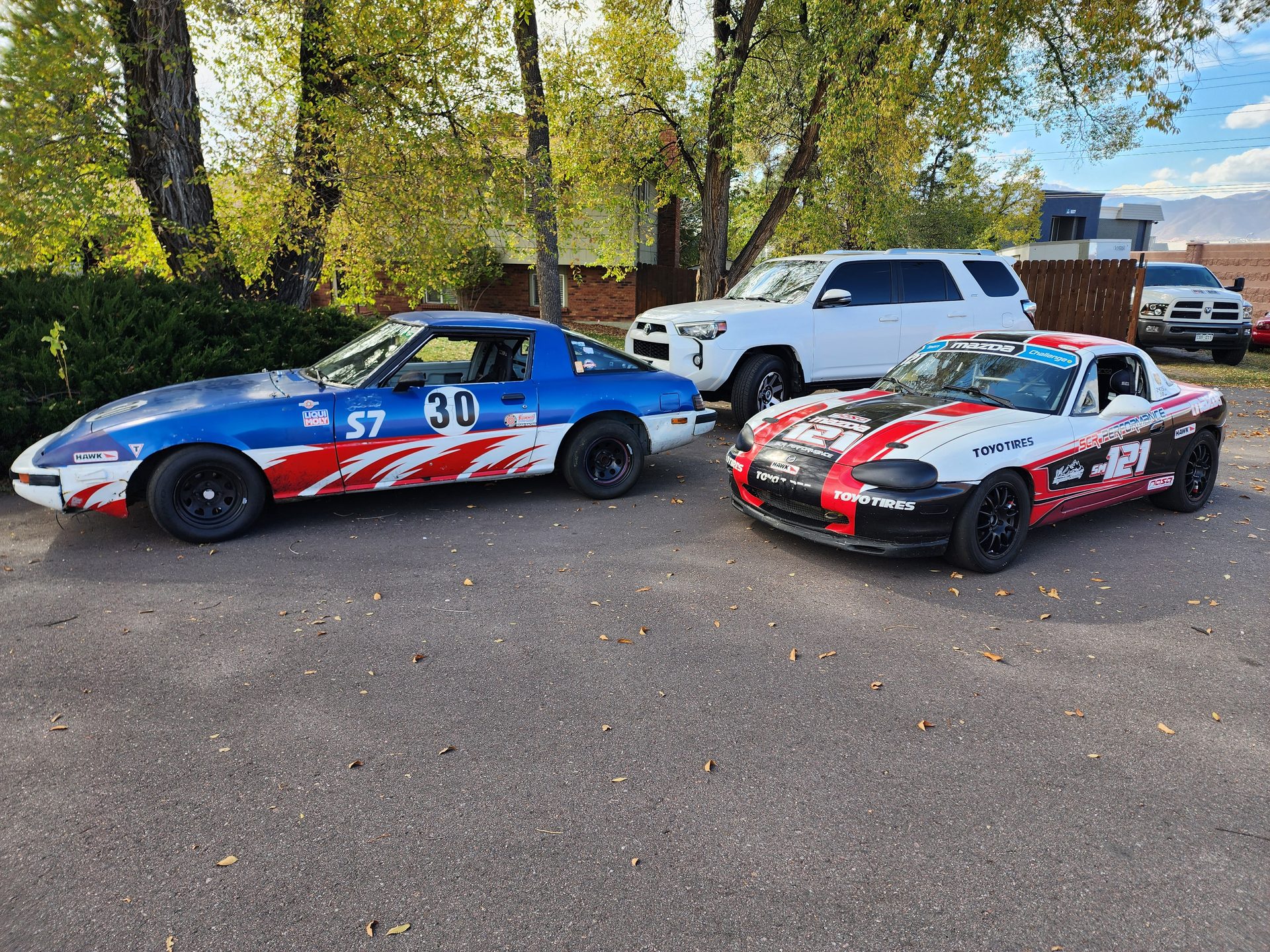 The gap between sessions is where most of this gets decided — not on track.
Your Tires Already Ran Their Best Lap
Most drivers assume tires get better with use — more heat, more familiarity, more grip. For a fresh set on its very first run, the opposite is closer to true.
A tire has a finite amount of grip stored in the compound, and it spends more of that grip on the first heat cycle than on any cycle after it. Racetrackdriving.com lays out the math through a Hoosier dealer's explanation: whatever grip the first heat cycle uses up, the remaining cycles split what's left, and the first cycle takes a bigger bite than an even share. Some race compounds, Hoosiers among them, are actually fastest on the second or third lap of that very first heat cycle. That was your session one. It was never going to be topped by session two on the same set.
The cause is chemical, not mysterious. Your Data Driven breaks down what's happening inside the rubber: repeated heating and cooling hardens the compound, oxidation from heat and air speeds that hardening along, and the additives that give a fresh tire its stickiness start breaking down. None of that reverses between session one and session two. It only adds up.
This is the same physical fact behind our post on reading tire temps like a race engineer — the tire is always telling you the truth. "It feels different than it did this morning" is often just the compound being honest with you.
The Track Got Hotter While You Were Eating Lunch
Tires aren't the only thing that changed between sessions. The track under them did too.
Every rubber compound has a window where it actually grips — too cold and it's stiff, too hot and it goes greasy. Driven Racing Oil's breakdown of weather and race performance puts it simply: when track temperature climbs, tires heat up faster and can get too soft, and "a hotter day may result in reduced grip and increased wear... affecting lap times." A morning session at 60 degrees and an afternoon session at 85 are not the same track, even though the pavement never moved an inch.
Colorado makes this worse than most places. High Plains Raceway and Pueblo Motorsports Park both sit near or above a mile of elevation, and our spring and fall swings can run 30-plus degrees from gate-open to midday. We covered the cold side of this same coin in our post on cold tires versus warm tires — a chilly out-lap that never finds grip. The afternoon version is the same tire pushed past its window in the other direction. Different direction, same lost grip.
If your best lap of the day keeps landing in whichever session had the friendliest air and track temp, that's not luck. That's physics doing exactly what it always does.
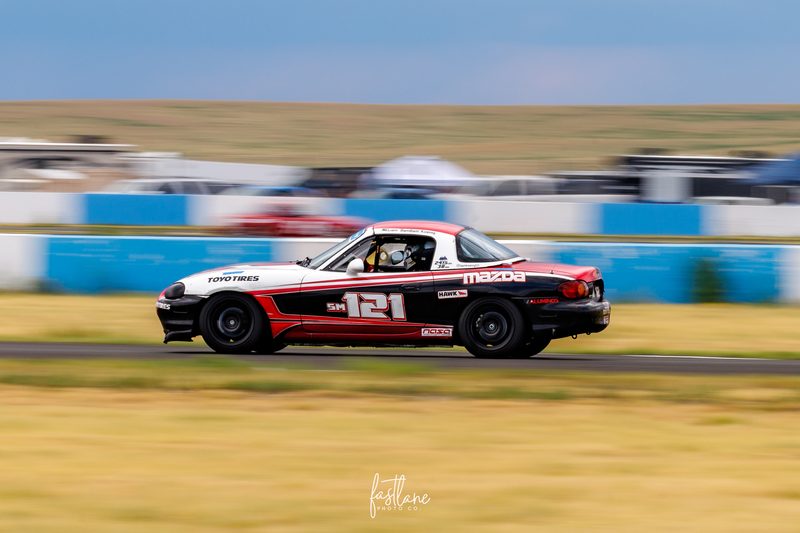 Same car, same track, different session — the air and the tire never stay the same twice.
Your Brakes Might Have Cold-Shocked
There's a third culprit that shows up less in driver conversations and more in shop conversations: brake pad glazing.
Push hard in session one and your pads get hot — really hot. If you don't cool them down properly on the way in, or if they sit and cool too fast back in the paddock, the surface of the pad can glaze over. Cat Driver Training's guide to track day brakes says it directly: overheated pads that get cold-shocked "may never recover," and glazed pads and discs "reduce performance and may lead to localised hot spots and overheating." Their fix is a proper cool-down lap at half speed before you park, so airflow pulls the heat out gradually instead of letting it soak and cook.
If your pedal felt firm all through session one and then went long and vague at the start of session two, glazing is a real suspect — not just a story you're telling yourself. It's worth checking your fluid too. We covered why factory brake fluid starts giving up around 400 to 450°F in our track day mistakes post. A pedal that goes soft instead of just long is usually fluid, not glaze — but both point back to the same session-one heat you can't undo.
You Got Comfortable
Here's the part that's actually on you, and it's the most common one of all.
Session one, you're careful. You're building speed on a car and a track you don't fully trust yet, and that caution is exactly what makes drivers fast by the end of a session. Driver61's track day guide puts it well: "the drivers who do a better job are the ones who start slow, build up their speed, and by early afternoon, they're quicker, safer, and more consistent than their over-confident counterparts."
Session two, you've already got a taste of the track in your head. That confidence can turn into carrying speed into corners you haven't actually earned yet — which costs time the moment you back out of a commitment mid-corner instead of gaining it. There's a duller reason too: concentration fades. Driver61 notes that "most amateur driver's concentration falls off dramatically at around 15 or 20 minutes" into a session, and that's exactly when the small, silly mistakes start — a missed shift point, a late brake, a line that's a foot off. None of that shows up as one big error. It shows up as a half-second here and a half-second there, until the lap times don't match how good the lap felt.
This is the same discipline we drill into new drivers in our Kart to Car program — learning a track and learning your own limits are two different skills, and the second one takes longer to build than people expect.
What Actually Fixes It
None of this means something is wrong with you, your car, or your tires. It means a second session is a genuinely different physical situation than the first one, and treating it that way is the fix.
- Warm everything up again. Don't assume heat carries over. Give the first lap of session two the same respect you gave your actual first lap of the day.
- Check hot pressures and pad feel before you push. A quick pressure check and a firm brake test on pit exit tells you more than guessing.
- Log the honest number, not the felt number. If you have any timing at all — a lap timer, a transponder, even a phone — write it down. Feel lies. Numbers don't.
- Change one thing between sessions, not five. If session two is slower, look for the single most likely cause — tire heat cycle, track temp, or your own pace — instead of overhauling the car.
- Respect the mental letdown. The fastest lap of your day is rarely your most comfortable one. It's usually the one right before comfort turns into carelessness.
Chase the actual cause, and a slower second session stops being a mystery — or worse, proof you're not as good as your first session made you feel.
The Honest Summary
Every driver hits this at some point, usually more than once. The tires spend their best lap early. The track keeps moving under them. Your own head does too. Figuring out which one is working against you on a given day is most of the fix.
If you'd rather sort this out with someone in the right seat instead of guessing session to session, that's what our full-season arrive-and-drive seats at High Plains Raceway and Pueblo are built for — real coaching, real data, and a debrief that tells you which of these it actually was.
Do you believe?
Sources: Racetrackdriving.com — Race Tire Heat Cycling, Your Data Driven — Why Do Tyres Lose Grip Each Heat Cycle?, Driven Racing Oil — How Weather Conditions Impact Race-Car Performance, Cat Driver Training — Everything You Need to Know About Brakes and Track Days, Driver61 — Track Days: The Definitive Guide. Mechanisms and quotes verified against these published sources as of September 2026, cross-checked against my own coaching and racing notes from High Plains Raceway and Pueblo Motorsports Park.