
The expensive mistakes at a track day don't look expensive. Nobody crashes. Nothing catches fire. You just go home slower than you should have, with a set of tires that aged three events in one day and a brake pedal that felt wrong by lunch.
I've watched these same seven things happen in the novice group for years. Every one of them is free to fix. Here they are, and what each one actually costs you.
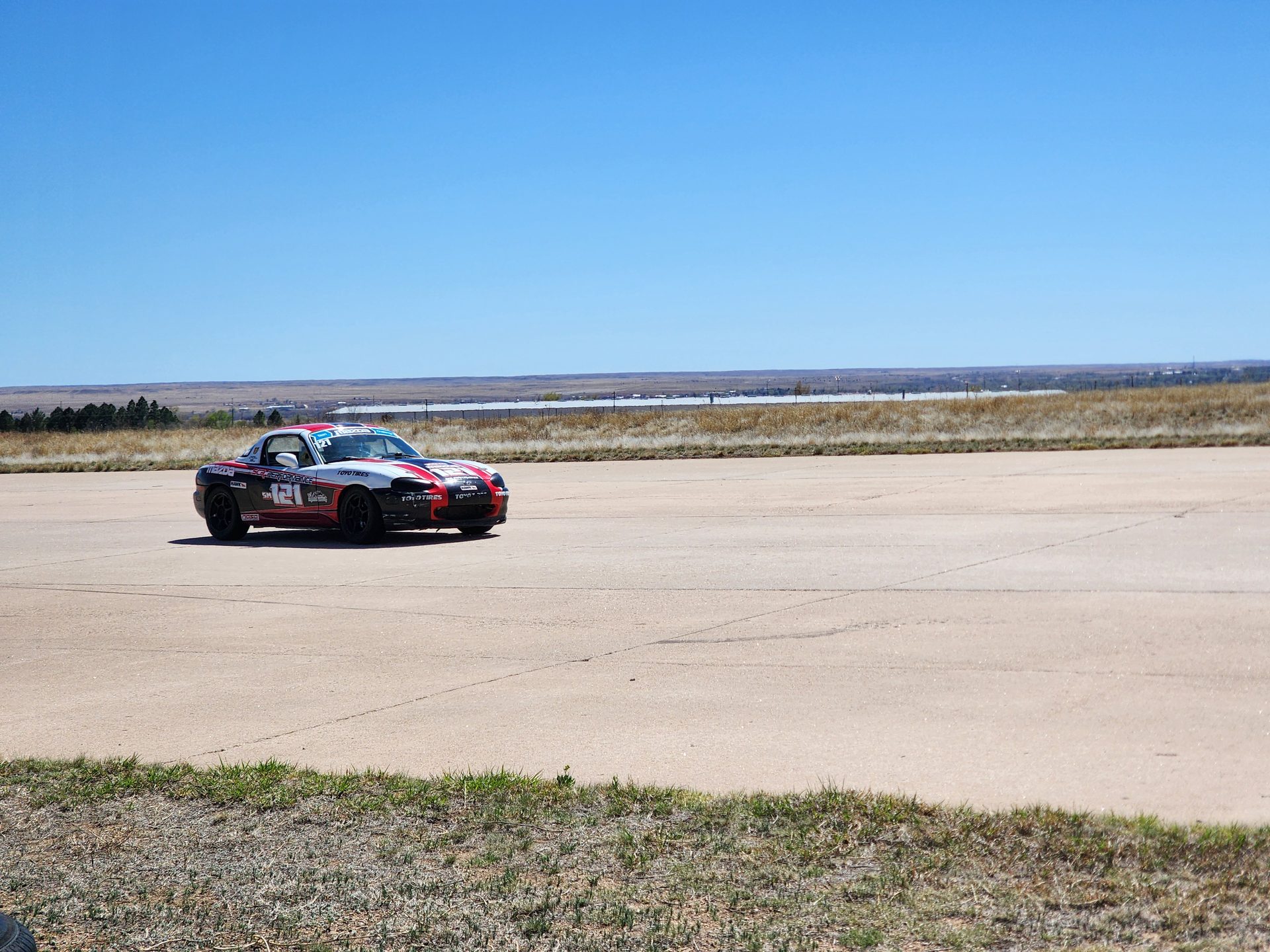 Our #121 Spec Miata. Everything below came from days like this one.
1. Trying to be fast in session one
This is the big one, and it's the root of half the rest of this list.
The drivers who push hardest in the morning are usually quick early and then stay stuck at that same speed all day. They never build a foundation, so there's nothing to build on. Meanwhile the driver who spent session one being deliberately boring is passing them by the afternoon.
Your first session should feel like about 70 percent. Smooth hands, smooth feet, learning where the track goes. You cannot learn a corner and drive it at the limit on the same lap.
Speed is something you accumulate, not something you bring in the trailer.
The cost: an entire day of learning, plus the tire and brake wear you burned getting nowhere. At $200 to $500 just for the entry, that's an expensive way to plateau.
2. Looking three car lengths ahead
Coaches will tell you that essentially every new driver has the same problem on day one: their eyes are too close to the car.
Where you look is where you go. If you're staring at the pavement 20 feet in front of the hood, your hands make small, late, panicky corrections. If you're looking at the exit of the corner before you turn in, your hands get calm and the car settles.
This is the single cheapest lap time on this list. It costs nothing. It takes one session of consciously forcing your eyes further up the road, and it feels uncomfortable at first, like you're not watching the road at all.
Do it anyway. Every driver who fixes their vision finds time immediately.
The cost: free to fix, and usually worth more lap time than any part you could bolt on.
3. Braking like it's a light switch
New drivers treat the pedals as on or off. Nothing, then everything, then nothing again.
Real braking is the opposite shape. You hit the pedal hard at the start, when the car has the most grip and the most weight over the front tires, then bleed pressure off as you slow down and approach the corner. Firm to soft, not soft to firm.
The related sin is braking in the middle of a turn. That's how a car gets upset, and it's how novices end up facing the wrong direction in the runoff. Slow the car in a straight line, get it settled, then turn. Once that's automatic, you can start layering the two together.
I broke this down corner by corner in our post on why new drivers are slow in Turn 1, because Turn 1 is where it shows up worst.
The cost: several seconds a lap, flat-spotted tires, and the occasional off.
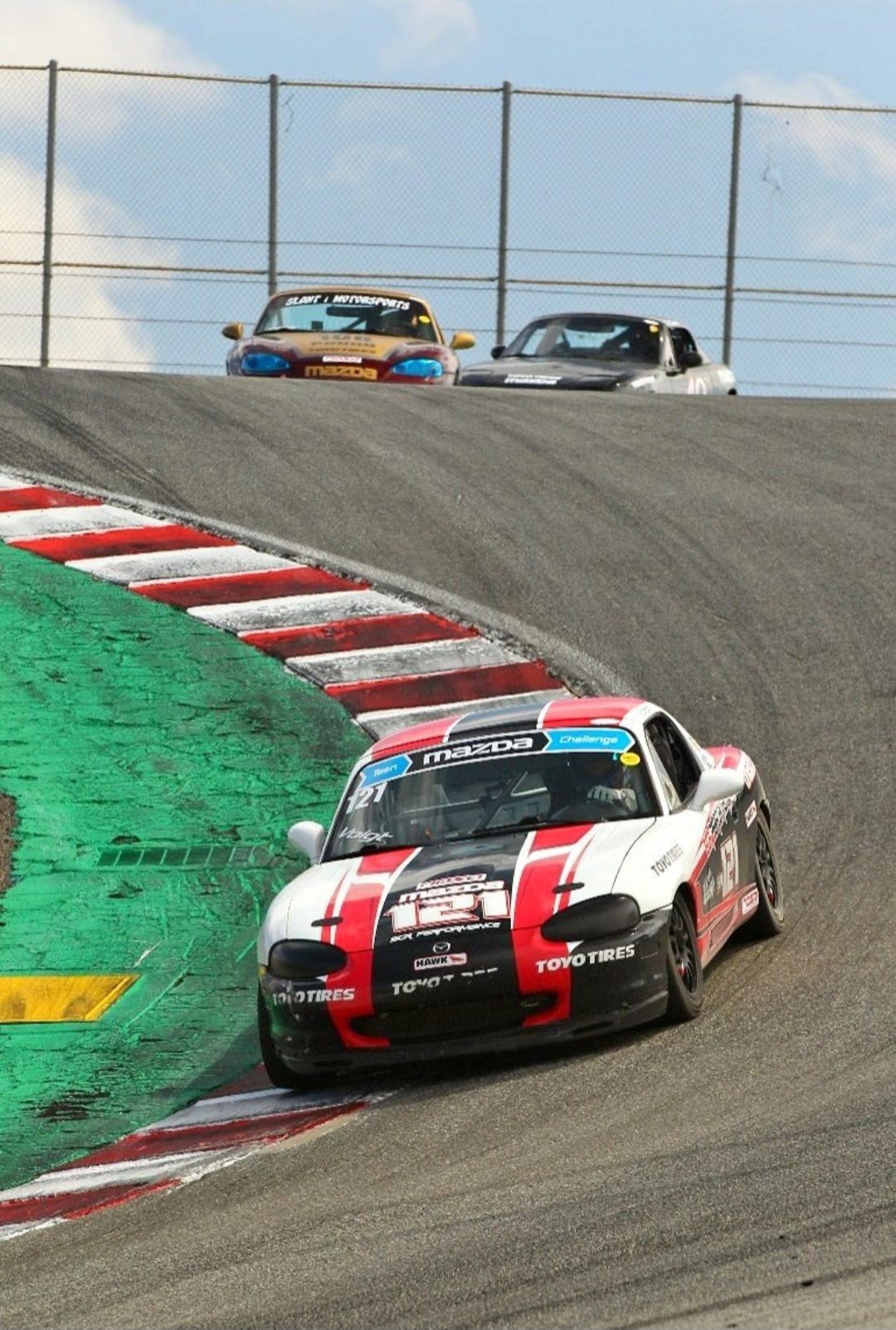 Braking straight, then turning. It looks boring from outside the car. It's fast.
4. Running street brake fluid
Here's the mistake that ends days.
Most factory-fill DOT 3 and DOT 4 brake fluid has a dry boiling point somewhere around 400 to 450 degrees Fahrenheit. On track, brake fluid routinely gets past that. And that's the dry number — brake fluid absorbs moisture over time, and old fluid boils even sooner.
When it boils, you get gas bubbles in the lines. Gas compresses. Fluid doesn't. That's the long, soft pedal that goes to the floor and scares people out of the sport.
The fix costs less than the fuel you'll burn that day. Flush the system with a high-temp fluid rated well above 500 degrees dry before your event. Then help it live: do a proper cool-down lap at the end of every session with light braking, and never park with the handbrake clamped on glowing-hot rotors.
Two more Colorado notes. High Plains Raceway out at Byers sits around 5,000 feet, and Pueblo Motorsports Park isn't far behind. Thinner air carries away less heat, so your brakes and your coolant both get less help than they would at sea level. Plan your cool-down laps like you mean it.
The cost: a boiled pedal ends your day. You've paid the entry, the fuel, and the drive, and you're loading up at noon.
5. Never checking a hot tire pressure
Tires are the most expensive thing you consume on track. A set of decent performance tires might give you around ten track days, which puts $50 to $150 a day of tire on your bill before you've touched anything else.
Air pressure decides how long they last and how much grip you get. Cold pressure is a starting guess. Hot pressure is the truth.
Come in from your first session and check them right away with your own gauge. Pressure climbs a lot with heat, and a tire that's over-inflated hot goes greasy and wears a strip down the middle. One that's too low rolls onto the shoulder and chews the outer edge.
Look at the wear after each session. Scuffing on the sidewall means add air. Scuffing across the center means let some out. That's the whole feedback loop, and most beginners never run it once.
The cost: grip you paid for and didn't use, and tires that die in five days instead of ten.
6. Buying parts instead of buying seat time
Every paddock has the guy with coilovers, a wing, and a big brake kit who is being passed by a stock car with a good driver in it.
For your first several events, the car is not the limitation. You are. And that's good news, because you're the cheapest thing to improve. A stock, healthy car with fresh fluids, good pads, and honest tires will teach you more than a modified one, because it talks to you at speeds where mistakes are survivable.
Sticky tires and modern traction control both hide errors. That's fine later. Early on, you want to feel what you did wrong.
Put the money into more days on track. Then put it into a coach. I laid out where the money actually goes in our full breakdown of what a track day costs if you want the real line items.
The cost: thousands of dollars that could have bought four more event days.
7. Treating your instructor like a passenger
If you're in a novice HPDE group, there's usually a very experienced driver sitting in your right seat for free. That is the best value in motorsports and people waste it constantly.
Talk to them. Tell them what confused you last session. Ask what they'd change first, not what they'd change overall. Ask them to give you one thing to work on per session instead of ten. Then actually do that one thing.
Same goes for the drivers' meeting. Show up early, sit up front, and learn the flags and passing rules cold. Nobody ever got black-flagged for knowing the rules too well. If you're not sure what the day even looks like yet, here's a full walkthrough of a first HPDE.
The cost: you pay for instruction either way. Ignoring it just means you paid for nothing.
The pattern underneath all seven
Every mistake on this list comes from the same place: wanting the result before doing the work that makes it.
Slow down, look up, brake straight, check your tires, talk to your instructor. Do the boring stuff well and the speed shows up on its own. It always does.
And if you'd rather learn all of this without owning the car, the tires, the trailer, and the repair bill — that's the whole idea behind our arrive-and-drive program here in Colorado. We handle the expensive part. You show up with a helmet and go learn.
Either way, get out there. The track doesn't care how you arrive.
Do you believe?
Sources: Driver61 — Track Day Guide, Lockton Motorsports — Costs of a Typical Track Day, No Money Motorsports — What to Expect at Your First Track Day, R1 Concepts — Track Day Brake Setup Guide, NASA. Brake fluid boiling points, entry fees, and consumable cost ranges verified against currently published figures as of August 2026. Everything else here is from coaching and running cars at High Plains Raceway and Pueblo — your club's rules and your drivers' meeting always outrank a blog post.