
Open your sponsorship agreement. Find the force majeure clause. It's usually three lines near the bottom, and almost every racer skips past it without reading it.
That's a fine bet — right up until you're the one who gets hurt. Because that clause almost certainly does not cover you.
 The season doesn't stop for weather. A driver's body is a different kind of stop.
Quick disclaimer: I race cars and sell sponsorship training. I'm not a lawyer, a doctor, or an insurance agent, and none of this is legal, medical, or financial advice. If you're actually dealing with this, get a real professional to read your specific agreement.
If this just happened to you and you need an actual answer today, not a blog post, skip down and book a 1:1 Strategy Call — we'll read your real contract together. If you're reading this to get ahead of it, here's what's actually true.
Force majeure protects the deal from the world. Not from your body.
Force majeure excuses a party from performing when something outside anyone's control makes it flat-out impossible — not just harder. That's the bar almost everywhere the clause shows up.
Look at what's actually on the list. I pulled ours. Our own season Driver & Rental Agreement spells out force majeure in Section 15.2: weather, fire, natural disaster, pandemic, war, civil unrest, labor action, supplier or track closures, sanctioning-body cancellations, government action.
Nothing on that list is "the driver got hurt." Personal injury just isn't a force-majeure event — it's a different kind of problem, and sponsorship-law guidance from the firm MFMac makes the same point from the other side: liability for death and personal injury can't be excluded from a sponsorship agreement at all. It gets its own clause, not the weather-and-war catch-all.
Two questions, and most racers only ask one
"What happens to my sponsorship" is actually two questions: does the money already committed still belong to you, and does whatever you promised — the decal, the content, the appearances — still happen without you?
The answer depends on what you sold. If a brand bought you — helmet, story, feed — that's a personal deal, and it typically pauses when you physically can't deliver it. If a brand bought the car, the seat doesn't need you specifically. We've covered who actually owns the sponsorship in a rented seat — that split matters even more once you're the one who's out.
That second path is why substitute-driver language exists. Standard sample clauses say it plainly: when a driver is replaced "due to illness, injury, or other reasons," the agreement carries on "otherwise unchanged." The car keeps racing. You don't have to be in the seat for the sponsorship to survive — if someone wrote that clause in before you needed it.
What a real agreement does instead of hoping force majeure covers it
A well-drafted deal handles injury with its own short menu: a notice period, a temporary suspension of the specific obligations you can't meet, a pro-rated fee if you can't finish the term, or a termination right after a defined stretch of missed events. None of that is exotic. It's just written down instead of assumed.
If your current agreement doesn't have any of that, the best time to fix it was before signing. The next best time is now. And if your situation is already tangled — a real diagnosis, a real sponsor, real money owed either direction — that's exactly the one-off, dollars-on-the-line problem a 1:1 Strategy Call exists for. It's $497, one hour, and you leave with the actual wording to send.
If you're building a deal from scratch and want that notice-and-suspension language drafted in from day one instead of improvised from a hospital bed, The First Sponsor System has the one-page agreement template that covers it.
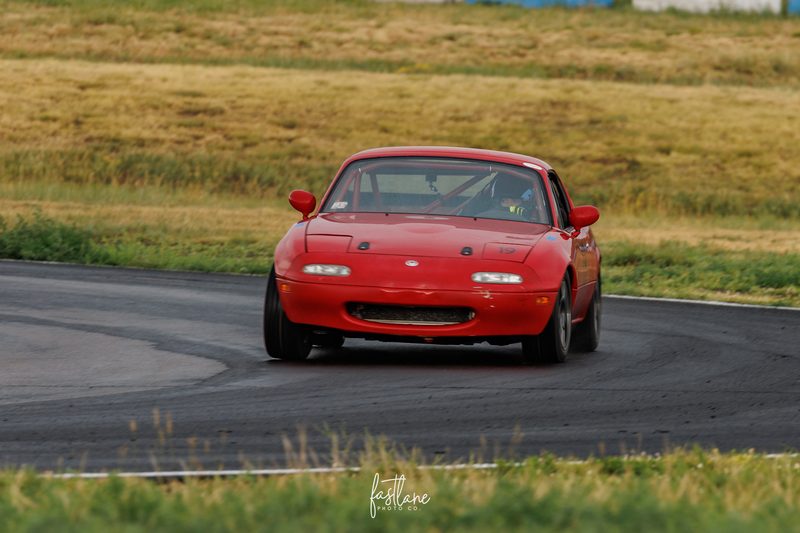 Battle scars on the bumper are routine. The sport doesn't insure the driver the same way it doesn't insure the car.
Nobody insures this for you by default — not even the pros
Here's the part that surprises people: even at the top of motorsport, injury coverage isn't automatic. NASCAR has no drivers' union and no pension plan, according to a legal analysis from long-term disability specialists. Drivers arrange their own life insurance, retirement, and disability coverage. That same writeup names "loss of endorsement or sponsor coverage" as its own category, separate from the hospital bill — because sponsor money disappearing is a different financial hit than the medical costs.
Specialty insurers do sell disability policies that count racing winnings, team retainers, sponsorship contracts, and endorsement fees as insurable income, for amateur and semi-pro drivers, not just full pros, per underwriting guidance from Diversified Quotes. Career-ending injury policies for pros go further, paying a lump sum up to five times annual income based on contract length and value, per UK motorsport insurer BBi Cover.
None of it is automatic. You have to go buy it. Our own paperwork says the quiet part out loud: Section 8.2 of that same Driver & Rental Agreement states plainly that "LFR provides NO medical, health, accident, disability, or life insurance coverage for the Driver. Any medical or injury costs the Driver incurs are the Driver's own responsibility." That's not unusual to us. It's standard everywhere we looked, from a Saturday club racer up to a Cup Series driver with no union behind him.
The comeback nobody could have written into a contract
Robert Wickens was paralyzed in a catastrophic crash at Pocono in 2018. No sponsorship clause could have predicted what came next.
989 days later, he tested a Hyundai fitted with hand controls. By 2023, racing with Bryan Herta Autosport, he'd won the TCR drivers' championship. Nobody's contract guaranteed that. A manufacturer partner decided the relationship was worth building new hardware for.
You don't need your recovery timeline nailed down before you call your sponsor. You need to call before they hear it from somebody else.
What to actually do this week if this is live for you
Tell them fast, even without a return date. "Here's what happened, here's what I don't know yet, here's when I'll update you" beats silence every time. Offer the substitute-driver option or a paused term yourself, before they have to ask. Don't promise a comeback date you can't keep — Wickens didn't get one either, and the partnership survived anyway.
Wondering what you actually owe back if money already changed hands? That's the fuller remedy ladder in what you owe a sponsor after a rough season — I won't repeat it here.
Honest note: LFR hasn't had a season driver medically pulled mid-year. This is built from contract research and how the wider sport handles it, not a story we've lived. I'd rather say that straight than fake it.
If you're staring at your own version of this right now — a real injury, a real sponsor, and no idea what to say — don't guess at the wording alone. Book a 1:1 Strategy Call for $497 and we'll work through your actual contract and your actual options together.
Do you believe?
Sources: MFMac — Sponsorship Agreements: Key Points to Consider, Law Insider — "To Substitute Drivers" Clause Samples, Long Term Disability Lawyer — NASCAR Drivers Can Protect Themselves When the Sport Doesn't (2015), Diversified Quotes — Disability Insurance for Race Car Drivers, BBi Cover — Career-Ending Injury Insurance for Professional Athletes, Wikipedia — Robert Wickens. The force-majeure and insurance clauses quoted from "our own season Driver & Rental Agreement" are LFR's internal template, not a public filing — quoted directly from our own document, not an external source. The NASCAR union/pension analysis is dated 2015; nothing publicly available suggests that structural fact has changed since. This post is general information based on published guidance and our own paperwork, not legal, medical, or insurance advice.