
The deal was real. You were standing next to his truck in the paddock, he said he was in for the season, and you both meant it.
Nine months later the last two payments never showed up and he's stopped answering.
Here's the uncomfortable part. You probably do have a contract. You just can't prove what was in it.
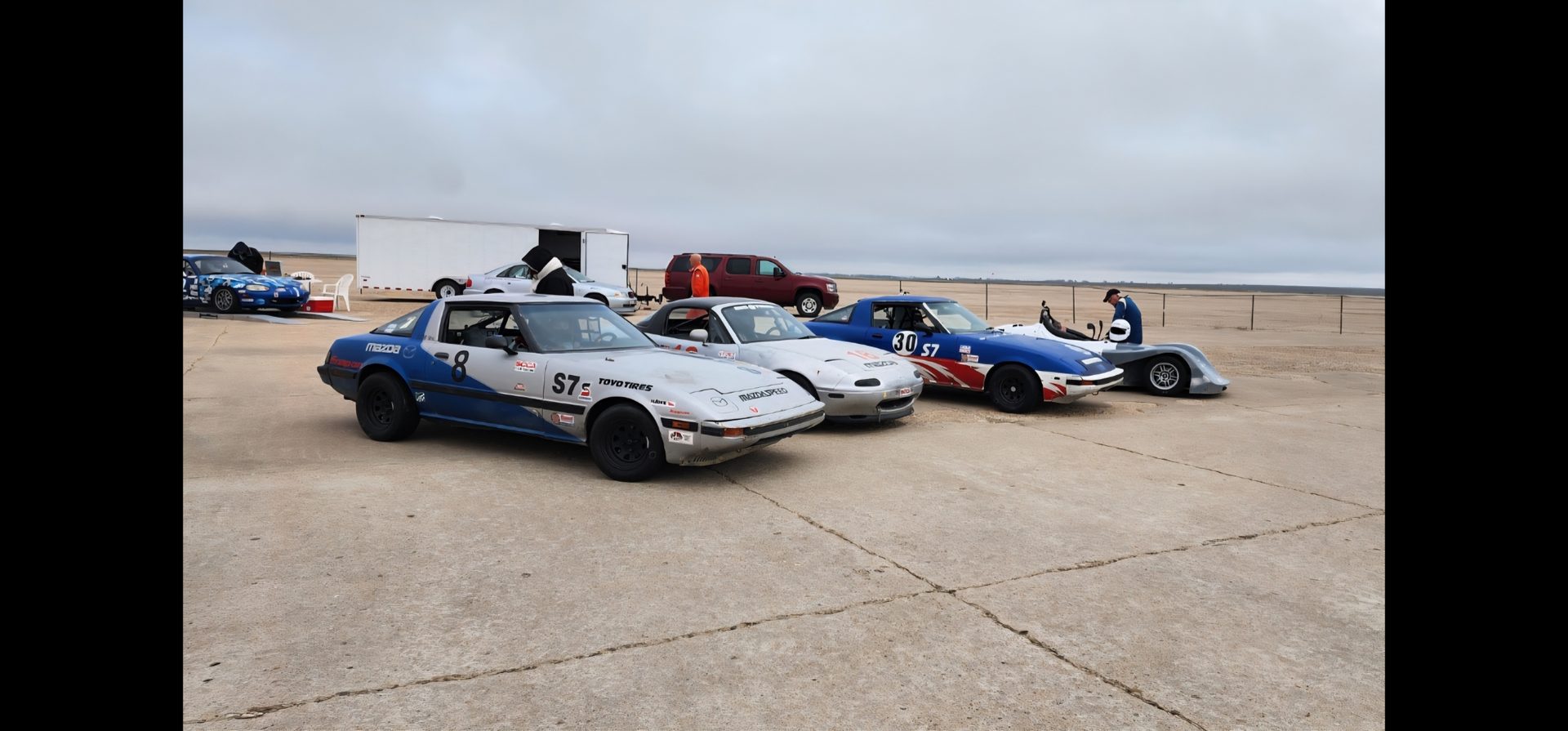 Different disciplines, same shop. Almost every deal that ever put a decal on one of these started as a conversation in a paddock.
I'm a racer and a team owner, not a lawyer. Nothing here is legal advice, and contract law changes by state. This is what I've learned about the gap between what you agreed to and what you can show.
The handshake is probably a real contract. That's not the good news.
Most people assume a verbal deal is worth nothing. Wrong.
An oral agreement is enforceable in most situations. You need three things: an offer, an acceptance, and consideration — something of value moving both ways. California's code says it out loud: all contracts may be oral unless a statute specifically requires a writing.
Colorado reads the same way. The Colorado Bar Association's own journal puts it plainly: "Oral contracts are enforceable unless a specific enactment, such as a statute of frauds, renders a particular category of oral contracts unenforceable."
So your handshake counts. But read what a court actually needs to enforce it — a meeting of the minds about terms sufficiently definite to enable the court to determine whether the contract has been performed.
Sufficiently definite. That phrase is the whole problem.
"A season of social media" is not definite. "He said he'd cover tires" is not definite. You can't tell from either one whether anybody did what they said.
What you'd actually have to prove
The burden sits on you. If you're the one claiming there was a deal, you're the one who has to establish it.
Courts will look at a handful of things: testimony from the people in the room, emails and texts referencing the agreement, proof that one side performed its obligations, and conduct that shows both sides understood the same terms.
Now be honest about what you've got. Photos of their decal on your car. A couple of Instagram posts. Maybe a text saying "excited to work with you."
All of that proves a deal existed. None of it proves the amount, the due dates, or the deliverable count.
Nobody argues about whether there was a deal. They argue about what the deal was.
One more thing, because it's easy to write this post like sponsors are the villains. I have never seen a sponsor act in bad faith at our level. Not once.
What I've seen is duller and more expensive. The marketing manager who loved your program takes a new job in March. The check that's "going out this week" lands after you already bought tires. The brand thought "season-long social" meant weekly content and you thought it meant a decal. Nobody lied. Nobody wrote it down. That's the whole failure mode, and it's why the one-page sponsorship agreement every racer needs walks the seven terms that belong on paper.
The multi-year handshake is the one that's actually void
There is one category where the verbal version genuinely fails, and racers walk into it constantly.
Statutes of frauds require certain agreements to be in writing. One of those categories is an agreement that cannot be performed within one year of the day you made it. California lists it in Civil Code 1624 along with real estate and a handful of others.
The test is whether the deal could be wrapped up inside a year — not how long you expect it to run. So a one-season verbal handshake usually clears that bar. "We'll do this for the next three years, same money" does not. That part of the conversation is a nice feeling, not an obligation.
There's a second clock most racers never hear about. The window to sue is often shorter for a verbal deal than a written one. In California it's two years on an oral contract and four on a written one. Other states split it differently, some don't split it at all.
Writing it down doesn't just buy you proof. It buys you time.
What "taking them to court" actually looks like
Let's do the math nobody does.
Colorado small claims court handles money disputes up to $7,500, and the court cannot award more than that even if your claim is worth more. It's cheap and it's built for people without lawyers. A grassroots sponsorship dispute fits inside it easily — a race set of tires runs around $1,200, a weekend entry roughly $500, a competitive do-it-yourself race weekend $2,000 to $3,500 all in.
So the money is in range. The filing fee is not the cost.
The cost is that you're suing a local business owner in a town where your entire funding strategy depends on local business owners. The paddock is small. The chamber of commerce is smaller.
I don't know a single grassroots racer who has actually sued a sponsor. That's not because everyone's deals are airtight. It's because suing is worse than eating the loss. Which means the paper you create before anything goes wrong is your only real protection.
Two doctrines sometimes rescue people — part performance, and promissory estoppel, which needs a clear promise, reasonable reliance on it, and a real financial loss. If you bought tires because he told you to buy tires, that matters. But "a judge might find this persuasive" is not a funding plan.
Every hour you'd spend arguing about terms after the fact is an hour you could have spent writing them down clearly the first time. That's the entire reason we sell a $39 Pitch Inspection instead of a legal service — most of the damage happens in the wording, long before anybody needs a courtroom.
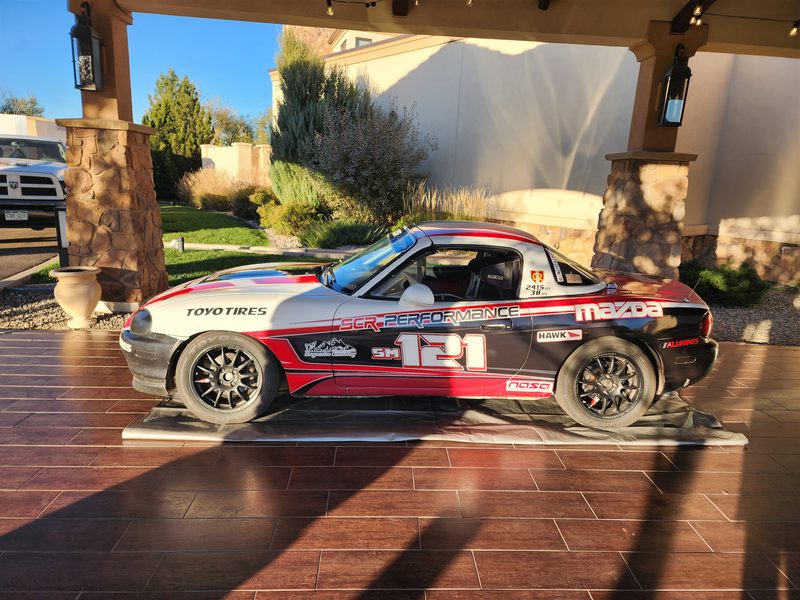 The car at Spark the Springs. The deliverable here is easy to prove — it either showed up at the event or it didn't. Write your deals so every line is that checkable.
The two-paragraph email that turns a handshake into a record
This is the actual fix, and it takes four minutes.
Send it the same day, ideally within a couple of hours, while the conversation is still sharp in both of your heads. It is not a contract. It's a memo. And the bar for a note or memorandum is lower than people expect — emails and invoices can qualify, and even a typed name at the bottom of an email has been treated as a signature.
Five things go in it:
- Both business names, spelled the way they're registered
- The number, and the exact dates the money lands
- The deliverables as counts, not adjectives
- Start date and end date
- One sentence asking them to confirm
Here's the shape:
"Ryan — great talking today, and thanks again for backing us. Writing down what I heard so we're both working off the same page: Ryan's Auto is in for $1,500 for the 2026 season, $750 by April 1 and $750 by July 1. You get your logo on both rear quarter panels and the driver suit, four Instagram feed posts across the year, one hosted race weekend at High Plains for up to four guests, and a season-end report with reach numbers and photos.
If any of that's off, tell me and I'll fix it. If it looks right, just reply 'looks right' and I'll get the decals ordered."
Their reply is the asset. Two words in an inbox is the entire difference between a story and a record.
This is not the agreement, and I'm not pretending it is. A real agreement handles exclusivity, image rights and how either side gets out — that's what the one-pager is for. This is what you send when there's no agreement and there isn't going to be one. Counting the deliverables also forces you to price them, and I broke our own menu down line by line in what a race team actually delivers for $2,500.
Before you send that email, though, it's worth having someone read it who does this for a living. That's exactly what The Pitch Inspection is — $39, you send the actual document or email you're about to hit send on, and it comes back marked up in writing within five business days with the three fixes that matter most.
If the season already went sideways and you have nothing
Three moves, in this order.
Reconstruct the record today. Every text, every DM, the screenshots, the dated photos with their decal on the car, the posts you made. Build the timeline while you still remember it accurately. Memory gets creative when money is involved.
Ask once, plainly, in writing. Not a confrontation. A short email restating what you understood and asking where the payment stands. Most misses are cash flow or a person who left the company — and if it's the second one, the playbook for a departed sponsor contact is the read.
Offer a landing instead of a demand. A make-good is far easier for a company to approve than a check they already skipped. There's a whole remedy ladder in what to do when your season under-delivers, and it runs both directions.
Then go write the memo for every other partner you have. Today. Before dinner.
If you've got a live deal sitting in your inbox right now — a handshake, a half-finished email, a proposal you keep not sending — don't guess at the wording. Send it through The Pitch Inspection. $39, marked up in writing within five business days by a team that's out there pitching sponsors for its own Spec Miatas, not by someone who read a book about it. And if you'd rather build the whole thing yourself, the templates, the outreach sequences and the contracts chapter all live inside The First Sponsor System.
Get the yes. Then get it in the inbox.
Sources: Colorado Lawyer (Colorado Bar Association) — Enforcing Oral Contracts, Schneiders & Associates — When Is an Oral Contract Legally Binding in California?, UpCounsel — Oral Contract Laws, Proof, and Legal Risks, Hanley Law — California Statute of Limitations: Written vs. Oral Contracts, Colorado Judicial Branch — Small Claims, C.R.S. § 13-6-403 — Jurisdiction of small claims court. Statutes, limits and statute-of-frauds categories verified against published material as of September 2026. The California code sections are cited as one state's example, not as a rule that governs your state — contract law varies and the one-year and limitations rules are different where you live. Cost figures come from our own verified racing-cost reference: roughly $1,200 for a race set of tires, roughly $500 for a weekend entry, and $2,000–$3,500 for a competitive do-it-yourself race weekend. The sample email is a template I wrote, not a real message from a real sponsor. None of this is legal advice — if there's meaningful money or a minor driver involved, pay an attorney in your state to read the paper.
Do you believe?