
Monday morning after the weekend, a sponsor emails four words: "Can you send footage?"
Most racers do one of two things. Ignore it for three weeks. Or zip the entire SD card — every session, every unedited lap, the telemetry files, all of it — and drop a Drive link in the reply.
Both are wrong. The second one is worse, and it's the one I see more.
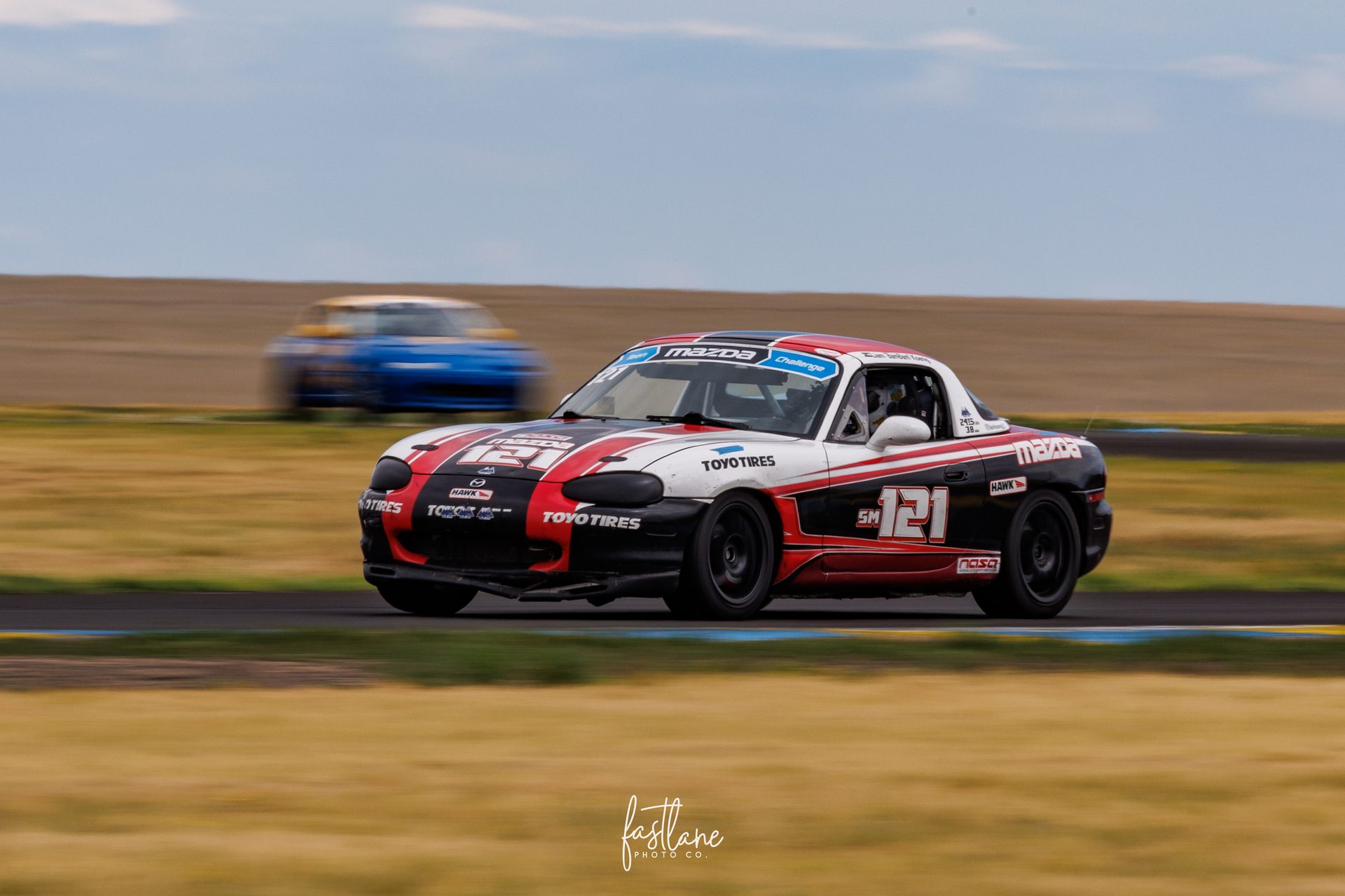 #121 panned at speed at High Plains Raceway, August 2026. Photo by Fastlane Photo Co for LeadFoot Racing.
The frames your camera shoots are actually yours
Start with the good news, because it's the opposite of the answer to a question I wrote about three weeks ago.
When a paddock photographer shoots your car, that photographer owns the picture — not you, and a "personal use" download does not cover handing it to a sponsor. That post exists because racers get that backwards constantly.
Your own camera is the clean case. You bought it, you mounted it, you hit record. The footage is yours to license.
One thing to check before you act like it is. Read what you signed at the gate. Sanctioning bodies and promoters put a media clause in the entry paperwork — ARCA's 2026 single-event license application, for one public example, has the entrant permitting use of their name, likeness and photographs on a non-exclusive basis.
That word is doing all the work. Non-exclusive means they get a right to use it. You keep yours too.
Different series word it differently and some events are much broader, especially anything with a TV package. Read your own entry form once, in full, instead of assuming. It takes ten minutes and you only have to do it per series.
Video is the deliverable they'll actually use
Here's why this matters more than it used to.
HubSpot's 2026 State of Marketing Report surveyed 1,500-plus marketers and found short-form video now delivers the highest ROI of any media format, with 48.6% ranking it in their top three for performance. Label that honestly: that's general marketing research, not motorsports. Nobody surveyed a grassroots paddock.
But it tells you what's sitting in your sponsor's job description. Motorsport sponsorship analysts at RTR Sports split sponsorship rights into six categories — visibility, intellectual property, hospitality, content, digital and data access, and commercial integration — and describe content-first activation as the 2026 standard.
I already ranked the whole inventory on a grassroots car, licensed content included, in the sponsorship assets tier list. I'm not re-running that argument here.
The narrower point is this. The business sponsoring you has one person who has to post something on Tuesday and does not have anything good. You have a camera pointed out of a race car at 100 mph.
You are not asking them for a favor. You are solving a problem that is already on their calendar.
If you want the whole content side built for you — the playbook, the video scripts, and the activation menu of sellable deliverables we use ourselves — that's inside The First Sponsor System. It's the working file set from our own team, not theory.
The data stays in the trailer
Now the part people get wrong.
"Footage" to a marketing manager means a clip. "Footage" to a racer with a data logger can mean a folder that includes your telemetry. Don't let those get bundled.
Commercial lawyers working in motorsport describe telemetry as a form of intellectual property belonging to the teams themselves, with organisers requiring access mainly to verify technical compliance. Their guidance is blunt about the rest of it: any party in the motorsport chain needs the appropriate permissions, rights and protections around that data.
Three plain reasons to keep it:
It's the thing you paid to learn. At club level your brake points and your line through the fast stuff at High Plains are not a national secret, but they're also not free. You bought them with coaching, tires and seat time. Handing them to anyone outside the team is a choice, not a formality.
They can't use it anyway. A raw data file is not a social post. It will sit in a folder forever.
It sets a precedent you can't walk back. Send it once unasked and it becomes a deliverable next season, in a contract, with a deadline.
What you send instead takes fifteen minutes: one clipped 30-to-60-second piece of clean video, and one number written in English. "Fastest lap of the weekend, four tenths quicker than last round." That belongs in your recap email. I laid the whole cadence out in what to send a sponsor mid-season, so I won't repeat it.
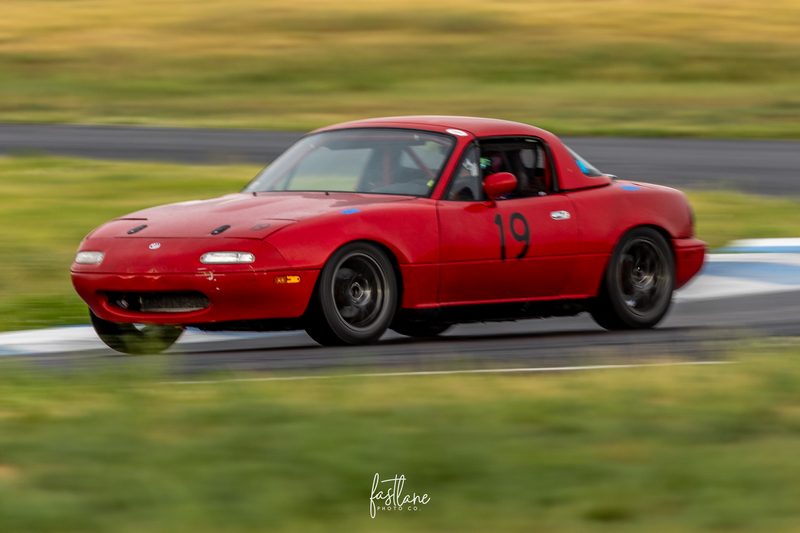 #19 committed over the curbing at High Plains Raceway. Photo by Fastlane Photo Co for LeadFoot Racing.
License it. Don't sign it away.
There are two ways content moves in a deal, and the difference is everything.
A license grants specific rights under defined terms while ownership stays with you. An assignment transfers ownership outright — the brand becomes the copyright holder and can do what it wants, including stopping you from using your own footage.
Creator-contract practitioners are consistent that you want the first one. The warning they repeat is worth reading twice: a perpetual license means the brand can use your content forever, for a one-time fee.
Four dials on any license. Set all four.
- Channels. Their organic social is one thing. Running your face in paid ads is another, and it should cost more.
- Duration. Thirty days to perpetual is the real range. Pick a number.
- Editing and sublicensing. Can they cut it, re-caption it, hand it to their distributor?
- Territory. The markets they actually sell in, not "worldwide" by reflex.
A sane grassroots default: non-exclusive, twelve months, their own owned channels, no resale, no sublicensing, credit where it fits. Then it renews when the sponsorship renews, which quietly gives you a reason to have the renewal conversation.
Everything I just described lives as a plain-English contract section in the Before You Sign material inside The First Sponsor System — written for a racer, not a lawyer.
The five blanks to write into the deal
Put these in the agreement, not in a text thread.
- What. "Edited clips." A number of them. A length. Not "footage."
- When. Turnaround after each event. Seven days is honest for a one-person team.
- Where. Channels, and whether paid media is included.
- How long. The license term, with an end date.
- Who approves. Cap revisions at two rounds so it can't run forever.
One more line that saves you: promise clips "per event we complete." Cameras die. Cars break. Don't write a number you can't deliver from a trailer at 9pm.
None of this is legal advice — I run a race team, not a law firm. If real money is on the table, buy an attorney an hour.
Send the clip. Keep the card.
The footage is the most valuable thing you make that costs you nothing extra to produce. Treat it that way.
Send a clip, not a card. License it, don't gift it. And never, ever put the data folder in the same zip.
If you want the documents that make all of this routine — the content playbook, the activation menu, the outreach sequences, and the contract material — The First Sponsor System is the real file set we use to fund our own Spec Miatas. And if your situation is genuinely weird, a 1:1 Strategy Call is an hour with me on your exact deal, $497.
Sources: Charles Russell Speechlys — Motorsport Races: Top Legal Considerations, Promise Legal — Brand Deal Contract Terms for Creators, RTR Sports — Motorsport Sponsorship in 2026, HubSpot — The Top Marketing Channels of 2026, ARCA 2026 Single Event License Application. The video-ROI figure is general marketing research and is labeled as such in the post. The ARCA form is cited as one public example of entry-release wording, not as a rule that governs your series — read your own. Nothing here is legal advice. Verified as of September 2026.
Do you believe?