
"Could you swing by and talk to our team for 20 minutes?"
That email feels like a compliment. It is one. It's also the moment a decal deal turns into a job, and most racers say yes before they've asked a single question.
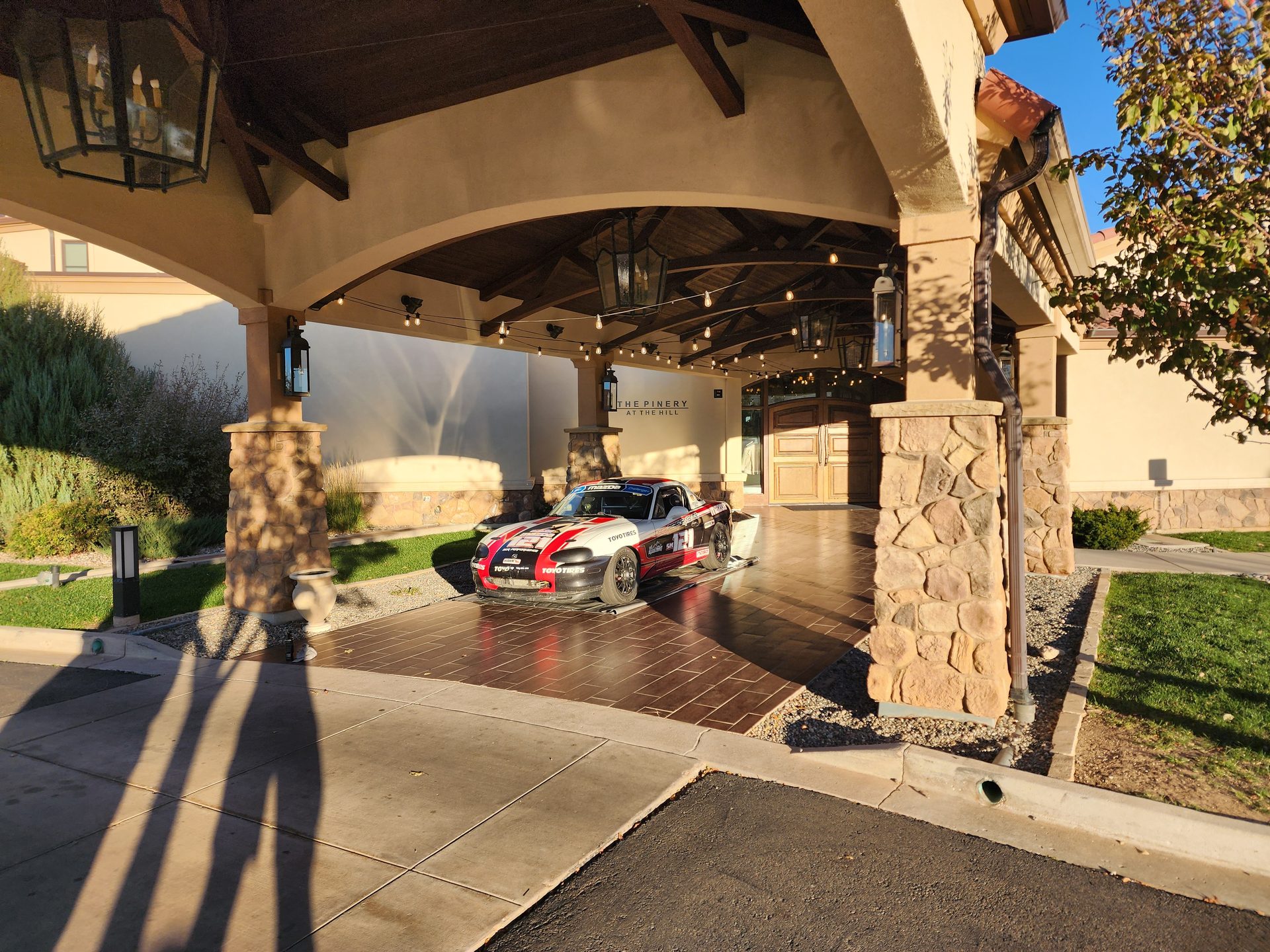 Spark the Springs at The Pinery. A sponsor wanting you in the room is good news. Know what you're agreeing to.
I'll cover what they're really asking for, what to get in writing, and how to make the visit worth more to them than the price of the sponsorship. When your situation is messy, like three visits a year nobody wrote down, a 1:1 Strategy Call is how we'd work it out together.
What an employee visit actually is
Companies use athletes to reach their own staff, not only customers. One sports-marketing vendor, Blue Sky, lists ten ways to put an athlete into a corporate event. Keynote. Meet-and-greet. Fireside chat. Employee awards. A hands-on skills session.
That's a vendor's marketing page, so read it as a menu, not a rulebook. But the menu is useful. "Talk to our team" could be any of those, and each one is a different amount of work.
There's real thinking behind it too. When Dutch company PostNL sponsored a cycling team, it asked staff what they wanted, paid for train tickets so employees could attend races, and put fan boxes at finish lines. Its sponsorship lead put it simply: "We don't assume what people want. We ask them." PostNL has 35,000 employees and a pro cycling team. Your sponsor may have nine. But the goal is the same: staff who feel part of it.
Get four things in writing before you say yes
Pull up a standard athlete endorsement template. Fynk's public version has blanks for the number of appearances per year and the maximum hours. It says the company pays "all reasonable out-of-pocket expenses." It says appearances are scheduled with the athlete's approval and can't conflict with competition.
Copy that thinking. Send an email, not a contract, with these four lines:
- Date, start time, length. "Thursday the 14th, 12:00 to 12:30, in your break room." Not "sometime in March."
- Format. Q&A, a short talk, or photos at the car. Pick one. Ask who's in the room.
- Who pays. Gas, tow, a day off work if you have a job. The visit is their asset. They cover the costs.
- How many a year. One is a bonus. Four is a part of the price. Say which it is.
A race weekend already costs a Spec Miata racer roughly $2,000 to $3,500 in consumables, plus about $500 entry. Your weekdays are not free either. Treat them like they matter, because they do.
Then put the number in your one-page agreement. Appearances are a deliverable. If they're not in the deal, you can't price them, and you can't say no to the fifth one.
Price it or cap it
Here's where racers get burned. They price the decal, then give the appearances away, and the sponsor never sees them as a cost.
Two clean options. Build a set number into your package and say so, as we covered in how to price racing sponsorship. Or list extra appearances as add-ons with their own price. Either way, the number exists before the first request.
The shortcut we built: the 1:1 Strategy Call is an hour with me on your exact deal. You send a 10-question intake first, we work through your package and your appearance terms, and you leave with a one-page written action plan within 48 hours. $497, recorded, with 30 days of email follow-up for quick questions.
Make the visit worth it for them
A bored break room is a bad return. Blue Sky's advice for these events is plain: brief the athlete on the audience ahead of time, and design the activity so it works for everyone, whatever their athletic ability.
For a racer, that means:
- Ask what they want people to leave with. Teamwork? Pride in the logo? Ask the contact first.
- Talk about their work, not yours. If the sponsor sells tires, tell the story of one stint on one set. Your stories are the hook. Their product is the point.
- Bring something to touch. A helmet, a steering wheel, a worn tire. People line up for things they can hold.
- Send a recap. Two photos and three lines to your contact the next day. It also feeds your mid-season report.
If the visit is at the track instead, our guide to hosting a sponsor at the track covers that side. A trade show is its own animal, covered in what to do when a sponsor wants your car at their booth.
An honest note
I haven't sold a sponsor an employee talk as a priced deliverable. This is the setup I'd use, built from a public contract template and event-planning guidance, not a story about a deal we closed. The four lines in the email are my own checklist.
Say yes, with the numbers on paper
A sponsor asking to see you is a sponsor who's paying attention. Say yes, with the date, the length and the expenses written down first.
If you want a second set of eyes on your own terms before you reply, book the 1:1 Strategy Call. If you're still building the deal itself, The First Sponsor System is $67 and has the templates and tracker to build it. Start with the call if the deal already exists.
Sources: Blue Sky Sports & Entertainment — 10 Ways to Incorporate an Athlete Into a Corporate Event, The Sponsor — How PostNL used cycling sponsorship to power employee engagement, fynk — Endorsement Agreement template, professional athlete. Blue Sky is a sports-marketing vendor, and the template is a sample, not a motorsports standard or legal advice. Weekend cost figures are from our own racing cost reference, checked as of November 2026.
Do you believe a sponsor who invites you in deserves your best hour?