
The press release lands on a Tuesday. Your sponsor, the shop whose logo is on your door, just got bought.
Your contact sounds fine on the phone. "Nothing changes for now." Then the new parent company's marketing team starts reviewing every line of spend.
Your deal is one of those lines. Here's how to make sure it survives the review.
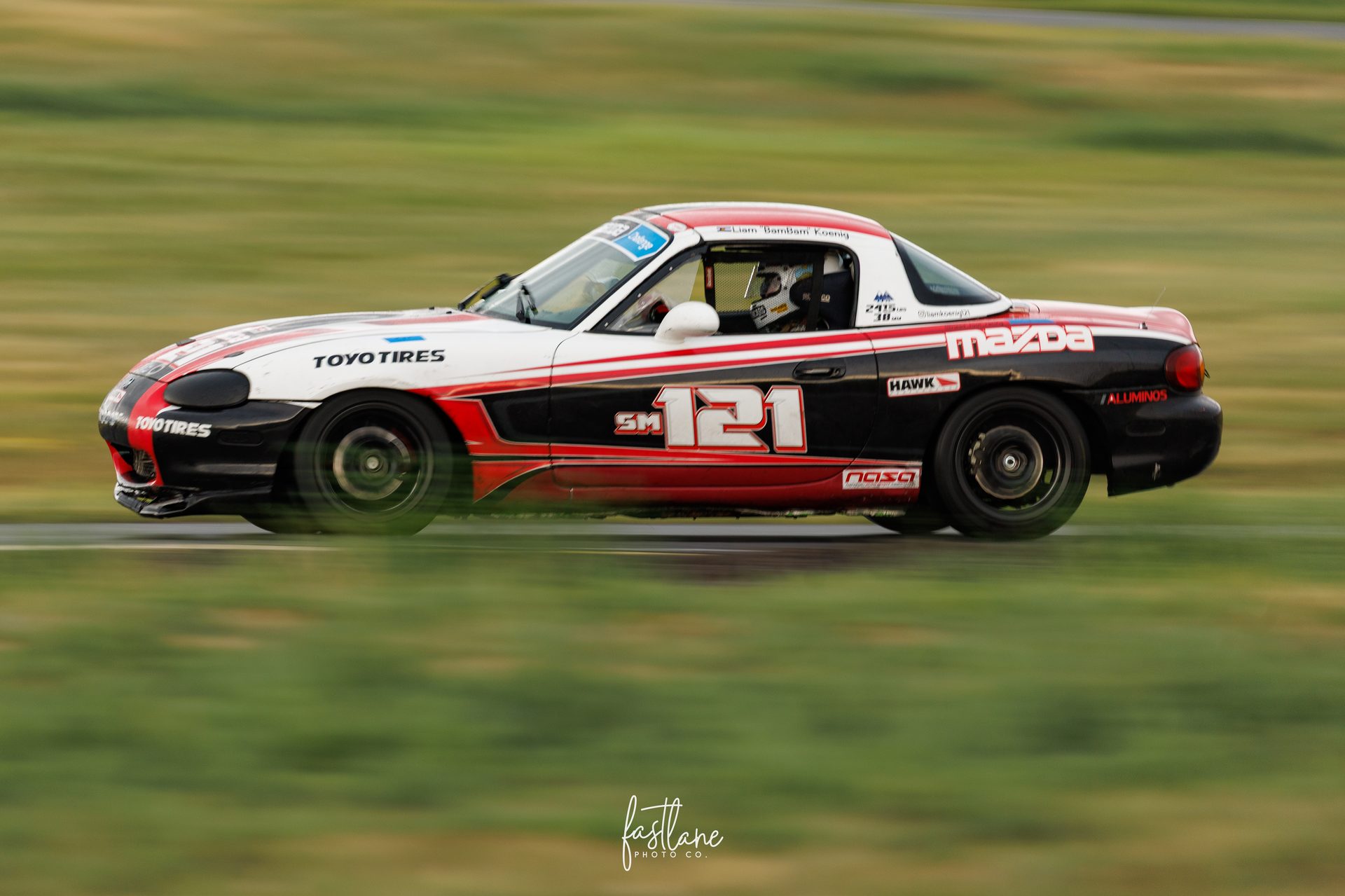 Every logo on this car is a contract. When the company behind one changes hands, the contract doesn't automatically follow the logo.
First, find out how they got bought
This sounds like lawyer trivia. It isn't. The answer decides whether your contract even moved.
They bought the company itself (a stock or share purchase). The business you signed with still exists. It just has a new owner. The contracts stay with the company. One Canadian law firm says it plainly: "an assignment of a contract is not needed." Your deal is still your deal.
They bought the business's stuff (an asset purchase). The buyer picks which assets and contracts it wants. Contracts it wants move over by assignment. Contracts it doesn't want can stay behind in a shell company with no marketing budget. That's the one that hurts.
Mergers are messier. The answer depends on how the deal was built and which law governs it. Don't guess.
You don't need to read the deal documents. Ask your contact one plain question: "Is the company I signed with still the company paying me, or is the contract moving to the new owner?"
Whatever the answer, plan on pitching this deal again to someone new. That's the job Proposal Review was built for, and I'll come back to it below.
Then read two clauses in your own agreement
Pull your sponsorship agreement and look for two things.
- An anti-assignment clause. This says neither side can hand the contract to someone else without the other side's consent. In an asset purchase, this is what forces the buyer to come ask you. That's leverage. It means you get a seat at the table, not a form letter.
- A change-of-control clause. This one fires when ownership changes, even if the company stays the same. Some say a change of control counts as an assignment. Some give the sponsor the right to walk. UK law firm MFMac lists "a change of control in the ownership of the sponsor" as a standard termination ground in sports sponsorship deals.
If you find neither, your deal most likely just continues with the same company under its new owner. Most likely isn't the same as definitely, so this is the moment to have someone read the actual wording.
And if you don't have a written agreement at all, you're in a weaker spot. What happens when a sponsorship runs on a handshake covers that scenario.
The real threat isn't the contract. It's the review.
Here's the honest part. Most small sponsorship deals don't die in court. They die in a spreadsheet.
A new owner usually reviews every marketing commitment and asks one question. The Sponsor, a sponsorship industry site, put the post-takeover question plainly: "would that entity still be one which you would opt to partner with?"
Now flip it. The new owner is asking that exact question about you.
The person deciding probably never met you. They see a logo on a race car and a dollar amount. If your deal is still a one-line expense with no story attached, it's the easiest cut on the sheet.
So treat it like what it is: a brand-new pitch to a brand-new buyer, with one big advantage. You already have a season of results to show them.
This is exactly where a second set of eyes earns its keep. You're rewriting your proposal for someone who has never heard of you, under time pressure. Send it to us first through Proposal Review. I'll mark it up, record a walkthrough, and rewrite the two weakest pages before it lands on their desk.
 The new owner sees this car for the first time in your proposal. Make the first look count.
Rebrands: who pays for the new decals?
Sometimes the deal survives and the name doesn't. That's when racers get hit with a surprise bill.
The best-known example in American racing played out in the open. Nextel merged with Sprint in 2005. NASCAR's top series kept the Nextel Cup name through 2007. It became the Sprint Cup on January 1, 2008. The company ran focus groups and fan surveys before making the switch.
Two lessons from that:
- The deal survived the merger. The title sponsorship didn't vanish because the company changed. It changed names on the new owner's timeline.
- The rebrand was planned, not instant. Even a company that size took more than two seasons to move.
Rebrands can also go badly. When AT&T tried to swap Cingular's name onto an existing car, it ended in lawsuits. That story is in what to do when a bigger sponsor wants the old decal gone, so I won't retell it here.
For you, the practical question is money. New vinyl, new photos, new merch, new social graphics. That cost should sit with the company that changed its name, not with the racer. Most small deals never say that in writing. So say it now, politely, before you print anything: "Happy to switch the livery. Can you cover the reprint, or should we fold it into the renewal?"
What we've seen, and what we haven't
Full honesty: LFR has never had a sponsor get acquired in the middle of a deal. I'm not going to pretend we've walked this exact fire.
But one of the brands we've worked with shows what the calm version looks like. The Würth Group bought the controlling share of Liqui Moly, effective January 1, 2018. Trade press reported that Liqui Moly would keep running "as an autonomous company with an independent brand." Same name, same product, new owner upstairs. That's the best case.
The bad case is the asset sale where your contract stays behind. The only defense there is being the deal the new owner wants to take.
Your five-day playbook
- Day 1: Congratulate your contact. Ask the "is my contract moving?" question.
- Day 2: Read your anti-assignment and change-of-control clauses. Flag anything unclear for a lawyer.
- Day 3: Ask who owns marketing under the new parent. Get a name, not a department.
- Day 4: Rebuild your proposal for that person. Lead with this season's results, not your history.
- Day 5: Ask for a short intro meeting. Bring questions, not just a deck. Our free 37 Discovery Questions work just as well on a new owner as on a first-time sponsor.
None of this is legal advice. If real money is on the line, have an attorney read your actual agreement.
Don't let a stranger cut you off a spreadsheet
An acquisition is the one time your existing sponsor gets judged like a cold prospect. The racers who keep the deal are the ones who show up with a sharp, current pitch before anyone asks.
If you want that pitch checked before it goes to the new owner, submit it for Proposal Review. It's $147, back to you within five business days, with the markup, a recorded walkthrough, and your two weakest pages rewritten.
Sources: Clark Wilson LLP — Acquiring Contracts in the Purchase of a Business, MFMac — Sponsorship Agreements: Key Points to Consider, The Sponsor — Sponsorship Contracts: What Could Possibly Go Wrong?, AftermarketNews — NASCAR's Premier Series to Be Named NASCAR Sprint Cup Series in 2008, Wikipedia — 2007 NASCAR Nextel Cup Series, CAT Magazine — Liqui Moly Acquired by Würth Group. Checked October 2026. The legal points are general and vary by contract and state. The playbook and the reprint advice are my own, not a quote from these sources.
Do you believe?