
The email is the best one you've gotten all year. A real brand, real money, way more than you're used to. One condition: the competing decal on your quarter panel has to go, now, before anyone signs anything.
Your first instinct is to say yes on the spot. Don't.
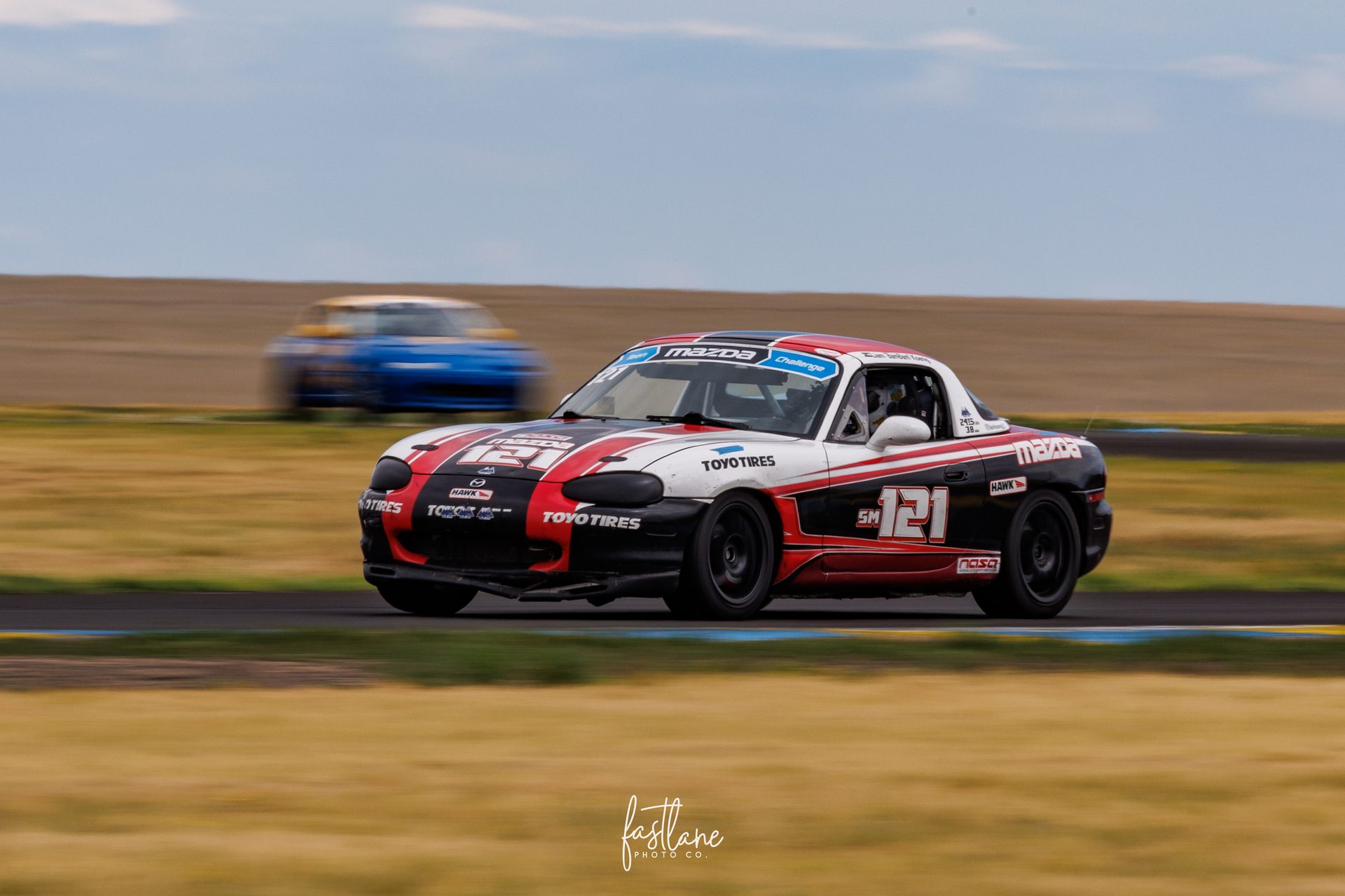 The car behind you in this frame isn't the problem. The contract with your current sponsor is the thing to check first.
This isn't a sticker swap. It's a second contract touching your first one
Most racers treat an existing sponsorship like a paint job — something you can change whenever a better offer shows up. It isn't. It's a signed agreement with its own rules for how it ends, and those rules don't disappear because someone waved a bigger check.
Rip a decal off mid-term without following your own contract's exit terms, and you've handed your current sponsor a breach-of-contract claim. That's true even if the new sponsor is the one who demanded it — the new company doesn't inherit your obligations to the old one; you do.
We cover exactly this kind of clause-by-clause reading in The First Sponsor System's Before You Sign module — scope, term, and exit language, in plain English, before you're staring at a live situation instead of a hypothetical one.
Check these three things before you say yes to anyone
1. Does the old deal actually conflict? A lot of "they have to go" demands are really just an assumption. Exclusivity is scoped by product category, not by "automotive" as a whole — a tire-mounting sponsor and an oil sponsor aren't competitors just because they both touch a car. We broke down how narrow a category clause usually is in what a sponsor exclusivity ask is really worth. Read your actual category wording before assuming anyone has to lose their spot.
2. What does your current contract say about ending early? This is the part racers skip. Service and sponsorship agreements that allow termination for convenience almost always pair it with a notice period — commonly 30 to 90 days — and sometimes an early-termination fee on top, so the party walking away still pays for the time and inventory it's giving up. If your contract is silent on early exit, you may not have a clean way out at all, and "non-renewal" (letting the deal run to its natural end date) is a very different, much safer move than "termination" (cutting it short now).
3. Is the new sponsor asking you to wait, or to breach? Here's the part almost nobody tells racers: breaking an existing contract isn't only your risk. If the new sponsor knows about your signed deal and still pushes you to tear it up early, they're not just a bystander — the law has a name for a third party who knowingly induces someone to breach a contract they're aware of, and it's not a defense they want to explain to their own legal team. A sponsor who's actually done this before usually asks to go on the open panel or to wait for your current term to lapse, not to rush the old partner out the door by Friday.
Most of these clauses are written to be skimmed past, not read. That's exactly why they end up breached by accident.
If you've never actually read the exit terms in your own sponsorship agreements — most racers haven't — that's the gap The First Sponsor System is built to close before you're in a live situation instead of a hypothetical one.
The NASCAR story that's actually about this exact problem
In 2001, Cingular Wireless signed on as the primary sponsor of Jeff Burton's #31 car. In 2003, Nextel signed a 10-year, roughly $750 million deal to become NASCAR's title sponsor — with full exclusivity in the telecom category. That should have pushed Cingular out entirely. Instead, NASCAR gave Cingular (and another existing sponsor, Alltel) a grandfather clause: they could stay, frozen exactly as they were, while the new exclusive deal applied to everyone else going forward.
That held fine for four years. Then AT&T bought Cingular's co-owner, Bell South, and decided to rebrand the car from Cingular to AT&T. NASCAR said no — a rebrand wasn't the same grandfathered sponsor anymore, it was functionally a new telecom brand on the car, and that touched Nextel's paid-for exclusivity. AT&T sued in March 2007. NASCAR countersued for $100 million, alleging breach of contract and fraud, and tried to kill the grandfather clauses outright. The two sides settled: AT&T kept its branding through the end of 2008, then handed the telecom category to Sprint Nextel completely, and NASCAR dropped its countersuit.
Nobody in that story just tore a decal off. The fix was a frozen, scoped, dated carve-out — and the fight only started when someone tried to change the deal's terms without re-checking who else's exclusivity it touched.
 Two cars, two sponsors, one panel. The question isn't who's faster — it's whose contract says what.
What to actually do with the email in your inbox right now
Pull your current contract and find three lines: the category definition, the term end date, and the termination clause. Then go back to the new sponsor with the actual shape of your situation — not a yes, not a no, a real answer: "Here's what I'm bound to until [date]. We can structure the new deal to start then, agree to a scoped carve-out until it does, or I give proper notice under my own contract starting today." Whichever you pick, put it in writing to your current sponsor the same day — a dated, specific notice beats a quiet decal removal every time.
If this is a live situation and not a hypothetical, this is exactly the moment for a 1:1 Strategy Call — we read your actual contract with you and figure out the real exit, not a guess.
LFR hasn't had to make this call ourselves — our current partners (Liquid Moly, Les Schwab, OG Racing, Engine Ice, FCP Euro) don't compete with each other, so we've never had to choose. That's genuinely different from having walked this exact fire drill. What we have built is the contracts chapter that tells you what to check before you're in it — The First Sponsor System is $97, and Before You Sign is the module built for the day this email lands in your inbox.
None of this is legal advice. A real attorney should read your actual contract before you make any of these moves.
Do you believe?
Sources: Autosport — AT&T, NASCAR Reach Settlement, Chief Marketer — NASCAR Files $100 Million Countersuit Against AT&T Over Sponsorship, TechContracts — Why a Notice Period to Terminate for Convenience?, Minc Law — What Is Tortious Interference?, ContractKen — Early Termination Clause. The NASCAR/AT&T/Cingular facts (2001 sponsorship start, 2003 Nextel deal value, the grandfather clause, the 2007 lawsuit and countersuit, the settlement terms) are drawn directly from the two linked news sources. The 50–100%-of-remaining-value early-termination-fee range comes from ContractKen's mid-market SaaS and service-contract data — labeled here as that, not a motorsport-sponsorship benchmark, because no published grassroots-racing figure exists. This post is general information from a racer and team owner, not legal advice. No LFR customer, sales, or survey data is claimed anywhere in it, and LFR has not actually faced this exact conflict among its current sponsors — stated plainly above.