
The renewal email isn't where a sponsorship dies. It's where you find the body.
You send the "so, about next year" note in October. You get four words back: "going a different direction." No argument, no reason, no chance to fix it. The decision was made months ago and nobody told you.
So let's do the autopsy. I'm not going to name a partner or invent one — that's not how we do things here. This is built from published renewal research and what I've watched happen in grassroots paddocks, including my own.
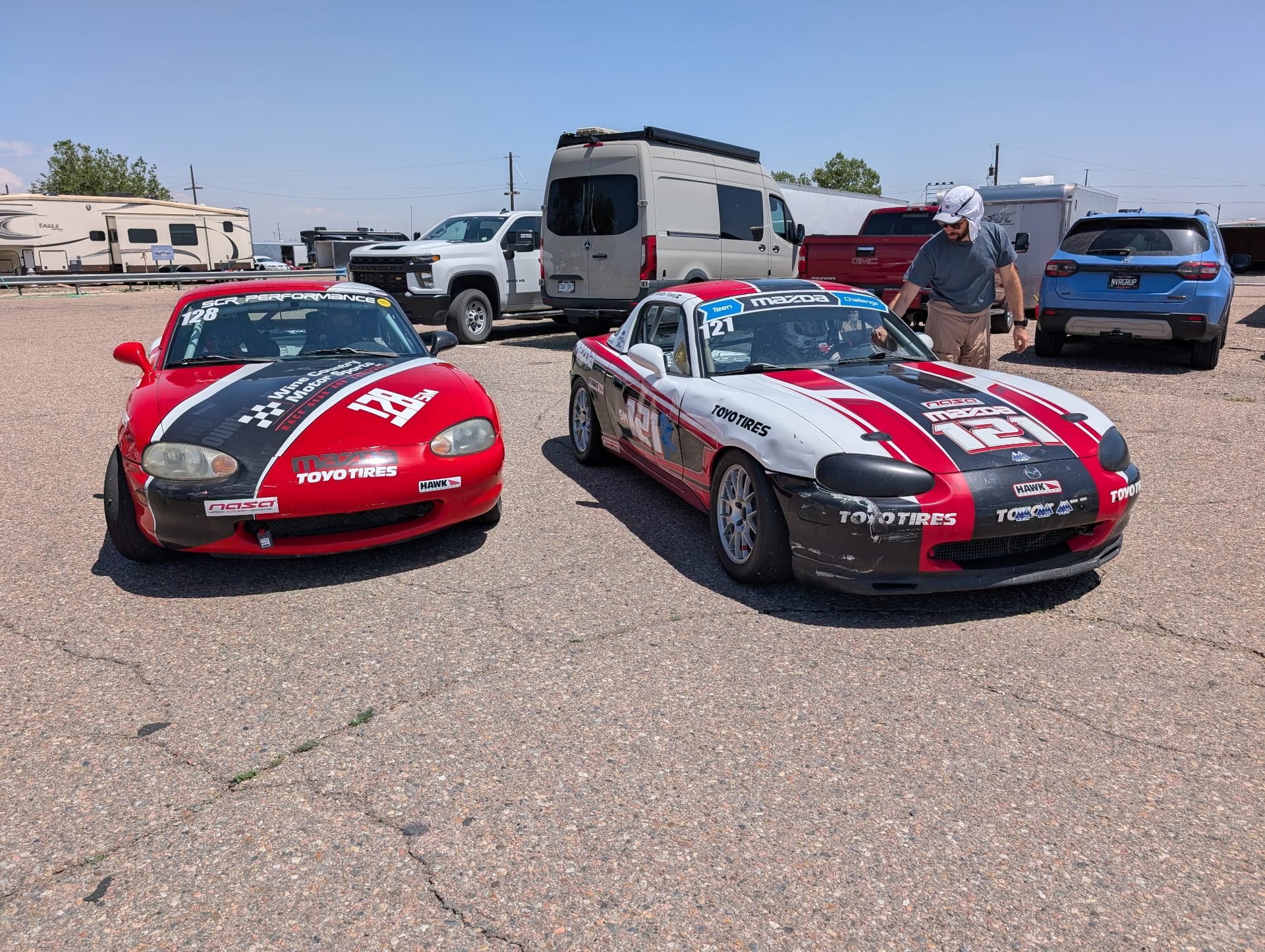 The season ends. Whether your sponsor comes back was decided long before this photo.
Cause of Death #1: A Report They Couldn't Forward
Here's the finding that should scare every racer with a partner.
Most sponsors who don't renew didn't have a bad experience. They had a bad reporting experience — one that left their marketing contact unable to justify the renewal internally.
That's the conclusion event-industry research keeps landing on, and it tracks with racing exactly. Your contact is rarely the only decision maker. They have to defend a line item to someone who has never smelled race fuel.
And the industry is bad at this. The 2026 Event Sponsorship Pulse Report found nearly 60% of sponsorship professionals measure ROI inconsistently, and 40% blame the lack of consolidated reporting tools. On the brand side, RTR Sports cites that 76% of CMOs struggle to calculate sponsorship ROI at all.
Read that again. The default state of this whole industry is "nobody can prove it."
That's your opening. If you hand your sponsor one clean page of numbers they can forward without editing, you're doing something 6 out of 10 professional properties aren't. The reporting templates in The Get-Funded System exist for exactly this, and I've also written a free walkthrough of the race recap format.
Cause of Death #2: Your Champion Left the Building
Someone at that company said yes to you. They liked racing, or they liked you, or both.
Then they took a job somewhere else.
Sponsorship platforms flag champion turnover as one of the biggest predictors of non-renewal. SponsorCX puts it well: new personnel inherit deals without the institutional memory that made those deals feel valuable in the first place.
The person who inherits your file doesn't see a race team. They see a spend line with a logo on it and no story attached.
The fix is unglamorous. Never let your partnership live in exactly one inbox. Get a second name on the thread — the marketing coordinator, the owner, whoever else touches it. Send the report to both. When your champion leaves, the relationship survives them.
Cause of Death #3: The 40 Weeks of Nothing
Event research found that while 90% of organizers sell sponsorships at their biggest event, only about a third of those deals include any year-round activity.
Racing has the same disease. They bought a season. You delivered six weekends and ten months of silence.
From their side of the desk, that silence reads as the whole partnership. Six race weekends is maybe twelve days. What happened on the other 353?
This is the cheapest cause of death to prevent, because the cure is free. A photo in February. A "here's what your product is doing on the car" note in April. A mid-season one-pager. I broke down the full cadence in what to send a sponsor mid-season, and none of it costs money — just the discipline to hit send when nothing is on fire.
Cause of Death #4: You Sold a One-Year Deal on a Three-Year Product
This one is structural, and almost nobody at our level talks about it.
RTR Sports lays out the life cycle of a motorsport sponsorship plainly. One year buys visibility only — you exit before the association sticks, which is the lowest-ROI version of the deal. Positive metrics tend to show up in year two. The return that clearly exceeds the investment usually lands in year three. Their stated minimum for real brand equity is three years.
So a one-year handshake is a deal engineered to underperform.
Then both sides draw the wrong conclusion. The brand decides racing doesn't work. You decide you weren't good enough. Neither is true — the term was just too short for the product to do its job.
Build the second year into the first conversation. A renewal option. A returning-partner rate. A stated plan for what year two looks like. You're not asking for more money up front; you're telling them what patience buys.
One honest caveat: not every death is your fault. RTR also lists exit signals that have nothing to do with you — the brand repositions, the category gets bought by a bigger property, budgets get cut. Sometimes the autopsy comes back clean. Take the lesson and move on to the next pitch.
Time of Death Is Earlier Than You Think
SponsorCX says it better than I can: by the time the contract end date shows up on the calendar, the decision has usually already been shaped by months of experience — or months of silence.
Put a real number on it. Assume your renewal is decided by mid-season, not in the off-season. That means the work that saves the partnership happens in June, not November. If you want the actual conversation script for that window, I wrote it up in how to negotiate sponsorship renewals.
The Win-Back Is a New Proposal, Not a Louder Old One
If a partner already walked, you're not out of moves. You're just running a different play.
- Ask for the real reason. One email. No defense, no pitch. "What would we have needed to deliver for next year to be an easy yes?" Most people answer honestly when there's nothing left to sell them.
- Respect the budget cycle. Their money resets. A no in November is often just a no for that fiscal year.
- Come back with a different offer. Same package at the same price is how you get ignored twice. Rebuild it around whatever they told you in step one.
That third step is where most win-backs die, because the racer sends the identical proposal with a new date on it. If you're about to take one more swing at a partner you lost, get someone who buys and sells this stuff to read it first. That's exactly what Proposal Review is — I go through your actual document line by line and tell you where a brand stops reading.
A lost sponsor is the best market research you'll ever get for free. Most racers throw it away.
If you've got a partner who didn't come back — or one you can feel drifting — send me the pitch before you send it to them. Proposal Review is $147, and it's a lot cheaper than a second season without them.
Sources: SponsorCX — The Sponsorship Renewal Playbook, Pheedloop — Why Your Best Sponsors Don't Renew (citing PCMA Convene and CEIR 2026), Showcare — 2026 Event Sponsorship Pulse Report, RTR Sports — How Long Should a Motorsports Sponsorship Last?. Figures verified against these published sources as of August 2026. Note that the retention and reporting data comes from the broader events and sponsorship industry, not motorsport-specific surveys — the patterns match what I see in grassroots paddocks, but I'm not going to dress up borrowed numbers as racing numbers.
Do you believe?