
The email you chased for six weeks finally comes back. "We love it. Can you do it for less?"
Most racers type "yes" before they finish reading the sentence. That reply is the moment the deal quietly stops being worth doing — and the moment you teach that brand what your work is really worth.
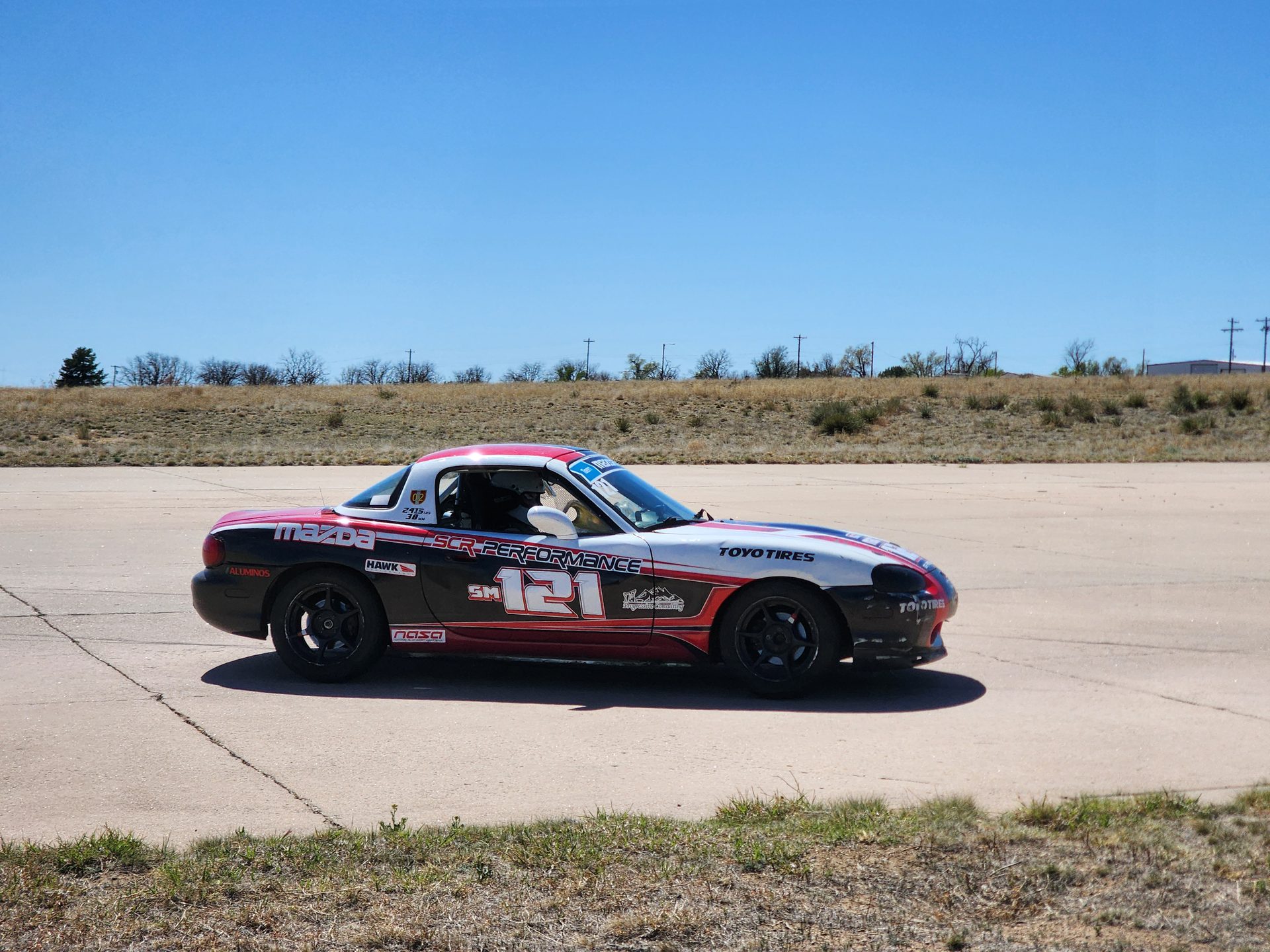 The flank of the car is the product. What you charge for it is a decision you get to make once — and then defend.
A discount request is good news. You just have to read it right.
Nobody haggles over something they aren't buying.
If a brand comes back with a number, they've already decided they want in. The deal isn't in danger. Your rate is. Those are two completely different problems, and racers lose money by treating the second one like the first.
Notice also what they did not say. "We don't have the budget this year" is a calendar problem — that one lives in our ranked list of sponsor objections, and the fix is a date, not a discount. "Can you do it for less?" is different. They have money. They're testing whether your number was real.
A price you drop the first time it's questioned was never a price. It was an opening bid.
What a discount actually cuts
Here's the part that trips up new racers: sponsorship money isn't profit. It's already spent.
For us, a set of race tires mounted runs about $1,200. A NASA or SCCA weekend entry is roughly $500, and that one is pure pass-through — it goes straight to the sanctioning body and never touches our account. Run a genuinely competitive Spec Miata weekend and you're at $2,500 or more in consumables before the green flag, which we broke down line by line in what a Spec Miata season actually costs.
So when you knock several hundred dollars off a deal, you aren't trimming a margin. There is no margin. You're deleting most of a set of tires.
McKinsey's Power of Pricing work makes the corporate version of this point: on an average income statement, a one percent cut in average price drops operating profit by roughly eight percent, all else equal. That's a big-company P&L, not a race team's, and I'm not going to pretend the math transfers cleanly. But the direction does — and a racer is in a worse spot than that company, because a racer has no margin to absorb the hit in the first place.
The one sentence that keeps the deal and the rate
You don't argue. You don't justify. You hand the decision back.
"That number is built for the full package. If the budget is lower, I can absolutely build a package at that number — tell me which pieces matter most to you."
That is the whole play. The Academy of Negotiation calls it scope adjustment, and the script they teach is nearly word for word the same: if budget is a constraint, offer to adjust the scope to fit, then ask which elements are most important. The Sponsorship Collective gives properties the same advice from the sponsorship side — when a sponsor balks at the price, adjust the package and find the mutual win. Neither one says "cut your rate."
Three things happen when you say it.
Your number stays intact as the price of the full thing. The deal stays alive, because you said yes to their budget. And the brand now has to choose what to give up — which is when a lot of them discover they actually wanted all of it.
You can only cut scope if you have a menu
This is where most grassroots deals collapse. Not at the price. At the paperwork.
If your proposal was one flat number next to the word "sponsorship," there is nothing to remove. No line items, no menu, no smaller version. The only lever you have left is the price itself, so you pull it.
A proposal built as a priced list of deliverables gives you somewhere to go:
| They want to spend less | What comes off |
|---|---|
| A little less | Cut the appearance days, keep the car and the content |
| A meaningful step down | Drop to a smaller decal position, cut the video deliverables |
| A lot less | One-event partnership instead of a season, renewable |
| Below your floor | Nothing. Send the smaller package price and let them come back |
Every one of those is a real conversation. None of them touches your rate.
Building that menu is exactly what The First Sponsor System is for — it's $67, and the piece that matters here is the Sponsor Activation Menu: sixteen deliverables written out as sellable line items with the scripts to sell them. It's the difference between a number a sponsor can only accept or reject, and a package they can shop. If you want to see what that looks like priced out in the open, we published what a race team actually delivers for $2,500.
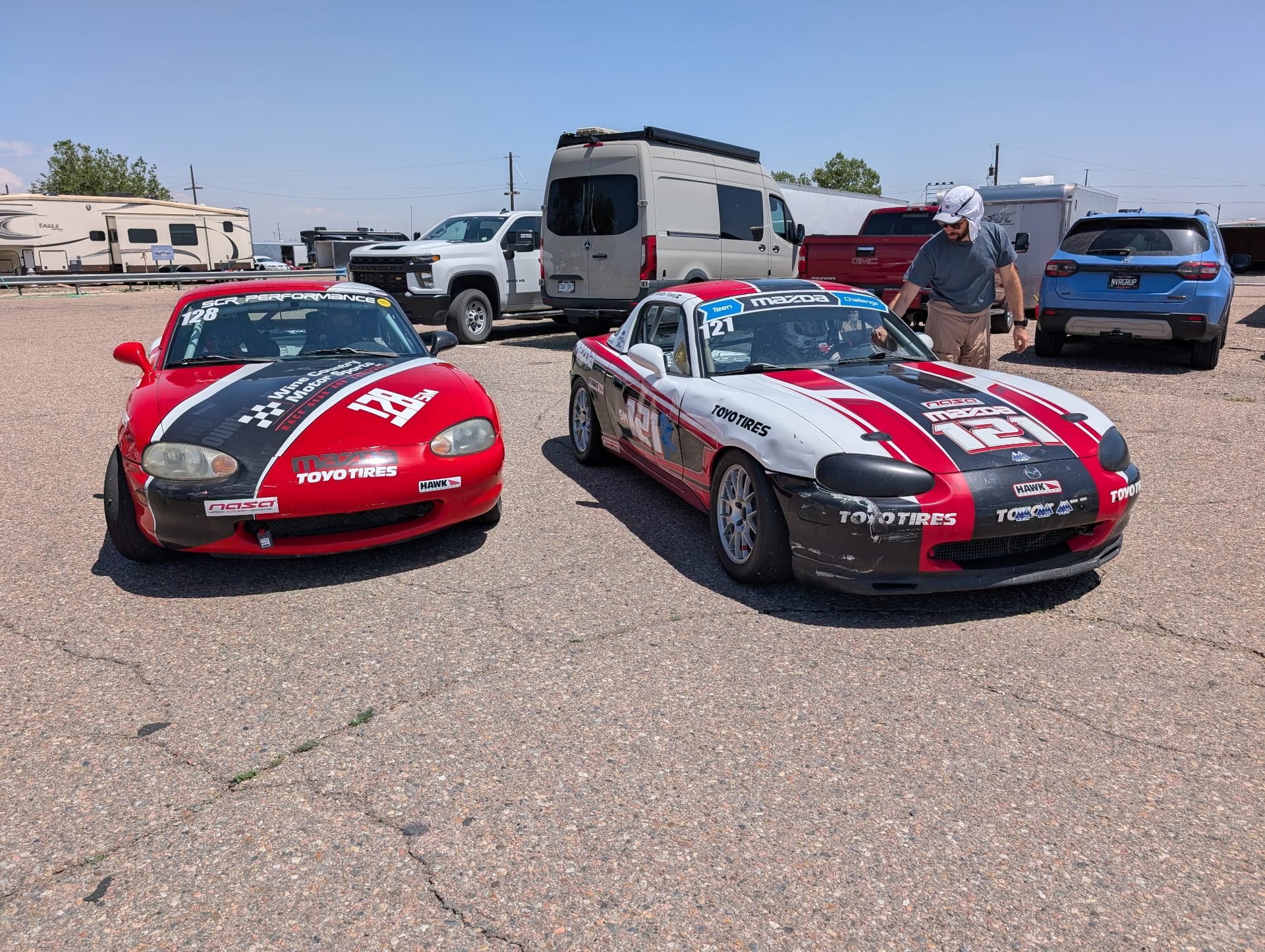 Every hour in this paddock is a cost that doesn't care what you agreed to charge.
Four things to trade instead of dollars
Deepak Malhotra, writing for Harvard's Program on Negotiation, recommends contingent concessions — concessions that only take effect if the other side does something specific in return — and says they're most useful in low-trust situations. He also warns that demanding reciprocity for every single move can come off as self-serving once a relationship is strong.
A first sponsorship conversation with a brand that has never heard of you is about as low-trust as it gets. So move conditionally here, and relax that once you've delivered a season.
If you're going to move at all, move like this. Each of these is worth real money to you and costs the brand very little:
- Term. "I can get closer to that number on a two-season commitment." You trade price for certainty, and you stop re-pitching this brand every winter. We laid out how to structure that in pricing a multi-year sponsorship.
- Timing. Paid in full before round one instead of split across the season. Cash up front is genuinely worth something when tires get bought in March.
- Rights. First right of refusal on their category next year, instead of a discount now. Cheap to give, valuable to them, and it doesn't touch your fee.
- Work. They supply product, a venue for a display day, an intro to two of their suppliers, or content their team shoots. All of that has a dollar value and none of it comes out of your tire budget.
Say it as an if-then, every time. "If you can do X, I can do Y." Never just Y.
Every one of those trades needs a number attached, or you're swapping a real dollar for a vague favor. That's what the audience-value calculator and sponsor tracker inside the same system are for — they turn "first right of refusal next season" into a figure you can actually defend out loud.
When taking the discount is the right call
I'm not going to pretend the answer is always hold firm.
If this is your first sponsor ever, if you have no track record to point at, and if a logo on the car this season is what makes next season's pitch credible — take the deal. Getting one real partner on the car beats winning an argument with the only brand that said yes.
Do one thing when you do it. Put the full rate on the invoice and show the reduction as a named line: first-year partner rate. Now the discount is a favor with an expiration date instead of your new price. When renewal comes around, you're negotiating up from the real number, not down from the discounted one — which is the whole battle in a renewal conversation.
And there's a floor. If a brand wants the entire package for a fraction of the price and won't trade anything for it, that isn't a partner. That's a company that found out you'll fold.
The short version
They asked for a discount because they want in. Give them a smaller package, not a smaller rate. Trade conditionally or don't trade at all. And if you do bend, name the discount so it expires.
If you've got a live negotiation on your desk right now and you want a plan for it specifically, The LFR Game Plan Workshop is a two-hour working session with ten seats — you bring the actual situation and leave with the action sheet. If you'd rather build the menu yourself first, The First Sponsor System is $67 and it's the whole package-and-pricing toolkit we use to fund our own cars. Either way, stop letting the first person who questions your number set it.
Do you believe?
Sources: Deepak Malhotra, Program on Negotiation at Harvard Law School — Four Strategies for Making Concessions, Academy of Negotiation — How to Refuse a Discount Without Losing the Client, The Sponsorship Collective — How to Price Sponsorship Packages, McKinsey — The Power of Pricing. The McKinsey figure describes an average corporate income statement, not a race team's budget, and is used here only for direction — I've labeled it that way in the post rather than pretending it maps onto grassroots racing. Tire, entry, and weekend-consumable figures are our own real cost lines. No customer, sales, or survey data of ours is claimed anywhere in this post, and the discount example is illustrative, not a real deal.