
Your hands shake on the grid. Your mouth is dry. Your braking point, the one you've hit a thousand times in the sim, suddenly feels like a guess.
That's normal. Nothing in a sim rig can fully copy the feeling of a real car with a real wall nearby. But you can prepare for it. Here are five steps, in the order I'd do them.
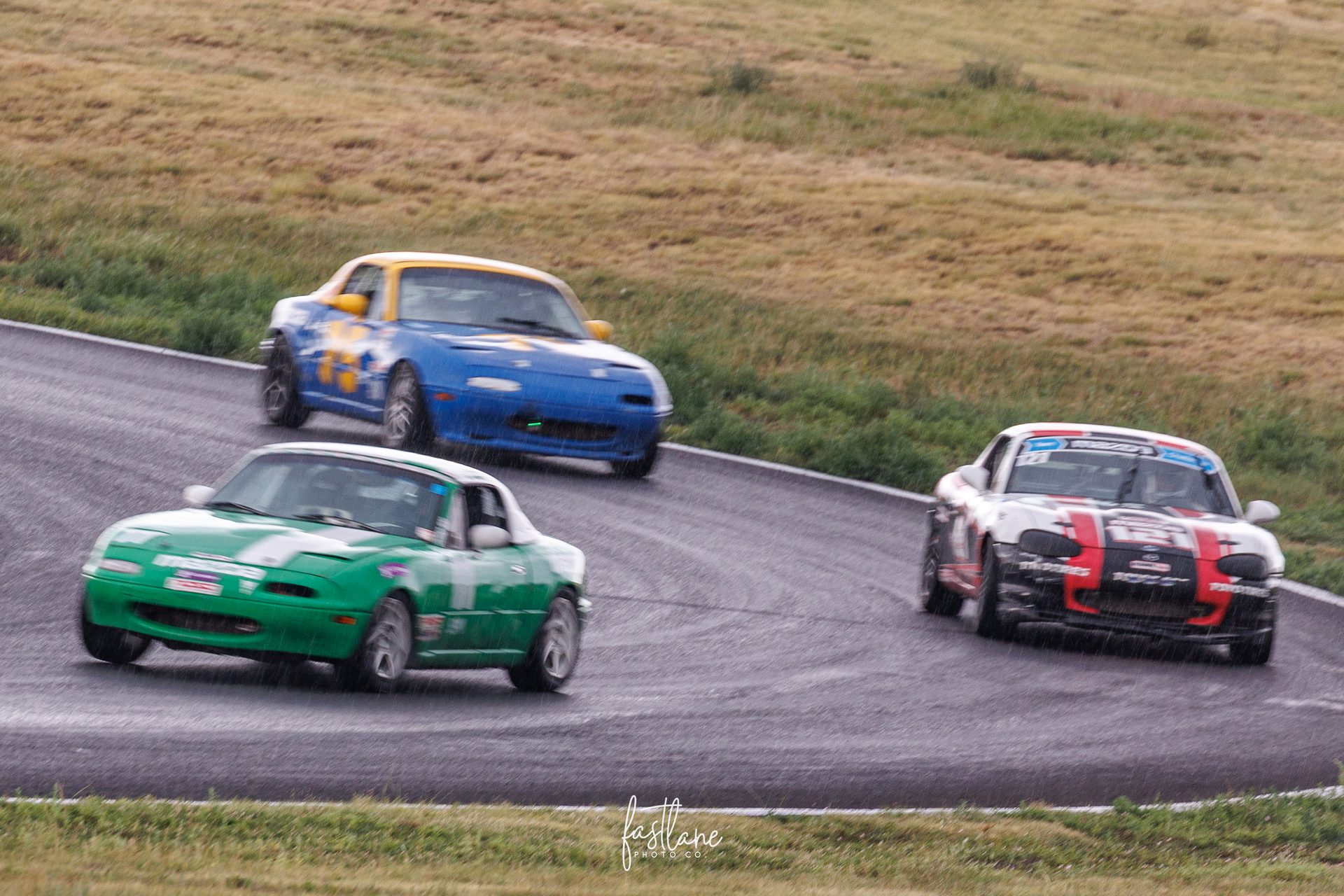 In a real car, the cost of a mistake is real. Your preparation has to account for that.
Step 1: Accept what the sim can't give you
Start with honesty. A sim trains your eyes, your hands and your racecraft. It doesn't teach your body what real risk feels like.
Porsche's sim coaching advice is blunt that sim racing is less physically demanding than real motorsport. Heat, vibration, G-loads and fatigue all show up on day one in a real car.
So don't expect to feel calm just because you're fast online. Expect to feel nervous, and plan for it. Our post on taking sim racing to real racing covers the big differences.
Step 2: Build a pre-session routine
Nerves love empty time. A routine fills it with something useful.
Write down what you'll do from the moment you reach your car to the moment you roll out. Keep it short and the same every time. For example:
- Walk the car and check what you're responsible for
- Go over the session goal (one goal, not five)
- Drink water, use the bathroom, put your gear on in the same order
- Review your first two or three corners
The routine isn't magic. It gives your brain a script, so you aren't improvising while your heart rate climbs.
One more tip from that same Porsche source: a warm-up of five to ten minutes gets the blood flowing, and the coach advises against stretching right before a session. Check that against your own coach, but it's a useful starting point.
Step 3: Use your sim time to practice what scares you
Here's where the sim earns its keep. Porsche's coach points out that many sim racers avoid the situations that make them nervous, like launching from a standing start. Practicing them leaves you "less nervous and more independent."
So pick the moments you dread in real racing, and rehearse them on purpose:
- Starts with traffic all around you
- Side-by-side through a corner with someone who won't give you room
- Recovering from a spin or off-track moment without panicking
- Rain or a low-grip session, if your sim supports it
You aren't training for speed here. You're training your response. When it happens in real life, it won't be the first time your brain has seen it.
Step 4: Visualize the lap, with your senses
Visualization sounds soft until you try it. Shift Up Now's racing mental performance guide recommends picturing the race using all your senses, and keeping the images positive.
Do it the night before and again in the paddock. See the grid. Hear the engine. Feel your hands on the wheel. Walk through your braking points and where your eyes go at each corner.
Keep the pictures on what you want to happen, not on what you're afraid of. If you catch yourself imagining the crash, reset and start that corner again.
Step 5: Focus on actions, not results
Most nerves come from caring about the outcome. Finishing position is mostly out of your control.
The same guide suggests concentrating on specific actions, like braking points, lift points and lane choices, instead of where you finish. Porsche's coach says something similar: stay in the moment, and save the analysis for after the session.
Give yourself one thing to do per lap. "Hit the apex on turn 3." "Smooth on the throttle." When you make a mistake, you have somewhere to put your attention besides the mistake.
If you want a place to write your goals and notes, the free Race Day Ready Pack has pages built for exactly that.
What to expect on the day
Your first real session will probably feel too fast and too loud. That settles. For most people, the new sensations stop competing for attention after a session or two, and the driving comes back.
Breathing helps in the meantime. Slow in through the nose, slow out through the mouth, a few times before you buckle in. Fanatec's sim-racing guidance also lists controlled breathing and positive visualization as ways to settle your nerves. None of this is a cure. It just takes the edge off.
And a sim license doesn't carry over to the real thing. Our post on why your iRacing license won't get you into NASA covers what you actually need before you reach the grid. Then read what to expect in your first wheel-to-wheel race so the day holds no other surprises.
You don't need to be fearless. You need a routine, some rehearsed responses, and a clear job to do each lap.
If you'd rather do this in a prepped car with a crew around you, our full-season arrive-and-drive seats are open for 2027 booking. Request a call and we'll talk through what fits.
Do you believe?
Sources: Porsche Newsroom: How to be a better sim racer, with Laurin Heinrich, Shift Up Now: Five Keys to Improving Your Mental Performance for Success in Racing, Fanatec: Maintaining Focus and Performance During an Endurance Sim Race. These are coaching and industry sources, not controlled studies, so treat the techniques as practical starting points, not guarantees. They're combined with my own racing experience.