
You got the call booked. Twenty-five minutes with a marketing manager who actually replied.
So you spend three days building the perfect pitch. And that's the mistake. The calls that turn into money are the ones where the racer talks the least.
 Photo by Vitaly Gariev on Unsplash.
The call that goes nowhere sounds like this
You open with your story. Then the car. Then the class, the series, the schedule, the livery.
Around minute twelve you get to packages. Bronze, silver, gold. You ask if they have questions. They say "this is great, send me something in writing." You hang up feeling good.
They never reply.
That call failed before you dialed, because you decided in advance that your job was to present. It wasn't. Your job on call one is to find out what this business is actually trying to fix, and whether racing can fix it. Everything else is guessing out loud.
The data says the same thing sales teams learned the hard way
This isn't a racing opinion. It's measurable in sales calls generally.
Gong analyzed 326,000 recorded sales calls. The reps who won deals talked less than the reps who lost them — roughly 57 percent of the call versus 62 percent for the losers. The winners also asked fewer, better questions. About 15 or 16 across a call. The reps who lost pushed closer to 20 and turned the conversation into an interrogation.
Two numbers to hold onto: talk less than the other person, and ask fewer questions than you think you need.
The Sponsorship Collective is even more direct about this for sponsorship specifically. A discovery call is not a sales meeting. It's closer to an interview. You are there to learn what you cannot find on their website.
Here's the split, side by side.
| The call that dies | The call that converts |
|---|---|
| You present your packages | You ask what they're trying to grow |
| You talk about lap times and class rules | You talk about their customers |
| You quote a price | You find out what range they work in |
| You send a generic proposal after | You build a proposal around what they told you |
| Ends with "send me something" | Ends with a date on the calendar |
Same racer. Same car. Completely different outcome.
The 25-minute agenda
You are running this call, even if they booked it. Have an agenda and say it out loud in the first minute.
Minutes 0-2: rapport, then stop. Two minutes of real conversation. Not politics, not the news. Where they're based, how long they've been at the company, something specific you noticed about their business. Then move.
Minute 2: confirm the time and the purpose. "I've got you for 25 minutes — still good? My goal today isn't to pitch you. I want to understand what you're trying to accomplish this year, and if there's a fit, I'll come back with something built for that."
That sentence does more work than any slide you could build. It removes the thing they were braced for.
Minutes 3-18: discovery. Their turn. This is most of the call.
Minutes 18-22: mirror it back. Repeat what you heard in your own words. "So the shop is busy in summer and dead in February, and you've spent money on radio that you couldn't track. Did I get that right?" When they say yes, they've just told you what your proposal needs to solve.
Minutes 22-25: next step. Not a price. A date.
The questions that do the work
Pick eight to ten. Not twenty. The Sponsorship Collective recommends narrowing it down to five to ten so it stays a conversation instead of a survey.
The ones I'd never skip:
- What are you trying to grow this year — awareness, foot traffic, hiring, something else?
- Who's your ideal customer? Describe the actual person.
- What marketing have you run in the last year, and what worked?
- What didn't work, and why do you think it didn't?
- Have you sponsored anything before? How did that go?
- When you spend money on marketing, how do you decide it worked?
- Who else is involved in a decision like this?
- What range should I stay inside so I'm not wasting your time?
That last one scares racers. Ask it anyway. Asking about budget range is normal in every other industry, and it saves you from building a proposal that was never affordable. If they say "it depends," that's fine — ask what they spent on their last marketing push instead.
Then shut up. The silence after a question is where the useful answer lives. Most racers step on it.
Building a good question list off the top of your head is hard. That's why we published a free pack of 37 sponsorship discovery questions, sorted by what you're trying to learn. Print it, keep it next to you on the call, and check off the ones you get answers to.
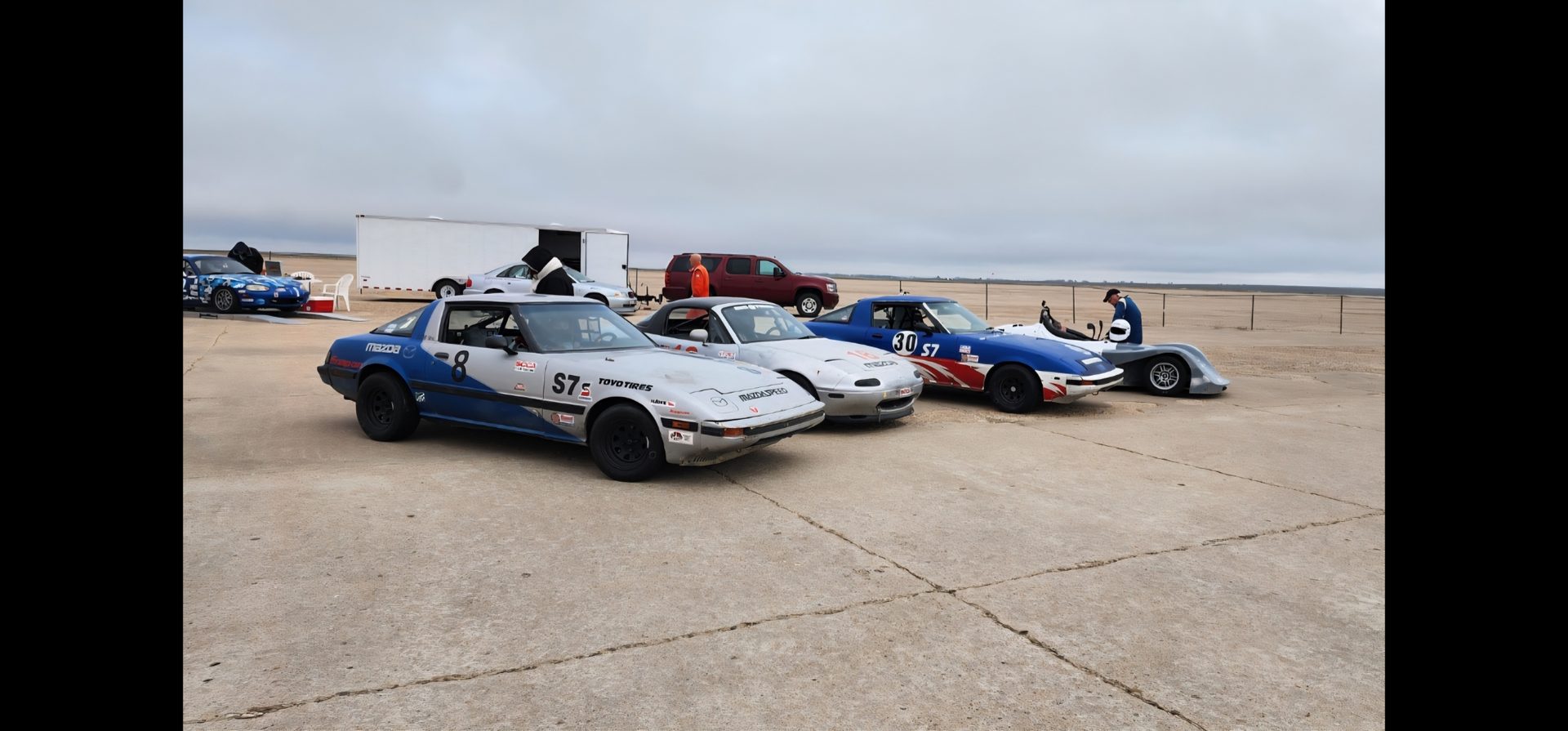 You can't design an activation until you know what the business actually needs. That's what the call is for. Photo: LeadFoot Racing.
Do not bring the proposal to the first call
If you show up with a finished deck and a price, you are telling them you already decided what they need before you met them.
Worse, you've capped the deal. Racers who lead with a number almost always lead with a number that's too low, because they're pricing their nerves instead of the value. Build the price after you know what they're solving for. Our guide on how to price racing sponsorship walks through the math once you have the inputs.
If they ask for a proposal in the first ten minutes, that's usually a polite exit, not buying interest. Answer it like this: "Absolutely. Give me fifteen minutes of questions first so what I send you is actually worth reading."
The close is one sentence, and it's not about money
Every call ends one of two ways. With a date, or with nothing.
"Send me something" is nothing. Email is where sponsorship deals go quiet, and you already know that if you've ever written a follow-up nobody answered.
So close on a calendar. "Based on what you told me, I want to put together two options built around February traffic. Can I walk you through it next Tuesday at 10, same call?"
Then send the invite before you get up from the desk. Booked while you're still on the phone is a different animal than "I'll reach out next week."
If they push back or hesitate, don't panic and don't discount. Hesitation is usually a question they haven't said out loud yet. We ranked the most common ones and how to answer them in sponsor objections, ranked.
What you do in the next hour matters more than the call
Within an hour, send a short recap email. Not a pitch. Five lines.
- Thanks, and one specific thing they said that stuck with you
- Your summary of their three goals, in their words
- What you're building for them and why
- The confirmed date and time of the next call
- Nothing to download, nothing to sign
That email is doing two jobs. It proves you were listening, and it becomes the outline of the proposal. If you got something wrong, they'll correct you in the reply — which is free intel most racers never collect.
And if the fit isn't there, say so. "Honestly, based on what you described, I don't think a car is the right tool for that this year." You'll lose that deal and keep the relationship. That's the trade that eventually pays.
The whole thing in one line
Ask more than you tell, mirror it back, and leave with a date.
That's it. The racers who land partners aren't smoother talkers than you. They just came in curious instead of rehearsed, and they know what happens after the call as well as during it. The same discipline runs through the five questions every sponsor will ask you — study the answers, then let them do the talking anyway.
If you want the full playbook — the discovery framework, the proposal that follows the call, the pricing method, and the follow-up sequence that closes it — that's The Ultimate Sponsorship Blueprint, $37. It's the version of this post with everything filled in.
Book one call this month and run it this way. One is enough to feel the difference.
Do you believe?
Sources: Gong — Mastering the Talk-to-Listen Ratio in Sales Calls, The Sponsorship Collective — Sponsorship Discovery Questions, The Sponsorship Collective — Sponsorship Sales Meeting Script, Speedway Motors — Race Car Sponsorship: The Meeting and Pitch. Call-behavior figures are Gong's published 2025 analysis of 326,000 sales calls. Everything else is drawn from those sources plus how we run sponsor conversations at LeadFoot Racing. No customer or survey data is claimed anywhere in this post.