
Search "is kart racing safe" and you'll find two kinds of pages. One says it's perfectly safe. The other is a personal injury lawyer's blog with scary numbers and no context.
Neither helps a parent standing at the edge of a track. So I read the actual studies. Here's what they say, and just as important, what they can't tell you.
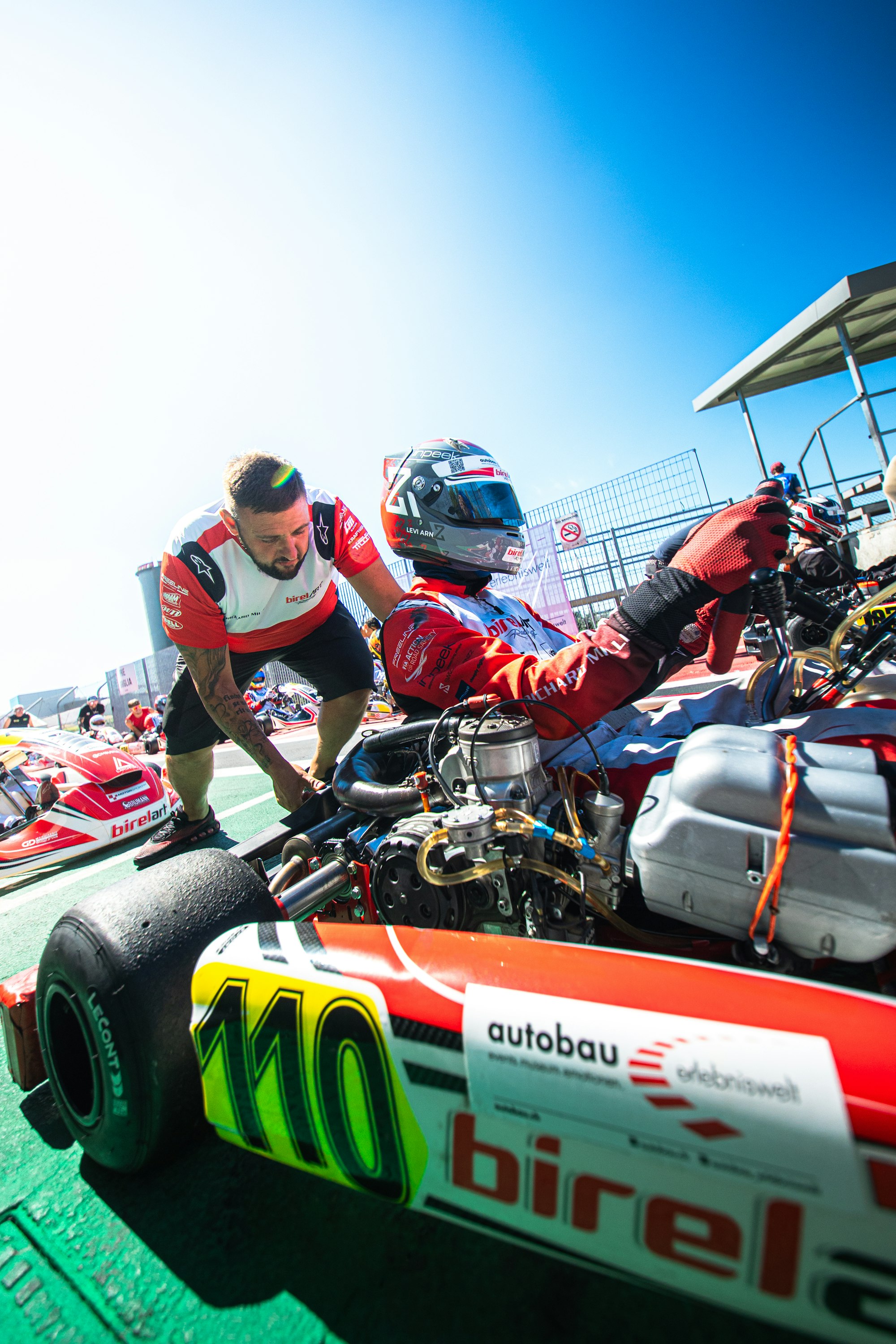 Photo by Levi Arn on Unsplash.
What the biggest U.S. study found
The best U.S. data comes from the National Electronic Injury Surveillance System, or NEISS. It samples hospital emergency departments across the country.
A study in the American Journal of Emergency Medicine looked at go-kart injuries from 2004 through 2023. It estimated about 34,561 emergency room visits over those 20 years, based on 1,015 sampled cases.
A few numbers stand out:
- 54% of the estimated injuries involved the head.
- 63.1% of patients were between 0 and 18 years old.
- The most common diagnoses were a closed head injury (31.8%), a neck or back strain or sprain (29.5%), and concussion (16.7%).
A separate NEISS analysis of go-kart craniofacial injuries from 2015 to 2024 pointed the same way. The head was the most injured site, followed by the neck, and kids 10 to 14 had the highest rate.
So the pattern is clear. When kids get hurt in karts, it's mostly head and neck.
What those numbers can't tell you
Here's the honest part. NEISS counts emergency room visits for go-kart injuries. It doesn't tell us how many kids raced, so it can't give you a true injury rate.
It also doesn't separate a kid at a rental track in street clothes from a kid in a sanctioned race with a helmet, neck brace, and a trained marshal crew. As far as the published abstract shows, those are all in the same pile.
That matters. A scary total does not mean a sanctioned, properly equipped race program carries the same risk as a birthday-party go-kart ride. It also doesn't mean it carries none.
Older articles quote bigger figures from the Consumer Product Safety Commission. The sources I found disagree with each other, so I'm not going to repeat them. Treat any precise "X thousand kids a year" claim with suspicion unless it names its year and source.
The trunk is the quiet risk
A recent study from a Dutch level-I trauma center added something the U.S. data misses. Researchers at Radboudumc in Nijmegen reviewed 14 kids, ages 4 to 17, hurt in kart crashes between 2015 and 2023.
It's a tiny sample, so don't build a worldview on it. But the details are worth knowing:
- Nine of the 14 crashed into a wall, tire stack, or barrier.
- Abdominal injuries were the most frequent serious injuries, followed by chest injuries.
- Only 9 of the 14 were reported wearing a helmet. Neck braces and protective clothing were each reported in 5.
The authors suggested protection aimed at the trunk, enforcing safety gear use, and considering minimum ages. A kart puts a small body low to the ground with very little around it. That's why leagues care about neck braces and rib protectors.
What the gear rules actually require
Rules vary by league and by age, and they change. Read your series rulebook every season. Here's the general shape in 2026, per a retailer's roundup of the major U.S. leagues:
| Item | What to expect |
|---|---|
| Helmet | Youth-rated helmet (CMR/CMS 2016 or an SFI 24.1 youth), usually within 10 years of manufacture |
| Neck brace | Required for junior classes in SKUSA and most of the others, unaltered with the original foam |
| Rib protector | Required by some leagues for younger drivers, recommended in others |
| Suit, gloves, shoes | Abrasion-resistant at minimum, kart-rated suit in some series |
I'd treat the rib protector as non-negotiable even where it's only "recommended." It costs little next to a trip to the ER. I walk through what to buy first, and in what order, in First-Year Karting Equipment.
Also, helmets expire and get damaged. If it's been dropped hard or it's past the date on the label, replace it.
What parents control
You can't make karting risk-free. You can stack the odds.
- Fit the gear to the kid. A neck brace that's too big or a helmet that shifts is worse than it looks. Have the kid sit in the kart with everything on.
- Never alter safety gear. Cutting foam out of a neck brace to make it comfortable can make it illegal and less effective.
- Watch the barriers. Most serious crashes in the Dutch study hit something solid. Ask what's at the corners: tire walls, barriers, run-off space.
- Ask who's on the flag stand. A good track has trained marshals and a clear plan for a hurt driver. Our questions to ask a team cover this.
- Learn the concussion basics. Head injuries lead the data. A kid who's dizzy, confused, or "just not right" after a hit sits out, every time, even if they beg.
- Check coverage. Know what your health and liability insurance does and doesn't do. We cover that in the insurance conversation.
We built a free Race Day Ready Pack with checklists so the gear check doesn't depend on anyone's memory at 6 a.m. in a cold paddock.
So, is youth karting safe?
It's a real motorsport with real risk, and I'd never tell you otherwise. The research shows head, neck, and trunk injuries, and it shows kids are a big share of them.
It also shows that gear, track conditions, and adult supervision are the things you can influence. Families who take those seriously are making a very different bet from a casual rental-track ride.
If you're weighing the decision, the Karting Parents Pack walks through gear, track selection, costs, and what to ask before you sign anything. It's $39 and written for exactly this moment.
Do you believe? Believe in the sport, and respect it enough to prepare.
Sources: American Journal of Emergency Medicine, head, neck, and spinal injuries in go-karting (abstract), National Epidemiology of Go-Kart-Related Craniofacial Injuries, 2015-2024 (PubMed), Go-Kart Incidents in a Level-I Trauma Center in the Netherlands (PMC), FAST RACER 2026 karting safety gear rules roundup. Figures verified against the published abstracts as of November 2026. Gear rules change by league and season, so confirm against your series rulebook. Everything else is based on my own racing experience.