
You find the "Sponsorship Requests" link at the bottom of a brand's website. You spend an evening on the form. You hit submit and feel like you did something.
Then nothing. Here's the part most racers miss: a lot of those forms said no before you typed your name. It's in the fine print.
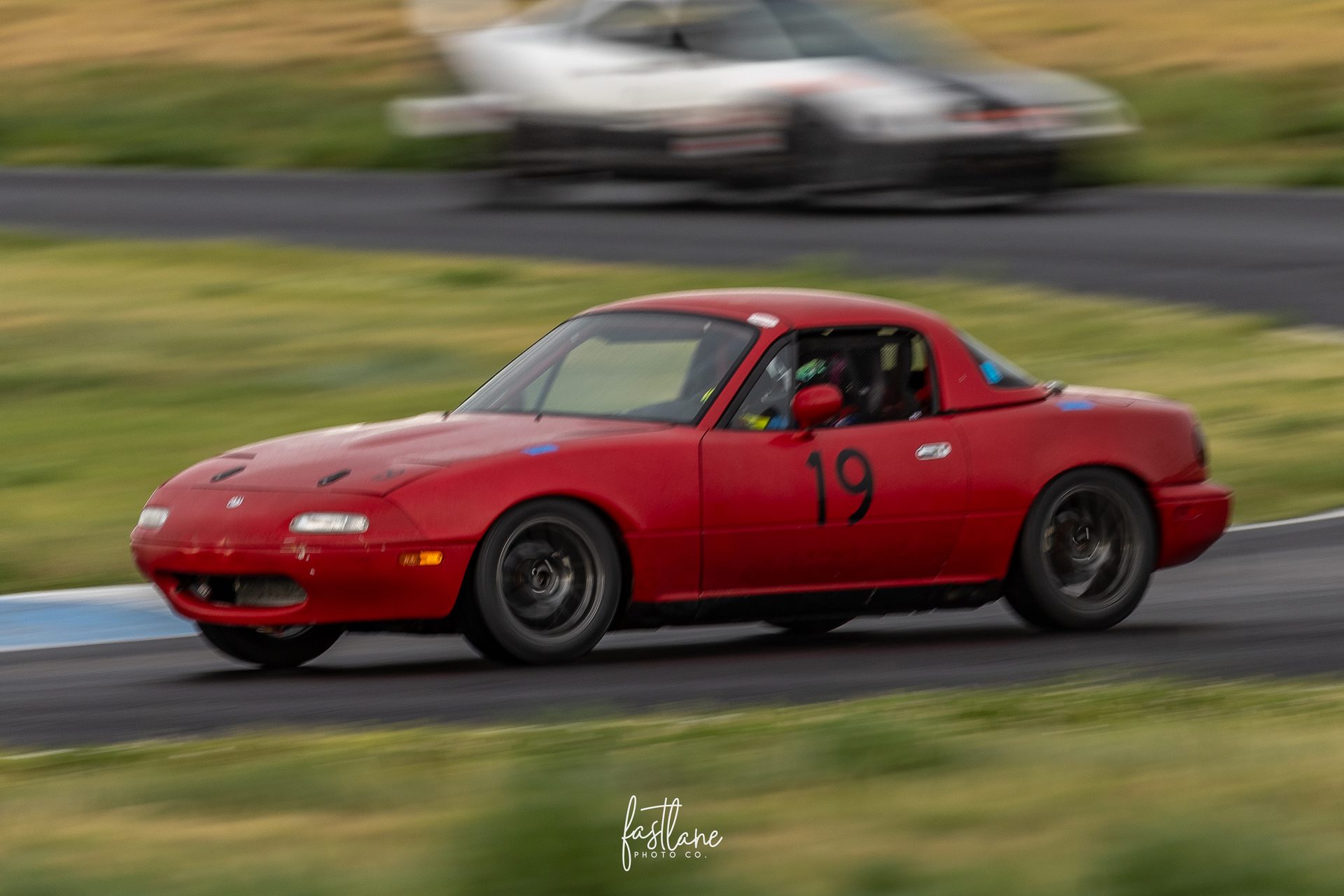 Our #19 at High Plains Raceway. A brand's form doesn't care how this lap went. It cares whether you fit its rules.
So I read six real sponsorship pages this week, from motorsport brands and big companies alike. Below is what they actually say, what the one open form asks for, and why your proposal has one shot to get it right. That last part is why Proposal Review exists, and I'll get to it.
What the fine print says
Here's the scorecard, quoted from each company's own page.
| Company | What the page says | Door open to a grassroots racer? |
|---|---|---|
| Boeing | Won't fund "requests that benefit an individual person (including athletes) or family" | No |
| Spectro Oils | "Sponsoring of individual athletes is excluded"; supports teams "on a professional level" | No |
| Allstar Performance | "Please do not email us individual race team sponsor requests" | No, not directly |
| Motorex | Describes support for "top international teams" | Unlikely |
| Hammer Nutrition | The request page covers USA-based events only | No |
| Toyota | Has a talent category that lists "Motorsports" | Yes, with six months' lead time |
Six is a small sample, and I picked them by hand. It's not a survey of every brand. But the pattern is hard to miss. Two of the six say in writing that they exclude individual athletes. Spectro even explains why: demand is bigger than what it can fund. It adds that not every applicant will hear back.
None of this means those brands hate racers. Allstar says it spreads its support across sanctioning bodies, racetracks and advertising media, to help more racers at once. That's contingency and series money. It reaches you through the series you race in, not through your inbox.
The one open form, and what it wants
Toyota's form is the interesting one. It takes talent proposals, and "Motorsports" is on the list. But read the rules before you get excited.
- Six months' lead time. The form says it can't consider requests with less than six months' notice. If your first race is in April, that request needed to go in around October.
- A 4-8 week wait for a response.
- One sitting. The form can't be saved and picked up later. Every question has to be answered.
Boeing runs on a similar clock. It aims to answer within six weeks and tells you to plan on six months to a year between the request and the start date.
Now look at what Toyota asks for. Proposed assets and benefits. Audience demographics. Follower counts and engagement rates. A media valuation. Proposed pricing. For talent, examples of past partnership work and references.
Read that list again. It's not just a form. It's a free outline of what every serious proposal needs, written by a brand that reviews them for a living. If you can't fill in every line, you're not ready to submit. You're not ready to pitch the local shop either.
Your proposal gets one shot
Here's the hard truth about a form like this. There's no follow-up call where you get to explain. No "sorry, here's the updated deck." You get a few text boxes and an upload slot, and someone reads it once.
That's the exact moment you want a second set of eyes. It's why we built Proposal Review. You send me your deck, proposal or pitch. I mark it up, record a walkthrough of the markup, and rewrite your two weakest pages. You get it back within 5 business days, with one follow-up round. It's $147.
I can't promise any brand says yes. Nobody honest can. What I can do is tell you where a reviewer will stop reading, before a reviewer does.
A form doesn't let you explain later. Make the first read the good read.
Where the money actually is
If most forms close the door, where do you knock? Three places, in order.
- The people who already know you. A local owner can say yes in a week, no portal needed. Start with how to find local sponsors for racing.
- The local operator, not corporate. A franchise owner often has a marketing budget the national form never sees. I wrote the full case in pitch the franchisee, not corporate.
- The series programs. When a parts brand says it supports racers through sanctioning bodies, that's your cue to check your series' contingency list. Our list of companies that sponsor grassroots racers is a place to start.
Save the big forms for when you can answer every question with real numbers. When you get there, the form is a good door. Just walk through it with your best work.
Before you hit submit
Do three things before you fill out any brand form.
- Read the eligibility section first. If it says no individuals, believe it. Move on.
- Count back six months from the start date you're asking for.
- Draft your answers in a document first, not in the form. Then get them checked.
Want expert eyes on it before a brand sees it? Send your proposal to Proposal Review. If you only need your opening email checked, The Pitch Inspection is $39 and comes back in 5 business days. Either way, don't spend your one shot on a first draft.
Sources: Boeing, Sponsorship Process, Criteria and Guidelines, Toyota sponsorship proposal form, Spectro Oils, Sponsoring Request, Allstar Performance sponsorship page, Motorex, Sponsoring, Hammer Nutrition, Event Sponsorship Request. All pages read November 2026; companies change these rules, so check the live page before you apply. The six were picked by hand and are not a survey. The Motorex "unlikely" call is my read: its page describes top international teams but doesn't state a rule on individuals. LFR has never applied through any of these forms, and I'm not claiming results from them.
Do you believe?