
You can spend thousands on a race car and give it all away with a tire gauge. Tire pressure is the cheapest lap time on the whole car. It costs nothing to change, takes two minutes, and most new drivers set it once in the paddock and never touch it again.
That's the mistake. The number you set cold is not the number that matters. What matters is the pressure once the tire is hot and working. Get that wrong and the car pushes, snaps, or just feels vague. Get it right and the car finally does what your hands are asking.
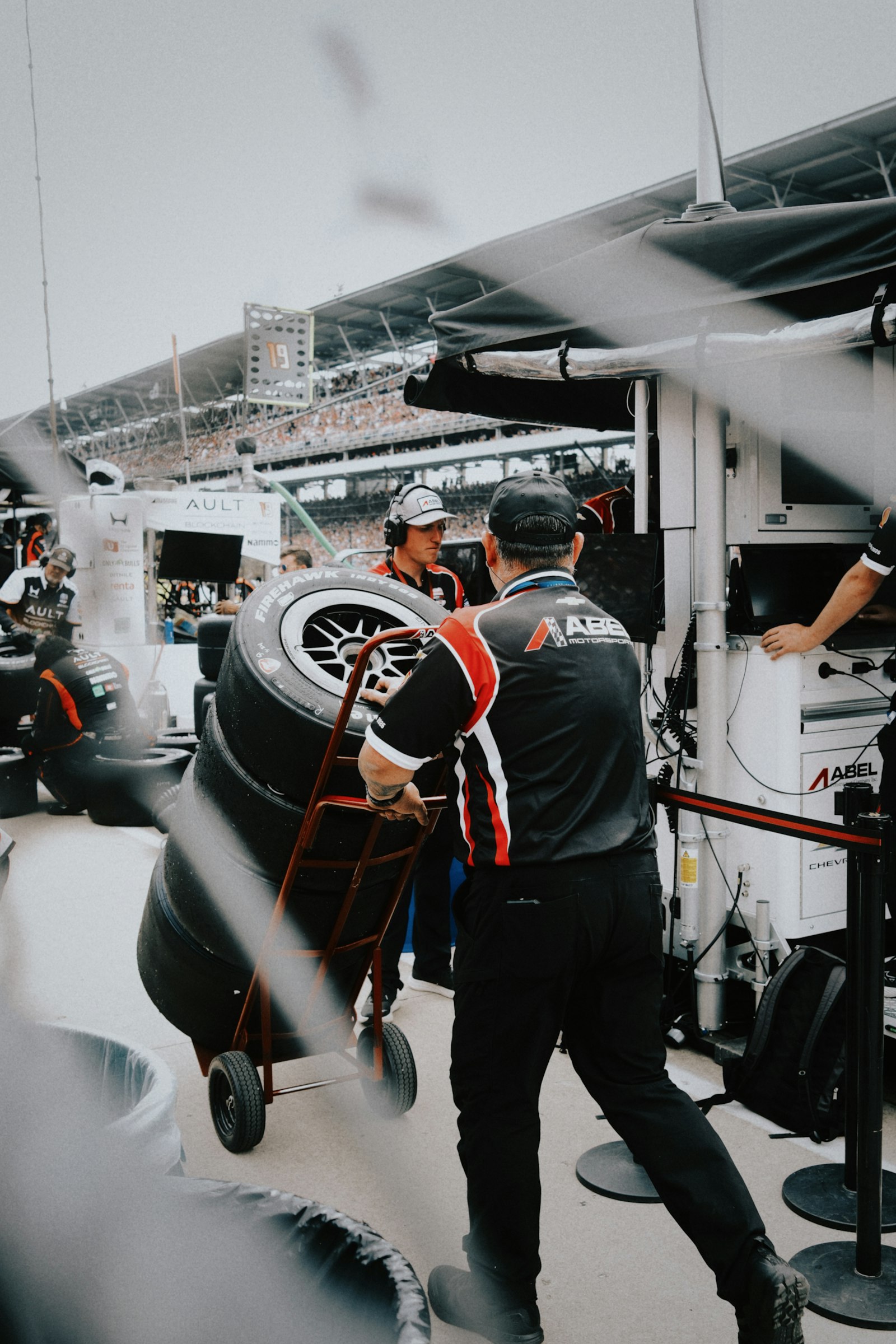 Photo by Logan Weaver on Unsplash.
Cold Pressure vs. Hot Pressure
Here's the whole idea in two sentences. You set a cold pressure in the paddock before you run. After a few hard laps the tire heats up, the air inside expands, and the pressure climbs to a hot pressure. That hot number is the one the car actually drives on.
So the cold pressure is just a starting guess. Your real target is the hot pressure.
For a Spec Miata on the spec Toyo Proxes RR, most fast guys land somewhere around 36 to 40 psi hot. That's the window you're aiming to be in after a session. Where you start cold depends on how much the tire grows, and that changes with the weather.
Think of it like an oven. You don't care what the dial says when the oven is cold. You care what temperature it hits once it's running.
The Pressure-Growth Math
The gap between your cold pressure and your hot pressure is called growth. On a Spec Miata you'll usually see about 6 to 9 psi of growth from cold to hot after a real session.
So if you want to end up around 38 psi hot, you start somewhere in the 29 to 32 psi cold range. Colder day, more growth headroom, start a touch lower. Hot day, less headroom, start higher.
There's a cleaner way to do it than guessing. Race engineers use a scaling factor: your target hot pressure divided by your cold pressure. On a track car that number usually lands between 1.2 and 1.5. Run it backwards to find your cold setting:
Cold pressure = target hot pressure ÷ scaling factor.
Say you want 38 hot and your car tends to run a 1.25 scaling factor. That's 38 ÷ 1.25, which is about 30 psi cold. Run it, check your hot number, and correct.
The point isn't to memorize a formula. The point is that cold pressure is something you calculate toward a target, not something you copy off a forum.
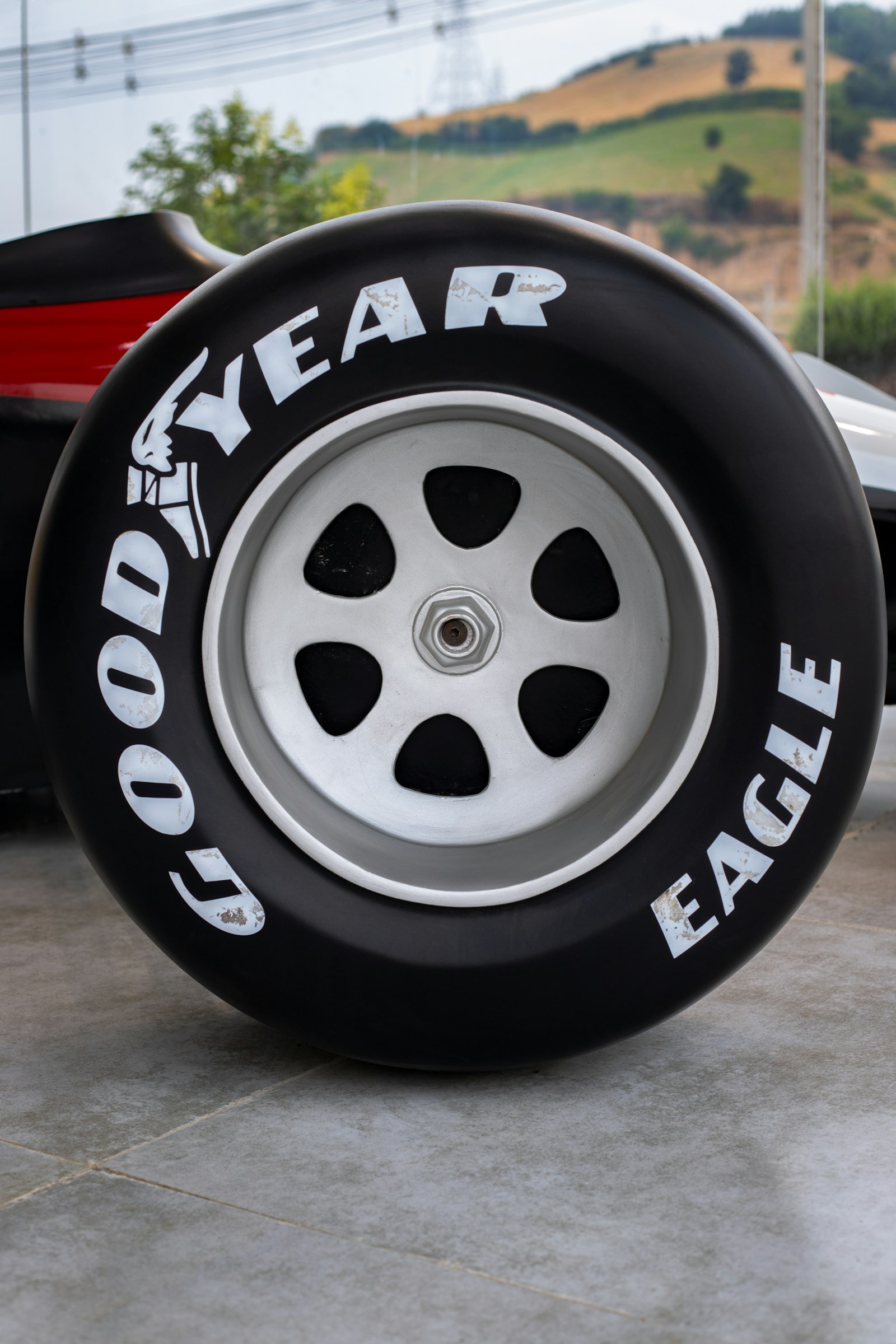 Photo by Amir Abbaspoor on Unsplash.
How to Actually Set Them at the Track
You don't need fancy gear. You need one good digital gauge and a notebook. Here's the routine we run.
- Set your best-guess cold pressures before the session. Write them down with the time and the air temperature.
- Run five or six representative laps. Not a warm-up crawl and not a single hot lap. You want the tires at the temperature they'd see in a race.
- Come straight in and check hot pressures immediately. They start dropping the second you park. Read fast.
- Bleed down to your target if you're over. Note how much you let out of each corner.
- Write everything down. Cold pressure, hot pressure, air temp, track temp, and the growth for each tire.
Do that for one weekend and you'll have real data instead of hunches. Do it for a season and you'll walk into the paddock already knowing your cold numbers before you even open the trailer.
This kind of pre-session routine is exactly the stuff we drill in our Kart to Car program. New drivers show up thinking racing is all bravery in the braking zone. Then they learn the weekend is won by the person with the gauge and the notebook.
Weather Changes Everything
The single biggest reason your "known good" numbers stop working is the weather. Air is a gas. Temperature moves it.
A solid rule of thumb: pressure changes about 0.1 psi for every degree Fahrenheit of change in air or track temp. That sounds tiny until you stack it up. A 7 a.m. qualifying session at 45 degrees and a 2 p.m. race at 95 degrees is a 50-degree swing. That's roughly 5 psi of difference from the same tire before you've even turned a wheel.
So the cold pressure that was perfect in the cool morning will be way too high by the afternoon. Same tire, same car, totally different day.
Two moves handle this:
- On a hot day, start lower cold. The tire will grow more, so you need less to begin with.
- On a cold day, start higher cold, and know the tire may take an extra lap to come up to temperature and pressure.
If ambient temp drops a few degrees between sessions, bump your cold settings up a hair to match. It's small, but at this level small is where the lap time hides.
Don't Chase One Magic Number
New racers want somebody to hand them one perfect pressure. It doesn't exist. The tracks we run, High Plains Raceway and Pueblo Motorsports Park, have different surfaces, elevations, and corner loads. What's fast at one isn't automatically fast at the other.
Tire pressure is also a setup tool, not just a safety setting. Adding air stiffens the tire like a stiffer spring. A little more front pressure can wake up turn-in. A little less can calm a nervous car. Once you're comfortable hitting your hot target, pressure becomes a dial you can tune with, corner by corner.
That's the fun part. But you earn it by nailing the basics first: know your target hot pressure, know your growth, adjust for weather, write it all down.
We put the full pre-session checklist, including tire pressures, into our free Race Day Ready Pack so you're not trying to remember any of this at 6 a.m. in a cold paddock. Grab it, print it, and stop leaving lap time in the pits.
Do you believe?
Sources: Mazda Racers — Under Pressure setup guide, 949 Racing / SuperMiata — Using a Tire Pyrometer, Your Data Driven — How to Set Your Racing Car Tyre Pressures. Pressure ranges and the temperature-to-psi rule verified against these published sources as of July 2026, plus our own race-weekend notes.