
A Spec Miata engine makes about 128 horsepower. A fresh one from a name builder starts at $7,495.
That number stops people cold. It shouldn't. You're not paying for horsepower — the rules won't let anybody sell you horsepower. You're paying for the right to keep the power you're already allowed to have, for as many hours as possible.
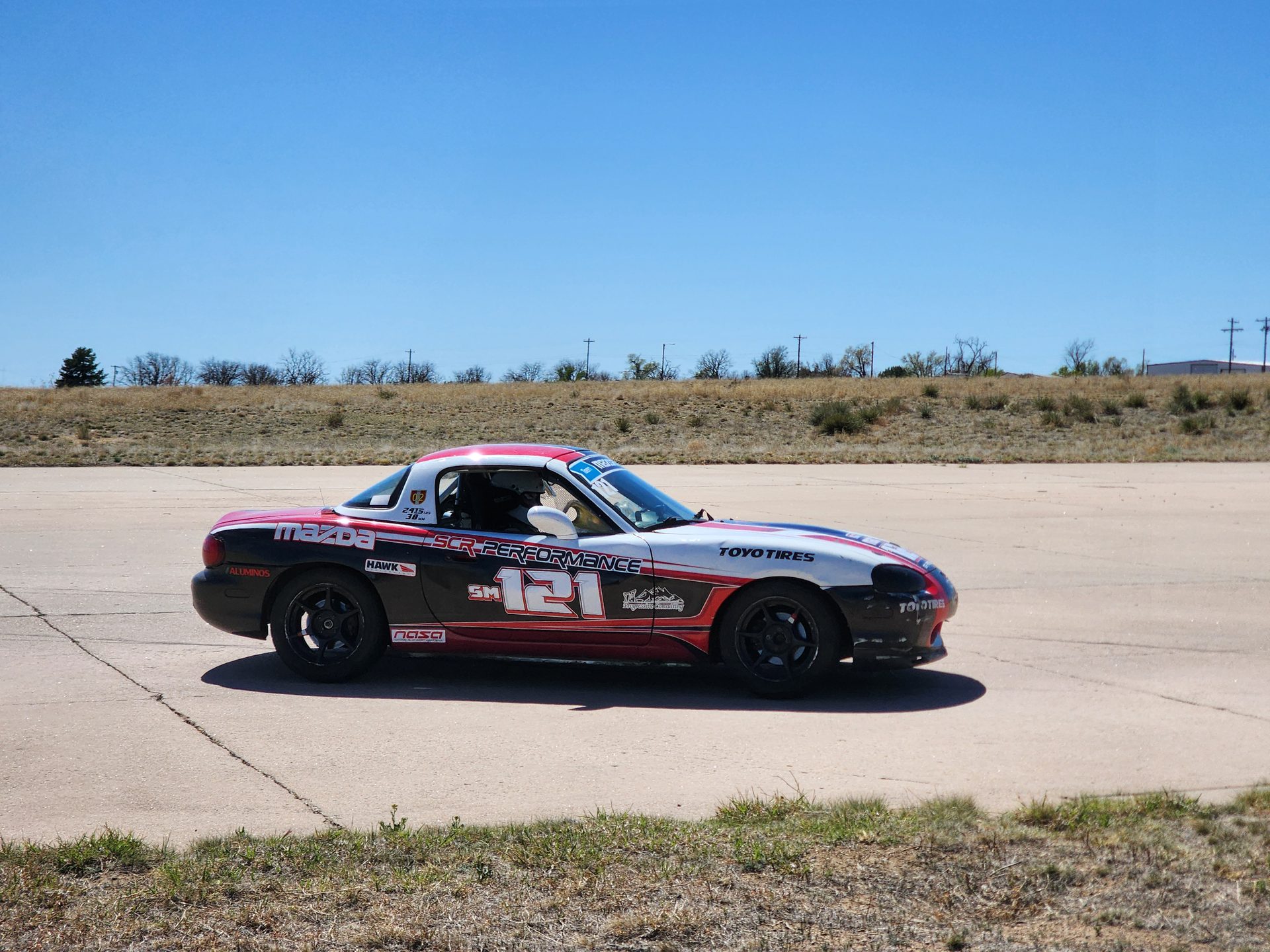 Car #121. The engine in it is worth about a third of what the whole car is worth.
A Spec Miata Rebuild Isn't a Normal Rebuild
Here's what makes this different from freshening a street motor.
The rulebook requires stock Mazda parts inside the engine unless a rule says otherwise. No balancing. No blueprinting. No lightening, no polishing, no other modification of the moving parts. The valve job is a stock three-angle cut. Coatings inside the engine — thermal barrier, anti-friction, anodizing, isotropic finishing — are out.
Mazda tightened this on purpose. After the 2014 Runoffs turned up head work well past what the class intended, Mazda Motorsports issued a memo pulling it back, adding weight penalties for approved head modifications and pushing for season-long compliance checks. The stated goal was returning the class to "low cost, fun, competitive."
So a builder isn't selling you a trick. He's selling you measurement discipline inside a very narrow legal window, and an engine that passes tech every single time.
The value in a Spec Miata engine build isn't power. It's precision and reliability that survive a protest.
The One Published Price You Can Anchor On
Most Spec Miata engine builders don't post prices. Rossini Racing — one of the best-known names in the class — just says call for details and pricing. That's not shady. Core condition, head condition, and how much of the engine you want dressed all move the number.
East Street Racing does publish, and it's the cleanest public anchor I know of:
- ESR Racing Engine, long block: from $7,495 with a core sent ahead
- Fully dressed: $7,995 to $9,495, depending on the core arrangement
- Core charge: $1,500, refundable when your core shows up
- Quoted output on the 90/93 engines: 127/128 hp, Dynojet SAE
When you call around, ask what's actually in the box. Dyno sheet? Gaskets and seals? Accessories bolted on, or bare? Two quotes that look $1,000 apart are often the same price once you finish that list.
What a DIY Rebuild Really Saves
The machine work is not the expensive part. Published shop rates make that obvious — one Midwest engine shop lists hot-tanking a block at $70, deck resurfacing at $150, three-angle valve seat cutting at $10 per seat, crank polishing at $100, and boring with a finish hone at $40.
Add it up on a 16-valve four and machine work lands in the hundreds, not the thousands. Parts are OEM Mazda by rule. The rest is your labor.
I'm not going to hand you a single DIY total, because every core is different and anyone who gives you one precise number is guessing. What I will tell you is what you're actually buying when you pay a builder instead: someone whose reputation depends on that engine being legal, tight, and still making its number in August.
That matters more than it sounds. A home rebuild that lets go in the middle of a season doesn't just cost you the engine. A competitive Spec Miata weekend runs $2,500 or more in consumables alone — tires, entry, fuel, pads, fluids. Blow up on Saturday morning and that money is already spent. We break the rest of those numbers down in the hidden costs of owning a race car.
The Four Options, Side by Side
| Option | What you actually get | Money | Best for |
|---|---|---|---|
| Top-end refresh | Head off, valve job, timing components, seals. Block stays in the car. | Machine work in the hundreds, plus OEM parts | Car runs fine, compression is fine, you want reliability |
| Full DIY rebuild | Everything apart, machined, reassembled by you | Machine work + full OEM parts + your weekends | You have the space, the tools, and the patience to measure |
| Built engine from a known builder | A legal, dyno'd, warrantied-by-reputation engine | From $7,495 published at ESR; most builders quote by phone | Front-running, or you don't have a shop |
| Don't own the engine at all | Somebody else's problem | Full-season seat at LFR, priced by car and package | A full season with no trailer, no storage |
When Renting Beats Rebuilding
Run the honest math before you buy a spare motor.
A race-ready Spec Miata is $10,000 to $35,000 for the car alone. Add a trailer, a tow vehicle, storage, and a $7,500 engine sitting on a stand as insurance. That's a five-figure commitment before you turn a lap.
LFR rents arrive-and-drive seats by the full season — car, crew, coaching and data every session, fuel, hospitality, for six events, paid in full before the season starts, with no damage deposit. Pricing depends on the car and package, and the entry fee goes straight to the sanctioning body. If the engine grenades, that's our balance sheet, not yours.
That's not "cheaper always." Race a lot, wrench yourself, and keep the car for years, and ownership wins on cost per weekend. What renting buys you is the engine risk, the trailer, and the storage off your plate while you find out whether this is your sport. I laid out both sides of that in arrive-and-drive vs. owning a race car.
Budget in Hours, Not Seasons
Engines don't die of old age. They die of heat, over-revs, and neglect.
Rossini claims front-runners have campaigned his engines for more than 80 hours of race time without a refresh. Take a builder's own marketing at builder's-marketing value, but the framing is right: hours are the unit that matters, not calendar years.
Three things that actually extend the number:
- Watch oil temp and water temp every session. The cheapest engine insurance you will ever buy is a gauge you actually look at.
- Log your hours. A club weekend gives you a couple of hours of engine time, not ten. Write it down and you'll stop guessing about refresh timing.
- Own your downshifts. A missed gear is the single most expensive mistake available to you in that car.
If you want the whole season picture — engine, tires, entries, tow — start with what a Spec Miata season actually costs.
Here's the part nobody says out loud. For most grassroots racers, $7,495 isn't a maintenance decision. It's a season-ending one.
That's a funding problem, not an engine problem. The First Sponsor System is the $67 kit we built to fix it — the templates, the prospect research, and the pitch structure that turns a local business into a line item that covers your motor.
Do you believe?
Sources: East Street Racing — ESR Racing Engine NA6, Rossini Racing Engines, Mazda Motorsports — Memorandum: Spec Miata Engine Rules, Kalamazoo Engine Machine published pricing, SCCA Car Classifications, NASA 2026 Spec Miata Rules. Engine and machine-shop prices verified against published listings as of August 2026; builder pricing changes, so call before you budget. Always check the current SCCA GCR or NASA rule set before ordering engine work — the rules are what make a rebuild legal, not the builder.