
Ask ten track-day regulars how often they change their oil and you'll get ten answers. All ten will sound sure of themselves. One Grassroots Motorsports poster put it well: you'll hear ten different answers and they'll all be correct.
That's not very helpful at 6am in the paddock. So here is the honest version. What's settled, what's opinion, and how to set your own number.
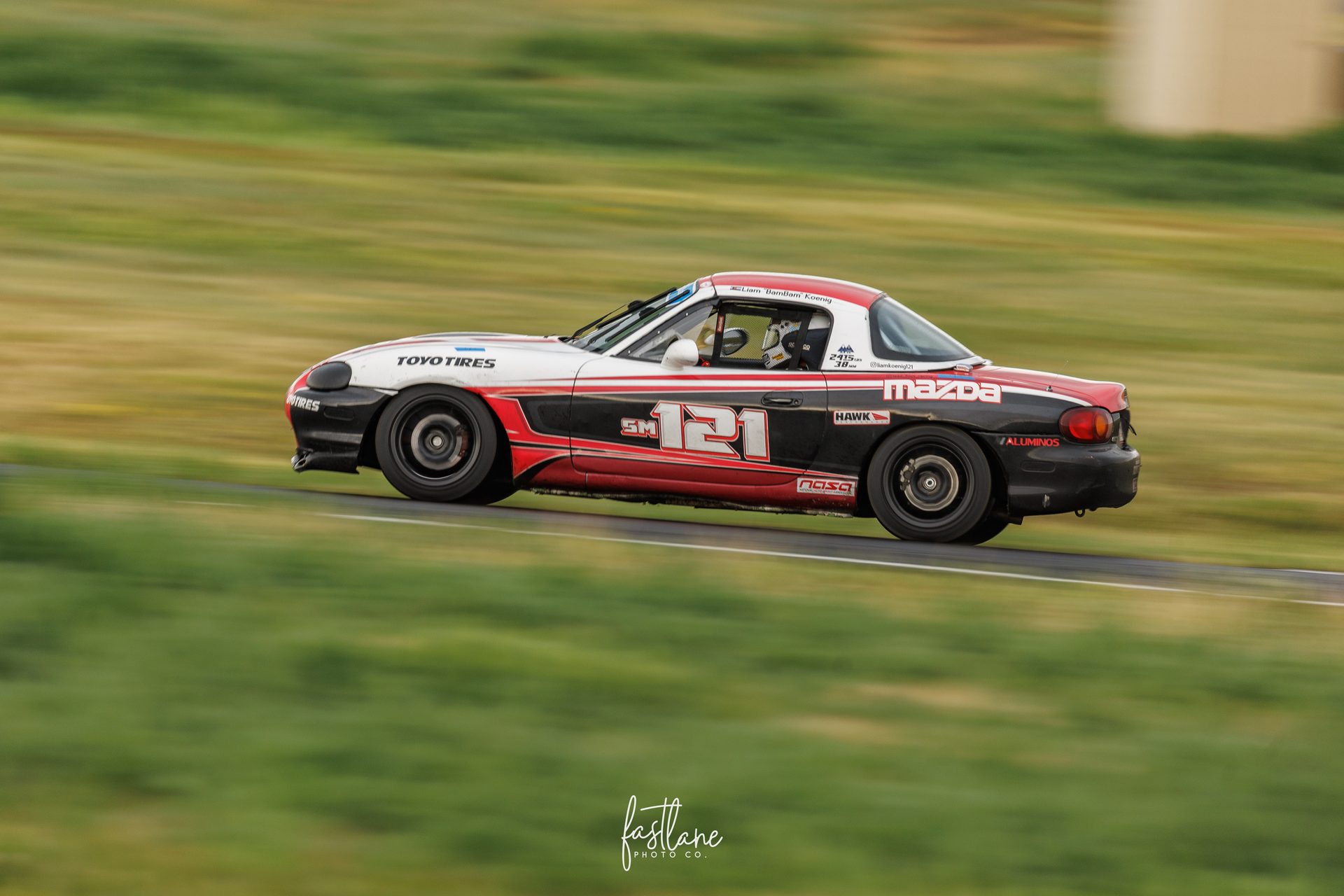
Why track driving is harder on oil than street driving
Your street car spends most of its life at part throttle. On track, the engine sits near full load and high rpm for 20 minutes at a time. Oil temperature climbs, and it stays up.
Heat is the main enemy. One widely repeated rule of thumb says oil oxidation roughly doubles for every 10 degrees C of extra temperature, and gets serious once the sump is past about 120 to 130 C. That comes from forum posters citing studies, so treat it as a guide, not a lab result. The direction is right, though. Hotter oil wears out faster.
The second enemy is fuel. Hard driving, rich mixtures and cold starts can push unburned fuel past the rings and thin the oil. How bad that gets varies a lot by engine. Some owners report almost none after ten track days. Others see measurable dilution after two. You can't tell by looking at it.
Which oil weight should you run?
Start with your owner's manual. It's the one source that knows your engine's clearances.
Beyond that, track folks lean one of two ways:
- Stay with the factory weight and change it more often. This is the safe default, and it's what most beginners should do.
- Go one step thicker on the hot number, such as a 10W-40 where the manual says 5W-30. The second number is the one that matters for heat. Several MX-5 owners on the Mazda club forums run a full synthetic 10W-40 on track, paired with a big oil cooler and an oil temperature gauge.
Thicker is not free. A very thick oil can struggle to get into small clearances, especially when cold. Some manufacturers publish a different oil for track use. Ford has done this on certain Mustangs. If yours does, follow it. If your manual says nothing, don't go more than one step off.
Full synthetic is the common pick. Not everyone agrees. One poster in that same thread argued synthetic is overkill and that cheap oil changed often works fine. It's a fair point. The thing nobody argues is that clean, topped-up oil beats expensive, neglected oil.
How often should you change it?
Here are the ranges real people use. None of them is official.
| Approach | What it looks like | Who it fits |
|---|---|---|
| Factory severe-service interval | The shorter schedule in your manual, often around 5,000 miles | Occasional track days, a daily driver |
| After every track weekend | Fresh oil before each event or right after | Racers who want the margin and accept the cost |
| Every one or two weekend events | The guideline a racing crew member gave The Drive for track and race cars | Regular club racers |
| By hours on track | Estimate hours per event, change at a set total | Racers who log their sessions |
| By oil analysis | Send a sample, change when the lab says | Anyone who wants proof instead of a guess |
At LFR we change oil and filter about every other race weekend, not every 5,000 street miles. That's a number for our cars and our habits. It isn't a rule for yours.
If you only do a few track days a year, the severe-service interval in your manual is a sensible floor. Change it before a big event, not after, so the fresh oil is the oil doing the hard work.
Oil temperature matters more than mileage
One forum member said that if you don't have high heat or foaming, the oil doesn't know it's on a racetrack. There's truth in that. A cool engine with good airflow is gentler on oil than a hot one, no matter how many miles it did.
So watch the gauge. If your car has an oil temperature gauge, learn what normal looks like. If it doesn't, a gauge is one of the cheapest forms of engine insurance you can buy.
Cars without a factory oil cooler can run hot on a Colorado August day at altitude, when thin air means less cooling. One owner of an older MX-5 fitted a cooler after seeing 110 to 115 C on a very hot day. If your oil temp keeps climbing session after session, come in a session early. Nobody has ever regretted parking a car one session too soon.
Cold matters too. In winter, oil needs time to come up to temperature before you use the full rev range. We covered that in our winter track days guide. If you add an oil cooler, get one with a thermostat so it doesn't overcool the oil in cold weather.
Is a used oil analysis worth it?
For many people, yes, once. A lab report on your used oil shows viscosity, fuel dilution, metals and additive levels. Forum posters and The Drive both point to labs such as Blackstone for this. Prices vary, and one UK owner quoted roughly the cost of an oil change.
Do it like this. Run your normal interval through a couple of track days. Send a sample. If viscosity is in spec and fuel is low, you've earned the right to keep that interval. If not, shorten it. You'll know your engine instead of guessing.
What to check at the track
Oil is cheap. Engines aren't. Before each session:
- Check the level on flat ground with the engine off for a few minutes.
- Look under the car for fresh drips.
- Make sure the filter and drain plug are tight.
- Carry a quart of the right oil in your kit. It's on our packing list for a reason.
After a hard session, check the level again. Some engines burn a little oil on track. That's normal. A big drop isn't.
The short answer
Use the oil your manual calls for, or one step thicker on the hot number if you're running hard in the heat. Change it more often than your street schedule, watch oil temperature, and let an analysis settle the argument. Skip the myths and trust your own numbers.
If you want the whole weekend sorted, including checks like these, the free Race Day Ready Pack puts prep, packing and setup tracking in one place.
Do you believe?
Sources: The Drive: How Track Days Affect Your Car's Maintenance Schedule, MX-5 Owners Club forum: What engine oil for track days, Grassroots Motorsports forum: oil change interval for HPDEs, Bob Is The Oil Guy: What temperature does synthetic oil degrade at. Forum material is owner opinion, not lab data, and is labeled that way above. Always follow your engine maker's guidance, and confirm your own interval with an oil analysis. Checked October 2026.