
Most racers treat LinkedIn like Instagram with a collar on. They send a connection request, attach a 300-word pitch, and wait.
That's backwards. LinkedIn is the best tool in grassroots motorsport for finding out who to pitch. It's a mediocre place to actually pitch them. Once you flip those two jobs around, it starts working.
 Photo by LinkedIn Sales Solutions on Unsplash.
Why the platform is worth your time at all
Instagram has more racers on it. LinkedIn has more people who can sign a check.
LinkedIn's own advertising audience data, cited across marketing research roundups, puts roughly 65 million business decision-makers and about 10 million C-level executives on the platform. Those aren't fans. They're the marketing managers, owners, and partnership leads who control the budget line your sponsorship would come out of.
That's the whole advantage. On Instagram you're guessing which DM inbox a brand actually reads. On LinkedIn, the person's name, title, tenure, and current priorities are printed on the page.
I ranked every outreach channel by real response data in cold DM vs. cold email. LinkedIn landed in B tier there for exactly this reason. Great at finding the human. Second-best at pitching them.
Step 1: Fix your profile before you send anything
Every request you send drives traffic back to your page. If your headline says "Student at Anytown High School," the person you're pitching has no idea why you're in their inbox.
Three fixes, twenty minutes total:
- Headline. Make it what you do, not where you sit. "Spec Miata driver, NASA Rocky Mountain | Partnering with brands that want a live audience" beats a job title every time.
- Banner image. A real photo of your car on track. Not a stock checkered flag.
- About section. Four short paragraphs. Who you are, what you race, who follows you, what a partner gets. Written for a business reader, not a racing forum.
Then add two or three posts before you start outreach. An empty profile looks abandoned. A profile with a race recap and a sponsor thank-you looks like a going concern. If you need the structure for the whole thing, we broke it down in how to build a driver profile that gets you noticed.
Step 2: Find the actual human, not the company page
Never pitch a company page. Nobody owns those.
Search the company, click "People," and filter by title. The titles you want depend on the size of the business:
| Company size | Who usually decides |
|---|---|
| Under 20 employees | The owner, founder, or president |
| 20-200 employees | Marketing manager or director of marketing |
| 200+ employees | Brand, partnerships, community relations, or event marketing |
At small local businesses, the decision-maker is almost always the person whose name is on the door. At bigger companies, look for titles with the words partnerships, brand, community, or sponsorship in them. Skip anyone in sales — they spend budget, they don't allocate it.
Write down the name, the title, how long they've been there, and one specific thing you noticed. That last column is what makes the message land later.
Building that list is the slow part. If you'd rather skip the research phase entirely, the Race-Ready Sponsor List is 50 companies that already sponsor grassroots racers, with the department to aim at, for $19. Use it as your starting column and do the LinkedIn work on top of it.
Step 3: Warm them up before you ask for anything
This is the step everybody skips and it costs them the whole campaign.
For a week before you send the request, show up in their feed. Like two of their posts. Leave one comment that says something real — not "great post," but an actual reaction that shows you read it. Follow the company page.
When your request finally arrives, your face isn't new. That's the difference between a cold ask and a familiar one, and it costs you about four minutes a day.
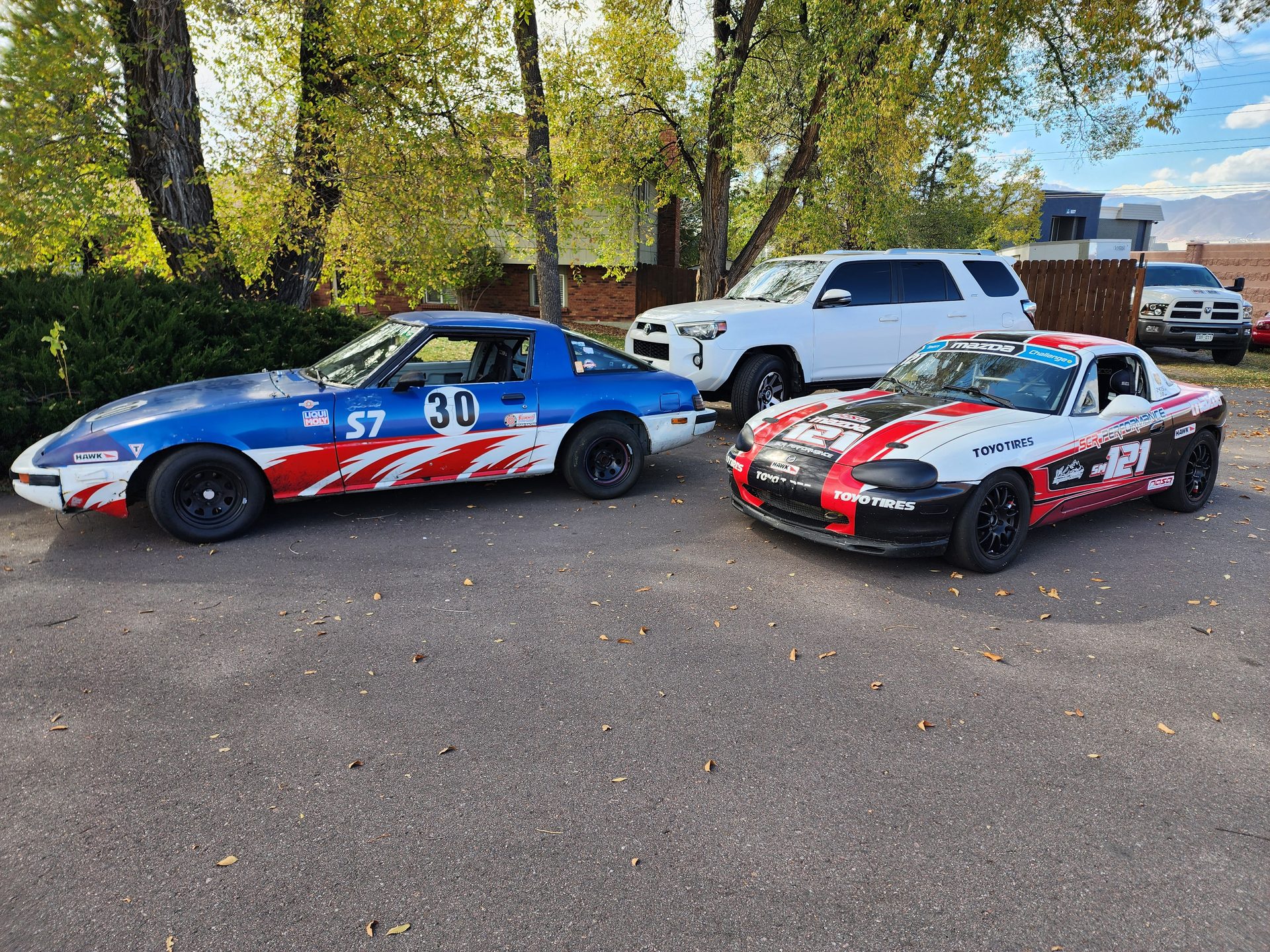 The thing you're selling is access to a real audience at a real event. Lead with that, not with your resume. Photo: LeadFoot Racing.
Step 4: The connection request note does not contain your pitch
Here's the number that should change how you write these.
A 2026 benchmark study of 13.2 million connection requests and 6.7 million messages found that about 28.5% of connection requests get accepted. But the reply rate on the note attached to the request fell to around 2.2%, while messages sent after someone accepts reply at roughly 10-11%.
The note gets barely read. The message after they accept performs about five times better.
So the note has one job: get accepted. Keep it under 300 characters and make it about them.
"Hi Sarah — I race Spec Miata with NASA out of Colorado Springs and I've been following what you've built at Ridgeline. Would like to connect."
That's it. No packages. No PDF. No "I'd love to explore a partnership opportunity."
Step 5: The message after they accept
Wait a day. Then send five sentences, max.
- Thanks for connecting, plus the specific thing you noticed about their business
- One line on who you are and what you race
- One line on the audience — event attendance, social reach, whatever's honest
- The ask, which is a conversation, not money
- A specific window
The ask should sound like this: "I'm not going to pitch you here. Would you be open to 20 minutes so I can understand what you're trying to grow this year, and see if there's a fit? I've got time Thursday or Friday morning."
You're asking for a call, not a check. That's a much smaller yes. And a call is where the deal actually happens, which I walk through in how to run a sponsorship call that converts.
Step 6: Get off LinkedIn as fast as you can
LinkedIn is where you find them and open the door. It is not where you close.
The second they reply with interest, move it to email or a calendar link. Messaging apps eat threads, notifications get buried, and nobody negotiates a contract in a DM. Ask for their email in your reply and send the invite the same hour.
Then keep the connection alive after. Post your race recaps. Tag the partners you already have. A marketing manager who said "not this year" in March remembers you in October if you've been visible the whole time. Half the sponsors I've landed came from a no that stayed warm.
The four ways racers blow this
- Sending the pitch deck as an attachment on a connection request. Instant delete.
- Using the same message for 40 companies. Recruiters and marketers read outreach all day. They can smell a template from the subject line.
- Buying Premium before proving the method works. InMail is commonly reported in the 10-25% response range, but that money is better spent on tires until you've run 30 free requests.
- Pitching a company page or a sales rep. Nobody in either seat can approve a sponsorship.
Run it for thirty days
Twenty companies. Twenty named humans. A week of warming, a clean request, a five-sentence follow-up. At published benchmark rates you'd expect around five or six connections and one real conversation out of that.
One conversation is enough. That's how the first partner always starts.
If you want the whole system — the prospect research, the outreach sequence, the proposal that follows the call, and the pricing that keeps you from underselling — that's The Ultimate Sponsorship Blueprint, $37. This post is one channel. That's the full map.
Do you believe?
Sources: Expandi — LinkedIn Outreach Benchmarks 2026 (13.2M data points), Overloop — LinkedIn Outreach Benchmarks 2026, Cognism — LinkedIn Statistics and Facts 2026, Skylead — How to Identify and Reach Business Decision Makers in 2026, Amplemarket — How to Find and Engage B2B Decision Makers. Acceptance and reply figures are from published 2026 benchmark studies, not LeadFoot Racing data. Decision-maker counts come from LinkedIn's own audience data as reported by those sources. No customer results or survey numbers are claimed anywhere in this post.