
Your race results are not a news story. Your town is.
That one sentence is the difference between an email a local reporter deletes and an email that turns into a segment. Most racers get it backwards. They send lap times to people who have never watched a race in their life.
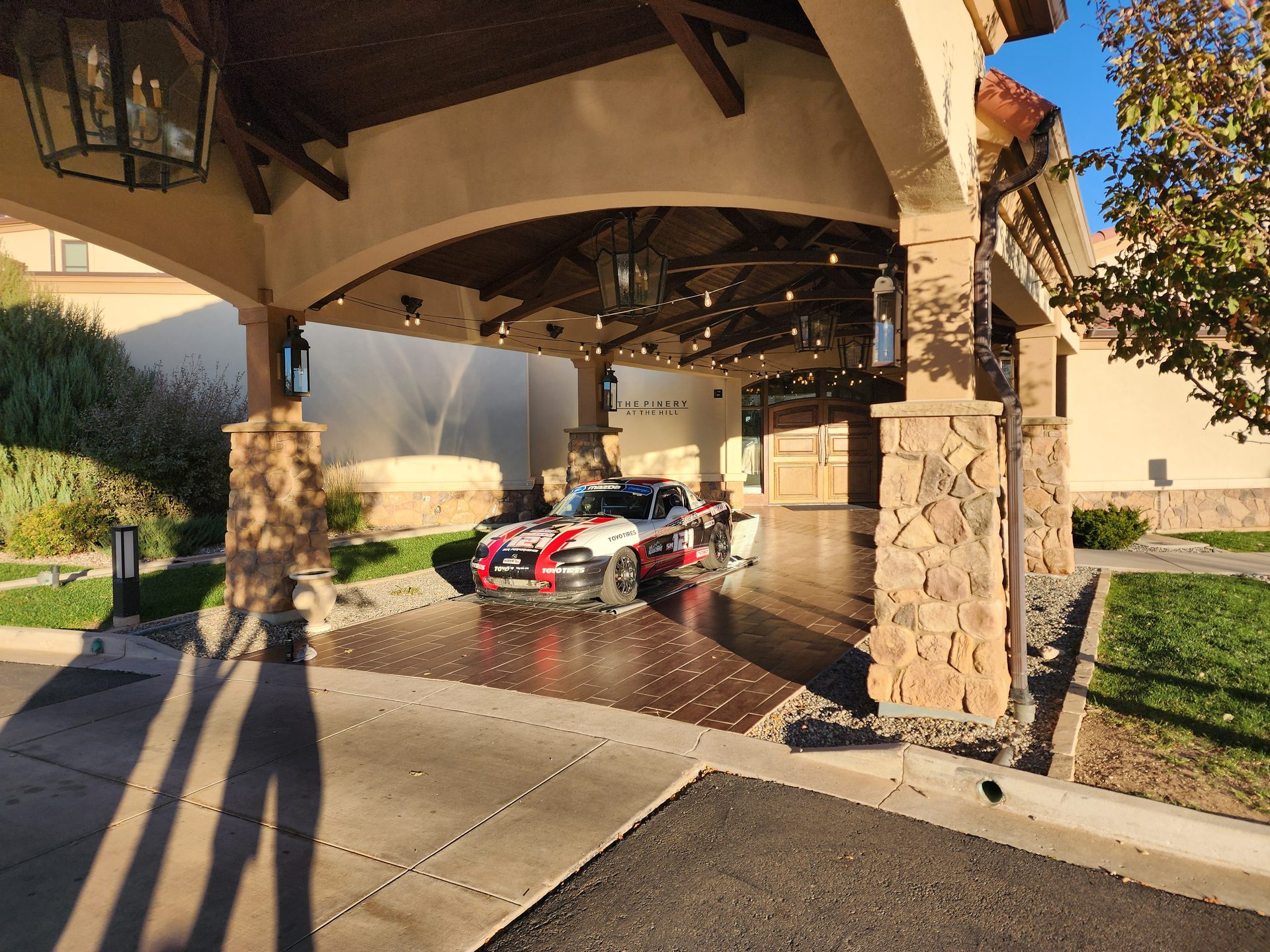 The #121 car at a local community event in Colorado Springs. This is the version of your race car local media actually wants to shoot.
Local newsrooms need you more than you think
Small newsrooms are running on fumes. The Medill State of Local News 2025 report counted more than 130 papers shutting down in a single year. Since 2005, nearly 3,500 local newspapers are gone, and the industry has lost over 270,000 jobs — a drop of more than 75 percent.
Here's what that means for you. The reporter you're emailing is covering three beats. They have a page to fill or a two-minute slot to fill, today.
A reporter with a hole in tomorrow's paper isn't looking for reasons to say no. They're looking for a story that's already done.
So hand them one that's already done.
Find a person, not an outlet
"Send it to the news station" is how a pitch dies. Newsrooms are split into desks, and each desk wants a different story.
| Who you contact | What they want from you |
|---|---|
| Sports desk (paper) | Results, standings, a local kid competing at a higher level |
| Features / community desk | The human story — how you got here, who's helping you |
| Morning TV show | Something visual. The car itself, in the parking lot, at 6am |
| Local radio / podcast | A talker. You, for eight minutes, being interesting |
GNCC Racing's press guide has a tip I've never seen fail: call the sports desk after 2pm and just ask who covers motorsports. Mornings are chaos. Afternoons, somebody will actually talk to you.
Build a list of every outlet within about 50 miles — papers, online-only sites, radio, TV, local podcasts. The Privateer's Story recommends exactly this. You'll land around ten names. Ten is plenty. You're not trying to get on ESPN.
Lead with the town, not the lap time
The Privateer's Story puts it better than I can: local media doesn't care about lap times. They care about community connection.
Your pitch should say "look at this town," not "look at me."
That means the angle is:
- You live here. You grew up here. Your school is here.
- Local businesses are funding you, by name.
- You're a teenager doing something adults do, or a working person doing this on weekends around a real job.
- You're giving something back — a school visit, a car display, a charity laps day.
Our own biggest local media moment had nothing to do with a race result. We entered a Colorado Springs business grant competition against actual businesses and won $50,000. That was a local business story that happened to involve a race car. Same principle.
Find your version. If you can't name why your town should care, you don't have a pitch yet — you have a results sheet.
Write it so they can copy and paste it
Racing Mentor's press release guidance is the standard, and it's simple. Structure your email as an upside-down triangle. All the important facts first, details underneath.
- Headline. Written the way they'd run it. Not clever. Clear.
- First paragraph. Who, what, when, where, why. If they only read this, they still have a story.
- Body. Two or three short paragraphs of context. Explain the class. Explain what makes it hard.
- Quotes. One from you, one from a sponsor or your team. Ask your sponsor by email — most say yes in an hour.
- Notes to editors. A line each on you, your team, and the series. Assume they know nothing about racing.
- Contact. A real name, a real phone number, a real email.
Paste all of it into the body of the email. Do not attach a Word doc. Do not attach a PDF. Attachments get skipped.
And answer their questions like a human. GNCC's guide warns racers about giving short yes/no answers in interviews. Talk to a reporter the way you'd talk to a friend who asked what you did last weekend.
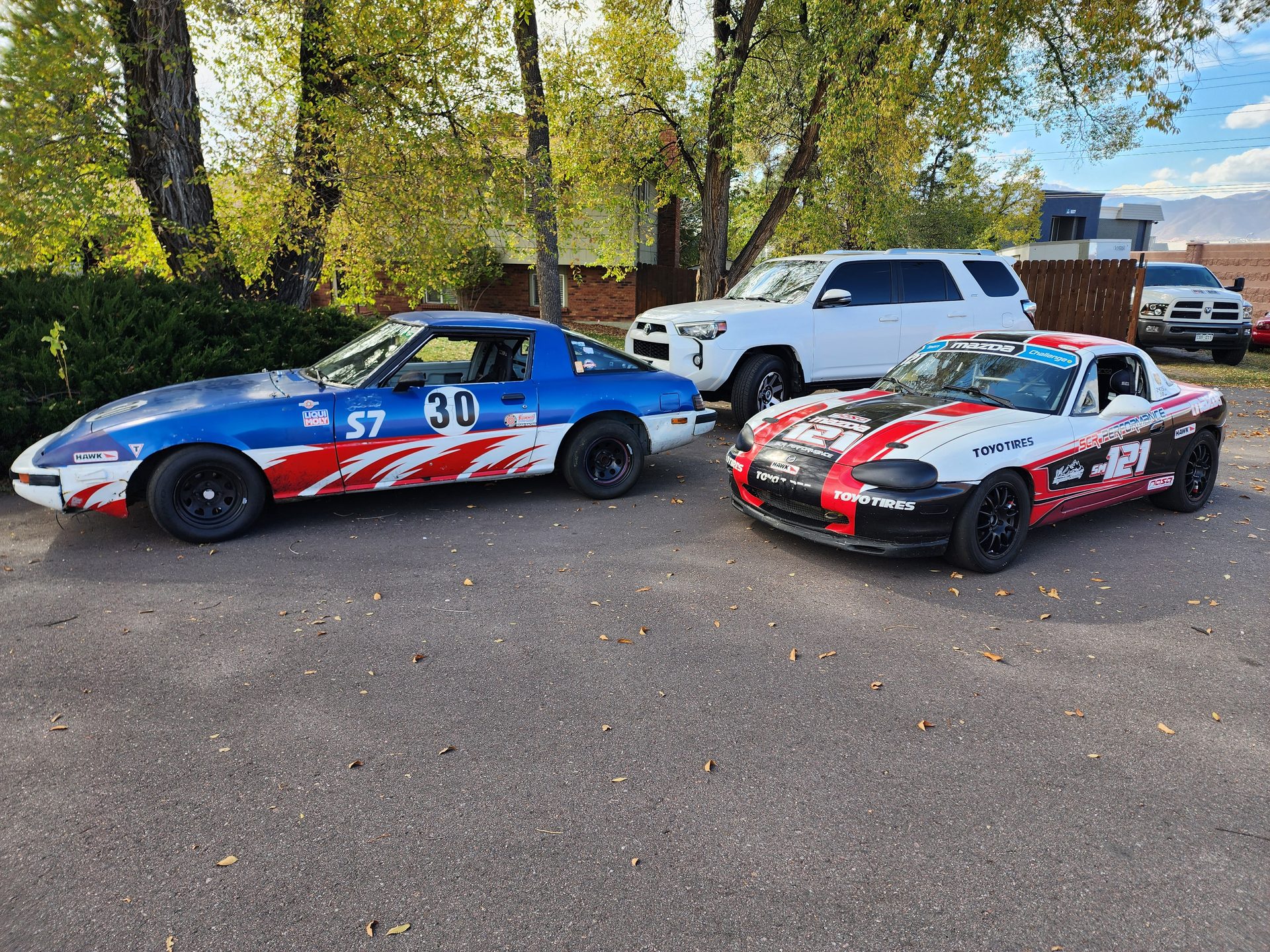 Paddock shots like this one give a photo editor something to run. A blurry phone picture doesn't.
Give them a photo they can actually publish
This is where most racer pitches fall apart.
Send two images, high resolution, and say clearly that they're free to use. One action shot of you on track. One clean headshot or a shot of you next to the car. That's the exact pair GNCC tells racers to provide, and it's what a photo editor needs to fill a layout.
Link them from a Drive or Dropbox folder instead of attaching 40MB of files. Racing Mentor recommends the same thing, and for the same reason — big attachments get bounced or ignored.
If a station wants to send their own photographer, move your schedule for them. That's a bigger story than anything you'd have gotten otherwise.
The clip is worth more after it runs
Getting on air feels great for about a day. The real value shows up in your next sponsor conversation.
A local sponsor's unspoken question is always "who's actually going to see this?" A newspaper story or a TV segment answers it without you having to argue. Drop the link into your sponsorship media kit and it works for you all season.
Then send the clip to every local business on your list. Not as a brag — as a heads-up: this is the visibility we're building, and here's what a partnership would look like. If you don't have that list yet, we built the Race-Ready Sponsor List for exactly this — 50 companies that actually sponsor grassroots racers, for $19, so you're not staring at a blank page at 11pm.
And don't disappear after the first hit. The Privateer's Story recommends sending your contact something monthly — a race update, a photo, a quote, a local sponsor mention. Reporters keep a mental list of people who make their job easy.
It's the same muscle you use to find local sponsors in the first place. Show up, be useful, keep showing up.
If you want the media kit, the one-pager and the outreach templates that turn a news clip into a signed sponsor, The First Sponsor System is the whole kit in one place for $67.
Sources: Medill Local News Initiative — The State of Local News 2025, The Privateer's Story — How to Get Local Media Attention for Your Racing, Racing Mentor — How to Write a Press Release for Your Racing, GNCC Racing — How To Get Press. Newsroom figures verified against the published 2025 Medill report. Everything else here comes from those guides plus our own outreach in Colorado.
Do you believe?