
Most people think "professional racer" the second they see a car with a number on the door. Fire suit, helmet, real race track — must be a pro, right?
Not even close. The car in that photo is almost always a club racer. Someone who paid to be there. And understanding the gap between club and pro is the single most useful thing you can learn before you spend a dollar chasing a racing career.
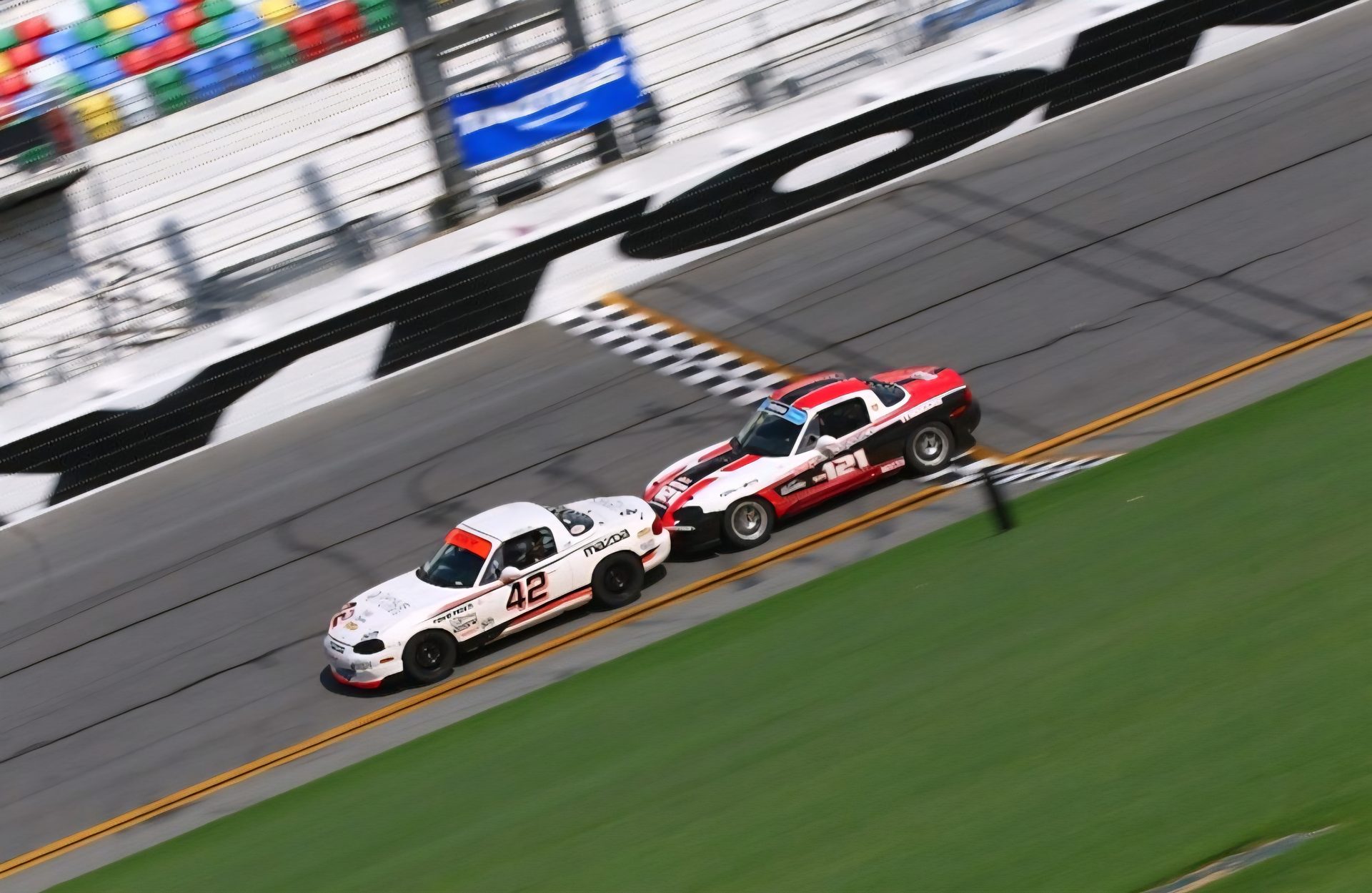 The LFR #121 racing wheel-to-wheel. This is club racing — real competition, real stakes, and yes, the driver paid to be here.
The one difference that matters most: who pays who
Here's the whole thing in a sentence. In club racing, you pay to race. In pro racing, someone is supposed to pay you to race.
That's it. That's the line.
At the club level, you buy the car. You buy the tires. You pay the entry fee. You tow yourself to the track. Nobody hands you a check for winning. Most club races pay exactly $0 in prize money — because there are no ticket-buying crowds to fund a purse.
Pro racing flips it. A paid pro drives a car someone else owns, funded by sponsors or a team budget, and takes home real money. Mid-tier pros in regional and lower national series can earn somewhere in the low-to-mid six figures a year, though many still lean on outside income and sponsorship to make it work.
Club racing is a hobby you fund. Pro racing is a job you have to earn your way into.
Neither is better. They're just different products. The mistake is thinking your local race is "amateur" and therefore lesser. Some of the fastest, most brutal wheel-to-wheel driving in the country happens in club Spec Miata — where 30 cars fight over half a second.
"Amateur" doesn't mean slow
Both of the big American road-racing bodies are, at their core, club organizations.
SCCA (the Sports Car Club of America) has been running since 1944. NASA (the National Auto Sport Association) started in 1991. Both are built around amateur, member-run competition. SCCA even has a separate pro arm — SCCA Pro Racing, founded back in 1963 — but the vast majority of what happens on any given weekend is club racing.
The two clubs approach licensing differently, and it's worth knowing before you pick one:
- SCCA sends you to a school that drills the procedural side first — flags, race starts, the racing line, staying safe. Speed comes later.
- NASA puts you in the car sooner and works on driving skill through a ladder of run groups with an instructor, then layers the wheel-to-wheel procedures on top.
We run mostly with NASA in the Rocky Mountain region because the depth of competition here is strong, and our cars are legal in both. If you want the full breakdown of getting licensed, we wrote a separate guide on what it costs to get your racing license.
Point is: club racing is amateur in the sense that you aren't paid. It is absolutely not amateur in the sense of skill. Plenty of club racers would embarrass a pro on the right day.
How the money actually flows
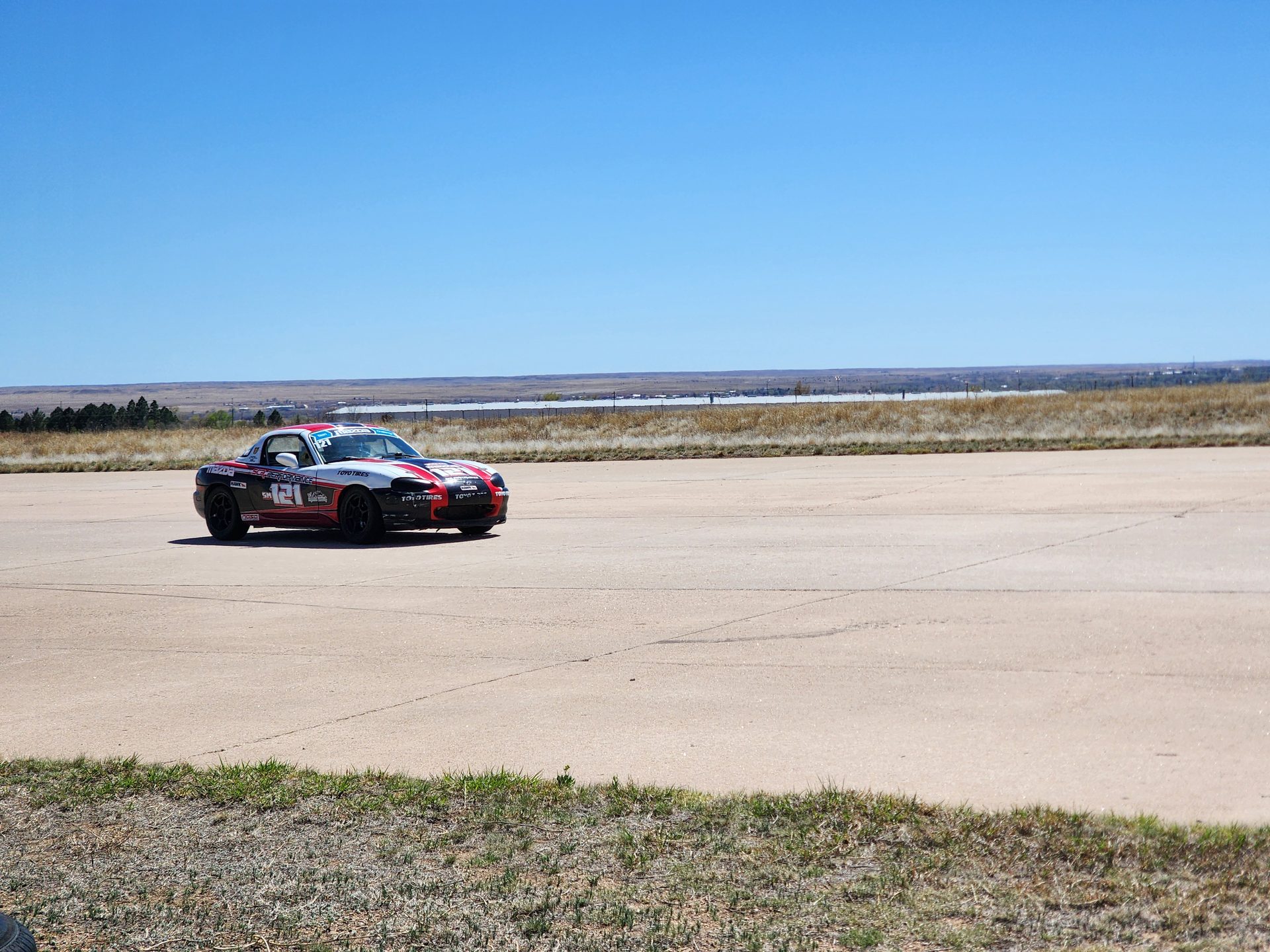 Every lap a club racer turns, they paid for. Tires, fuel, and entry come out of their own pocket — not a team budget.
Since money is the real dividing line, let me lay it out plainly.
Club racing, honest numbers. A competitive Spec Miata race weekend runs a minimum of roughly $2,500 in consumables alone — a fresh set of tires around $1,200, entry fees near $500, plus fuel, brake pads, and fluids. That's before the tow rig, before prep labor, before anything breaks. You can run cheaper on used tires if you never crash and do all your own wrenching, but that's the floor, not the norm.
But you're not totally on your own. This is where contingency programs come in, and most new racers don't know they exist. Manufacturers like Mazda and tire brands like Toyo pay real money and free product to club racers who finish up front. Mazda's contingency program has paid out everything from a few hundred bucks at the club level up to a quarter-million-dollar prize for the MX-5 Cup champion. To collect the full club payout, you usually have to beat at least four other cars in your class. For a lot of racers, contingency covers most of a season's consumables — it's the closest thing club racing has to a paycheck.
Pro racing. Here the team carries the cost, and a hired driver gets paid. But those seats are scarce, and most of them still expect you to bring sponsorship. The dirty secret of a lot of "pro" racing is that plenty of drivers are still paying — through a check, a family, or sponsors — well past the club level. The fully-paid-to-drive seat is rarer than the internet makes it look.
Which one do you actually start in?
You start in club racing. Everyone does.
There is no version of this where you skip club and land a paid pro seat. The kart-to-club-to-pro ladder is the path, and club is the rung where you learn to race wheel-to-wheel, build a record, and prove you can develop a car and yourself. It's also where you build the audience and story that sponsors care about — which is the real fuel for climbing.
That's the whole idea behind our Kart to Car program. We take young drivers coming out of karts or sim and put them into real club Spec Miata competition with coaching, sim work, and sponsorship help — because club racing done right is the on-ramp to everything else. You don't chase pro. You earn it, one club season at a time.
Here's the part nobody tells you: the skills that get you to pro aren't just lap times. It's showing up prepared, treating your program like a business, and turning race weekends into something a sponsor wants to fund. The driving is the price of entry. The rest is what separates the people who move up from the people who stay stuck.
The bottom line
Club racing and pro racing look identical from the grandstand. Under the hood, they're opposites — one you fund, one funds you. And the road from one to the other runs straight through years of club racing, done well.
Don't let "amateur" fool you. The club racer sweating in the paddock at 7 a.m. is doing the exact work that builds a pro. The only question is whether you keep showing up.
If you're a young driver ready to take that first real rung, apply to Kart to Car — it's the structured path from karts and sim into actual wheel-to-wheel competition, coaching and sponsorship help included.
Do you believe?
Sources: SCCA Pro Racing (Wikipedia), Winding Road — The Guide to Road Racing: SCCA vs NASA, No Money Motorsports — Racing Prize Money & Contingency Prizes, Mazda Motorsports — Grassroots Club Racing. Cost figures are cross-referenced against our own Spec Miata program and published grassroots sources as of August 2026. Any specific numbers here are grounded in those sources plus real experience running a club race team.