
You spent four days writing it. You read it out loud twice. You checked the guy's name three times so you wouldn't spell it wrong.
Then you hit send.
Now you're refreshing your inbox every eleven minutes like it's a lap timer. I've been there. Here's what actually happens next.
 Photo by Krsto Jevtic on Unsplash.
Nothing Happens. That's Normal.
The most likely outcome of your first sponsor email is silence. Not rejection. Silence.
Look at the numbers from the big cold-email benchmark studies. Average reply rates across business outreach land somewhere between roughly 3% and 5%. Snov.io puts the typical figure around 5.1%. Instantly's 2026 report puts the average closer to 3.4%, with the top quartile above 5.5%.
Run that math on one email. One email at a 5% reply rate isn't a campaign. It's a coin flip with bad odds.
That's not a reason to quit. It's a reason to stop reading meaning into a quiet inbox. A sponsor who doesn't reply in 48 hours has not evaluated you and found you wanting. They probably haven't opened it yet.
Silence on day two isn't feedback. It's just Tuesday.
The racers who fall apart in this window are the ones who thought one good email was the whole plan. It isn't. It's the first rep.
Your Pipeline Is One Email Deep
Here's the real problem with the day you hit send: you now have a pipeline of exactly one.
If that one prospect says no, your entire sponsorship program is dead. That pressure makes people do dumb things. They follow up too fast. They re-send the same email with "bumping this to the top of your inbox." They start negotiating against themselves before anyone has even replied.
The fix isn't a better email. The fix is more emails.
The same benchmark data that shows sad average reply rates also shows something useful. Small, tightly targeted sends beat mass blasts. Snov.io found sequences going to under 100 recipients pulled the highest reply rates. Personalized campaigns beat generic ones on every metric measured.
So the number you want isn't one perfect email. It's fifteen to twenty-five well-researched, genuinely personalized emails to companies that make sense for you. That's a pipeline. At a realistic reply rate, that's a handful of conversations.
Building that list is the grind most racers skip. If you don't want to spend three Saturdays on research, the Race-Ready Sponsor List is the $19 version of that homework — companies that actually sponsor grassroots racers, with the category and the angle already sorted. We built it because "who do I even email" was the question that stalled the most drivers.
The Four Replies You'll Actually Get
When replies do land, they come in four flavors. Knowing which one you're holding changes what you do next.
"Can you send more information?"
This is the best email you'll get, and most racers fumble it.
It is not a stall. It's a request. Somebody is willing to spend ten more minutes on you. What they usually mean is: what would this cost, and what do I get.
Answer in under 24 hours. Send one attachment, not four. Give them the specifics — audience numbers, what you'd deliver, what it costs, and a proposed next step with a date on it. Vague answers here are where warm leads go cold.
Have that document built before you send your first email. If a reply forces you to spend three days building a deck, you've already lost the momentum.
"Not in the budget right now."
This reads like a no. It's usually a date.
Most companies set marketing budgets on an annual or quarterly cycle. "Not right now" often means "you caught me in month nine of a twelve-month budget."
Don't argue. Don't discount. Ask one question: when does the next budget cycle get planned? Then put that month in your calendar and email them a week before it. You just turned a rejection into a scheduled opportunity, and you're now the racer who followed through instead of the one who vanished.
"We could send you some product."
Product offers come fast because they're easy to approve. A parts company can ship you a case of something without a purchase order.
Product is real value and you shouldn't sneer at it. But be honest with yourself about whether it pays a bill you actually have. Free coolant is great if you buy coolant. It doesn't cover an entry fee.
Take the product, deliver on it like it was cash, and treat that relationship as your foot in the door for a paid conversation next season. A brand that has already worked with you is a much easier second ask.
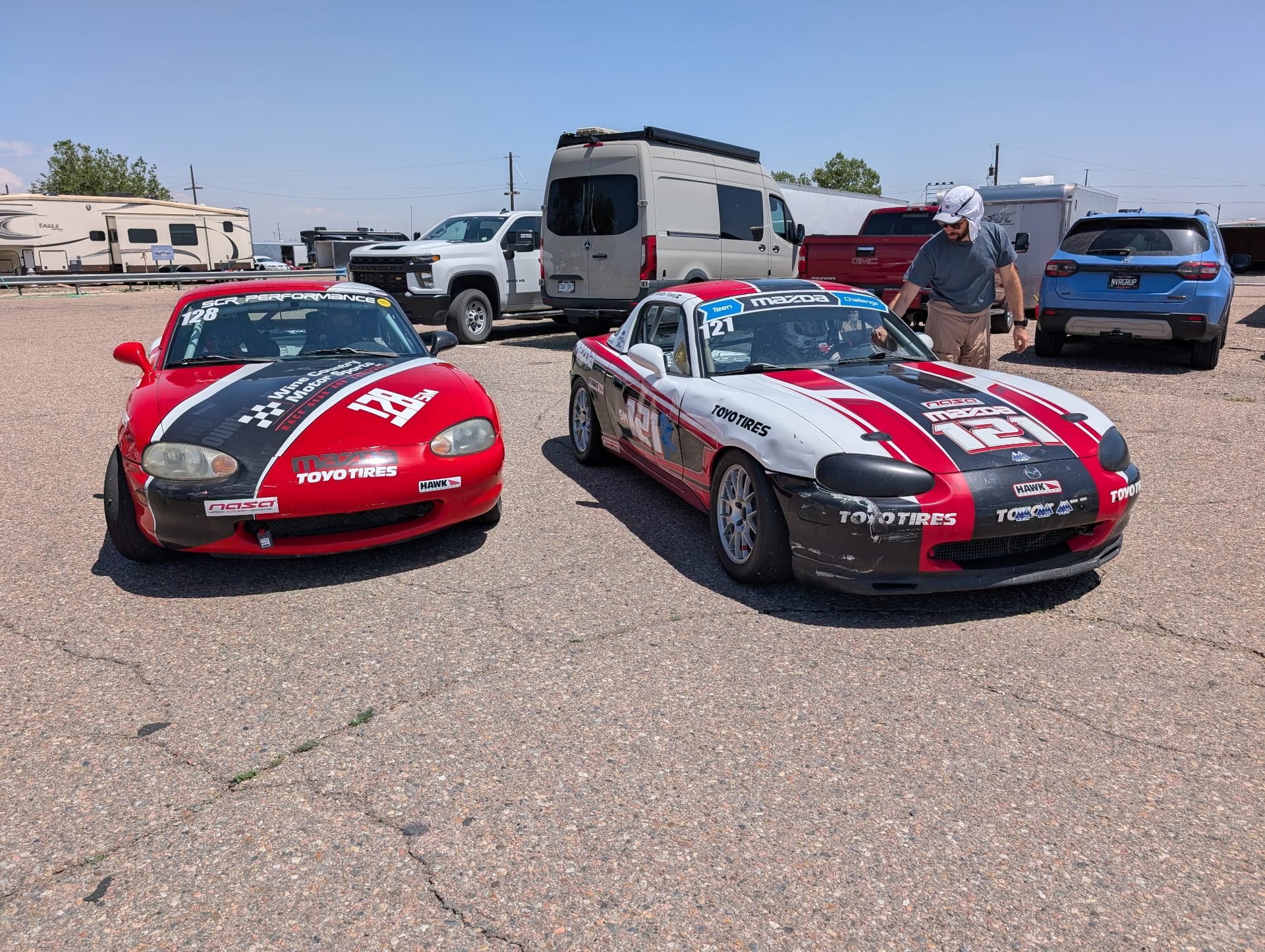 The work that makes the next email easier happens at the track, not in your inbox.
Nothing at all.
The most common reply is no reply. I wrote a whole post on why brands ghost racers after the first email, because the reasons are almost never about you.
Your move is a follow-up, not a rewrite. I'd rather not repeat myself here — the timing, spacing, and exact wording live in how to write a sponsorship follow-up email. The short version: wait several business days, then follow up with something new to say, and space the touches out from there.
What to Do in the Waiting Window
The waiting window is not downtime. It's the only free prep time you'll get.
Four things worth doing while nobody is replying:
- Send the next five emails. Momentum beats agonizing. The best cure for waiting on one prospect is having six.
- Clean up what a sponsor sees when they check you out. Before anyone replies, they look you up. I broke down exactly what a sponsor Googles before they reply — go make sure that search works in your favor.
- Update your numbers. Pull your current follower count, engagement rate, and event attendance. Stale numbers in a live conversation make you look sloppy.
- Build the "more info" packet. So the best reply you get doesn't catch you empty-handed.
None of that requires anyone to email you back. All of it makes the next reply go better.
How to Know When It's Actually Over
At some point you have to stop chasing and put the effort somewhere else. The sponsorship world has a rough consensus on where that line sits.
Power Sponsorship's guidance on unsolicited proposals is blunt: don't follow up more than three times before you call off the chase, and keep the whole pursuit inside about six to eight weeks. Past that, persistence stops reading as commitment and starts reading as desperation. The cold-email data agrees from the other direction — replies drop off hard after the third touch, and hammering a dead contact only hurts you.
So set a cap before you start. Three touches. Six weeks. Then send a clean closing note: you're assuming the timing isn't right, you'd love to revisit it, thanks for their time.
That last email gets more replies than you'd think. And even when it doesn't, it leaves the door open. That contact goes on next season's list instead of into the trash.
Hitting send on your first sponsor email doesn't make you a racer with a sponsor. It makes you a racer with a pipeline of one. The whole job is turning that one into twenty, and then working them like a professional instead of waiting like a fan.
If you want that turned into an actual week-by-week plan instead of a vague intention, the Sponsorship Accelerator is $27 and it's built for exactly this stage — you've sent one email, and you need the next thirty days to have a structure.
Sources: Snov.io Cold Email Statistics, Instantly Cold Email Benchmark Report 2026, Power Sponsorship — How Long Should You Follow Up on a Sponsorship Proposal?. Reply-rate figures are industry benchmark averages, not motorsport-specific, and are cited as ranges because published datasets disagree. Everything else here comes from our own outreach at LeadFoot Racing.
Do you believe?