
Spec Miata gets called the best deal in racing so often that it starts to sound like a sales pitch. So let's be honest instead.
I run a Spec Miata program in Colorado. I've built the cars, raced the class, and watched a lot of people fall in love with it. I've also watched a few get burned. Here's the real answer to whether it's worth it, without the cheerleading.
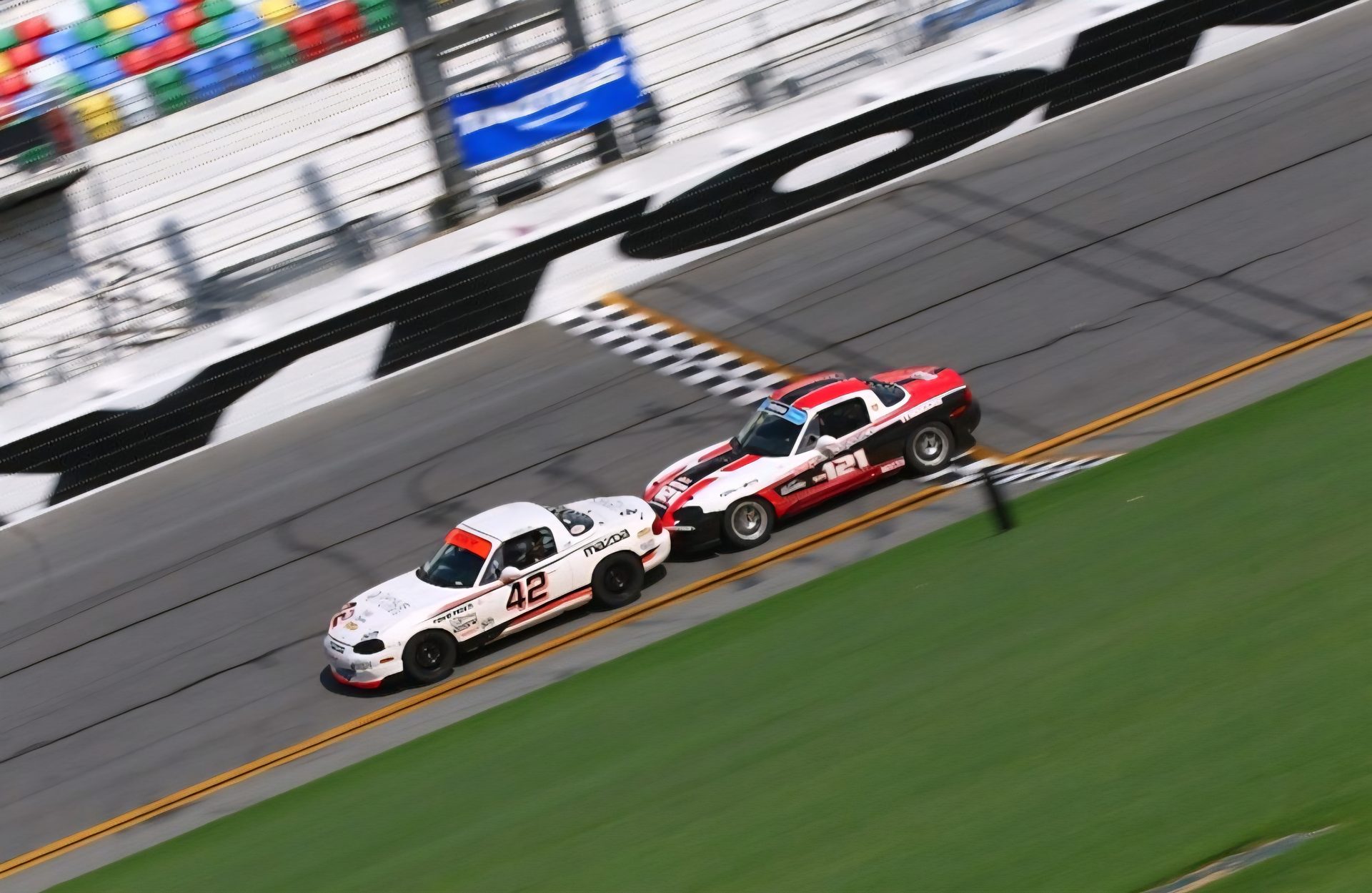 Our #121 racing door-to-door — the kind of close, low-cost fight Spec Miata is built for.
What Makes Spec Miata So Popular
Spec Miata is the most-entered road racing class in the country. That's not marketing. SCCA and NASA both regularly grid the biggest fields in this class, and there's a real reason.
It's a "spec" class. Every car runs the same tightly-controlled rules, so nobody buys their way to the front. You can't bolt on more horsepower and drive away. That levels the field and puts the result back on the driver.
A few things stack up in its favor:
- Reliability. These are simple, tough cars. They start, they run, and they hand you seat time instead of eating your weekend in the paddock.
- Cheap, plentiful parts. Mazda backs the class hard, the used market is deep, and almost everything is a phone call away.
- Huge community. More people race Spec Miata than anything else, which means more shared setups, more advice, and always someone to race with.
- A real ladder. Plenty of pro drivers came up through Spec Miata. It's a legit stepping stone, not a dead end.
Reliability matters more than beginners think. The class that keeps you on track teaches you fastest. We wrote a whole breakdown on how to make the most of a first race weekend if you want to see how the days actually flow.
The Racing Is the Real Draw
Here's the part that doesn't show up on a spec sheet. Spec Miata racing is close. Sometimes uncomfortably close.
Because the cars are so evenly matched, you don't win by disappearing up the road. You win in traffic, in the draft, in the last two corners. A pack of ten Miatas nose-to-tail is one of the best fights in all of motorsports, and it costs a fraction of what an open-wheel weekend does.
You don't drive away from anyone in Spec Miata. You out-think them.
That's why the class hooks people. It rewards racecraft over budget. For a new driver, that's the best possible thing to learn — because racecraft travels with you into every car you ever drive.
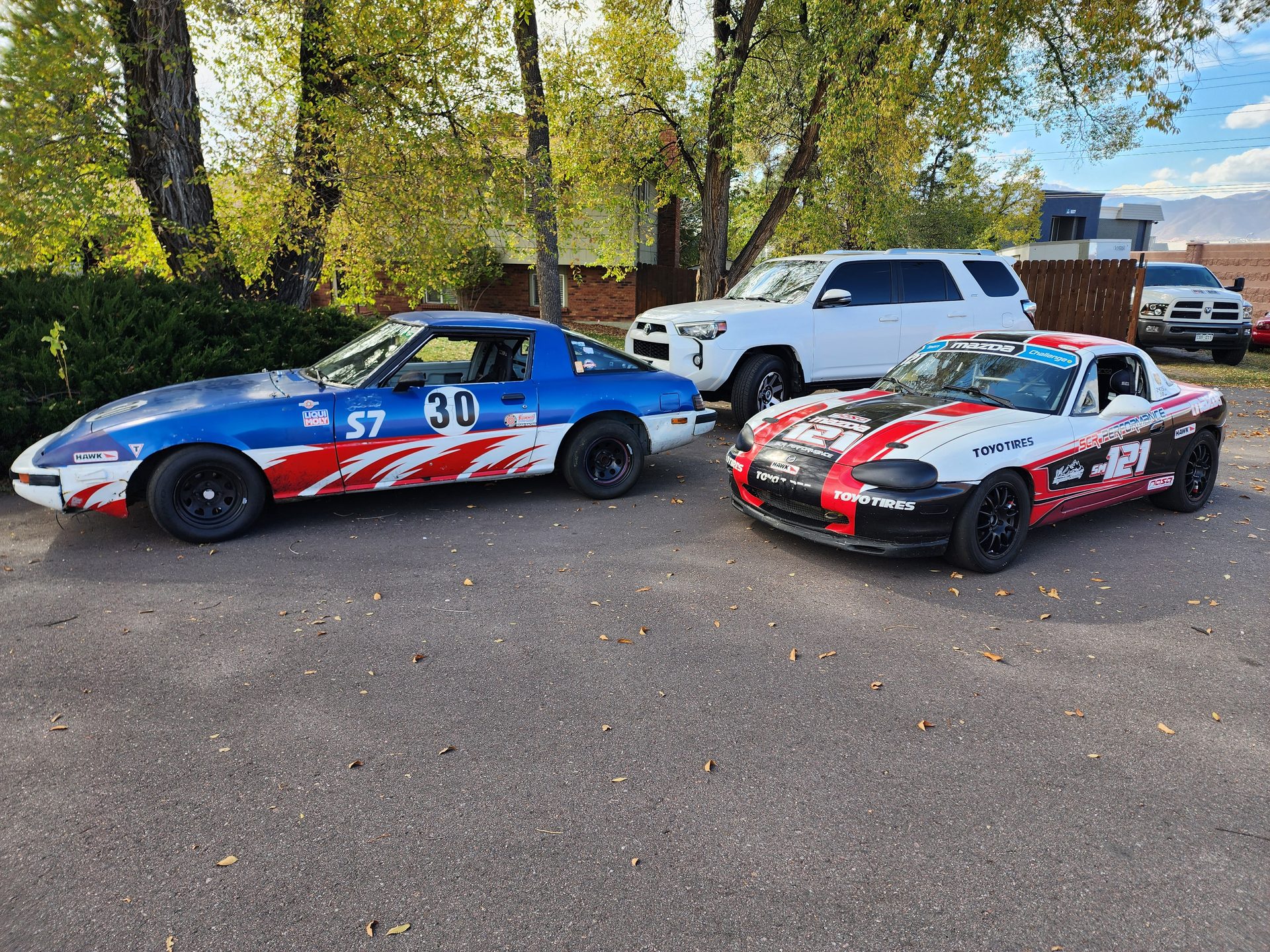 A paddock lineup like this is normal for Spec Miata — big fields, deep community, cars everywhere.
What It Actually Costs (No Fantasy Numbers)
This is where a lot of articles quietly lie to you. You'll see "$1,000 a weekend, all in." That number exists, but it's the floor, not the norm.
Here's the honest range for owning and running your own car:
- A competitive race weekend runs about $2,000 to $3,500 all in if you're on fresh or nearly-fresh tires and doing your own wrenching. A fresh race set of tires alone is around $1,200, and entry fees run roughly $500 a weekend.
- You can hit the $1,000-ish floor only if you're on old heat-cycled tires, you don't crash, and you do every bit of the work yourself.
- Front-runners spend real money. Racers chasing championships replace tires every weekend and pour money into engines and development. At the sharp end, a serious season can run well past $50,000.
Then there's the buy-in. A race-ready car is roughly $10,000 to $35,000-plus, before you count a trailer, a tow vehicle, and somewhere to store it all. That tow rig is the cost nobody warns you about, and it's why "cheap" racing still starts in five figures.
So is it cheap? Compared to almost any other real wheel-to-wheel class, yes. Compared to nothing, no. Go in with the honest number.
The Downsides Nobody Puts on the Brochure
Every class has warts. Spec Miata's are worth knowing before you write a check.
The front of the field gets expensive. The rules allow a lot of legal "tricks" — careful engine prep, shaved tires, blueprinted parts. None of it is cheating, but it adds up, and it means winning at the top costs far more than mid-pack running.
Used cars carry unknown history. A cheap Spec Miata might have a tired motor or a bent past. Buy carefully. We put together a used race car checklist so you don't inherit someone else's problem.
The racing can get rough. Close fields mean contact happens. Most of it is clean hard racing, but if you want polite space on track, this isn't the class.
None of these are dealbreakers. They're just the truth, and you should hear the truth before the deposit, not after.
So Is It Worth It?
For most people getting into road racing, yes. If you want the most seat time, the deepest community, the closest racing, and the lowest realistic cost of entry into wheel-to-wheel, Spec Miata is hard to beat. It's the class I'd point almost any new driver toward, and it's the one we build our program around here in Colorado.
The one honest catch: you still have to buy a car, tow it, prep it, and learn the hard way. That's a real barrier, and it's exactly the one that stops a lot of people who'd love this sport.
That's the gap we built our program to close. With our arrive-and-drive program, you show up, we hand you a race-ready Spec Miata with crew and coaching, and you find out if you love the class before you spend a dime on a car or a trailer. It's the cheapest way to answer "is this for me?" honestly.
Spec Miata is worth it. The only real question is whether you're worth it to yourself enough to try. Do you believe?
Sources: Mazda Motorsports – Spec Miata, NASA – Spec Miata, Spec-Miata.com – Why Spec Miata, No Money Motorsports – Ultimate Spec Miata Handbook. Cost figures reflect current published ranges as of August 2026, cross-referenced with my own program's real numbers. Any specific cost or rule claims here are based on those sources plus firsthand experience running the class.