
Most people start racing by buying the wrong thing first.
They see a carbon-fiber helmet or a $700 suit and think that's the entry ticket. So they drop a grand on gear before they've turned a single lap. Then they run out of money for the part that actually makes them a racer: time in the car.
Here's the order I'd buy in if I were starting today. Five things, ranked by what actually moves you forward. Spend on these first, in this order, and you won't waste a dollar.
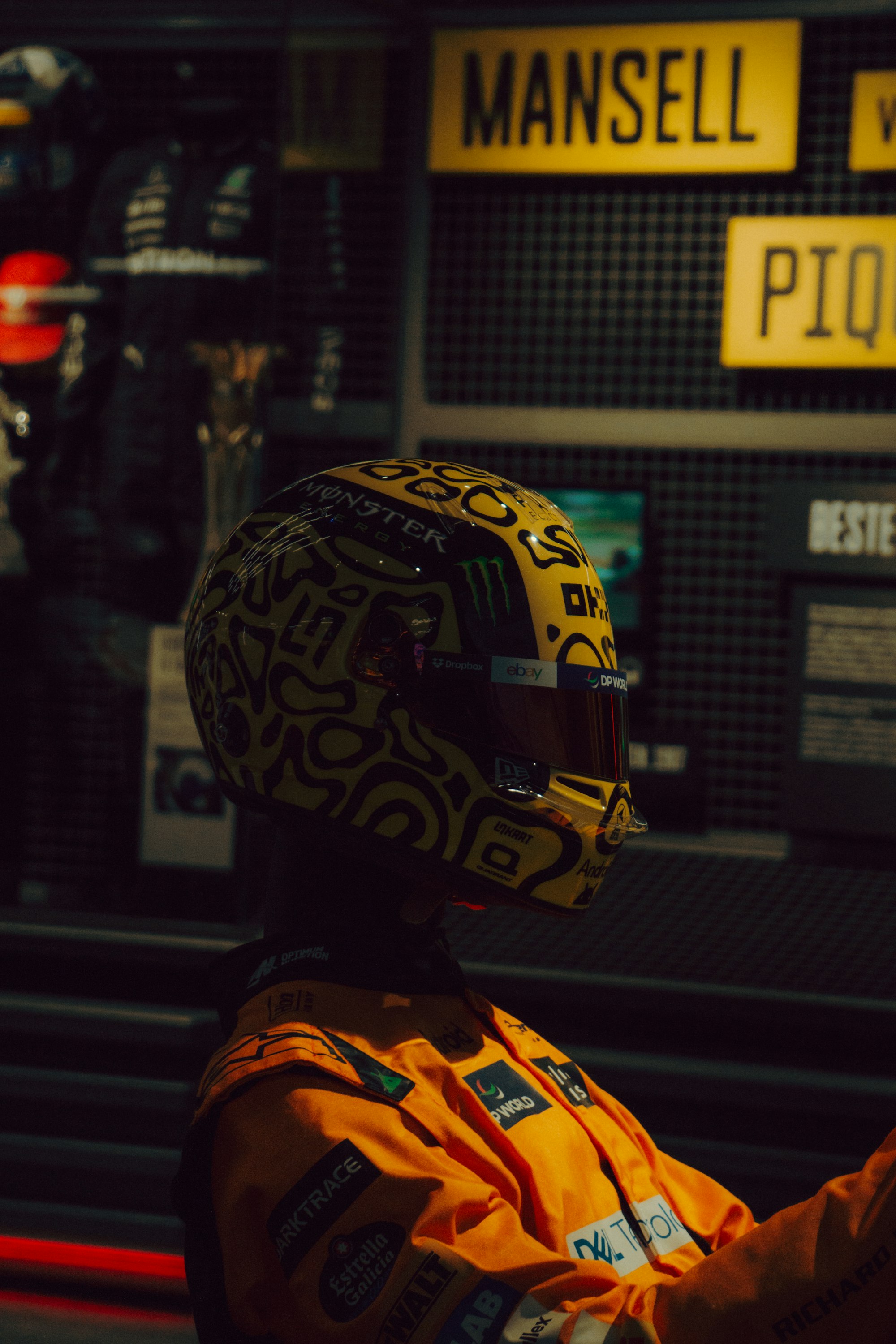 Photo by Justin Reichelt on Unsplash.
1. A Snell-rated helmet
If you buy one thing, buy this. A helmet is the one piece of gear you'll need at almost every event, from a beginner track day to a real race.
It has to be Snell-rated for auto racing, which means the label says SA and a year. As of late 2025 the current standard is SA2025, and the older SA2015 rating is aging out — but as of 2026 most clubs, SCCA and NASA included, still accept SA2015, SA2020, and SA2025 lids. Always check your sanctioning body's current accepted Snell ratings before you buy. A closeout SA2020 is still good for years, so it can save you money.
You don't need the fancy one. A solid entry-level SA2025 helmet runs around $220 to $340. Carbon models climb past $2,500, but that's weight savings you won't feel on day one.
Buy the helmet that fits your head, not the one that fits your ego.
One note: some clubs rent loaner helmets to first-timers. Ask before you buy so you can try the sport before you commit.
2. Seat time (yes, this counts as gear)
This is the buy nobody puts on a shopping list, and it's the most important one.
You can own every piece of gear made and still be slow, scared, and unsafe if you've never driven at speed. The thing that turns a car owner into a racer is laps. Track days, HPDE events, an autocross on a Saturday. Every one of those is money spent on the only upgrade that matters early: you.
A beginner HPDE weekend often costs less than a mid-range helmet, and it teaches you more than any part you can bolt on. If you're a sim racer making the jump, this is where the screen stops being enough. I broke down what actually transfers in our first track day guide.
So before your third gear purchase, book an event. Put a date on the calendar. Real seat time is the best money a new racer spends.
3. Gloves and shoes
Now we're back to gear, and this is where you round out safety without breaking the bank.
Racing gloves protect your hands and give you grip on the wheel. Good entry gloves run around $20 to $60, and honestly the $30 pair does the job fine when you're starting out. Racing shoes have a thin sole so you can feel the pedals, plus fire protection a sneaker doesn't offer.
Neither of these is glamorous. Both are cheap insurance. And once you have a helmet plus gloves and shoes, you're cleared for most beginner track events.
A quick tip that saves headaches: pack all of it the same way, every time. We built a free Race Day Ready Pack that's just a plain checklist you run through the night before, so nothing important gets left in the garage. It sounds small until the one morning you forget your gloves at home.
4. A fire suit (when you go wheel-to-wheel)
Here's where a lot of beginners overspend early, so let me be clear about timing.
For most beginner HPDE track days, a suit is optional. You can run in cotton long sleeves and long pants. But the moment you go wheel-to-wheel racing, a fire suit becomes required, and it needs to carry an SFI 3.2a/5 rating for real racing.
That's why the suit is fourth on this list, not first. Buy it when your racing demands it, not before. Entry-level SFI 3.2a/5 suits and starter kits are widely available, and some kits bundle the suit with gloves and shoes, which can stretch your dollar further than buying each piece alone.
If you're still doing track days, save this money for more seat time. If you're stepping into real races, budget for it and don't cut corners on fire protection.
5. A head-and-neck restraint (HANS device)
The last essential is the one that protects the injury nobody walks away from casually.
A HANS device, also called a frontal head restraint, keeps your head from snapping forward in a crash. Like the suit, it's required for wheel-to-wheel racing, not usually for beginner track days. A solid one runs around $450 and up, with pro-level models roughly double that.
So the honest timeline looks like this. Helmet and seat time first. Gloves and shoes to round out the track-day kit. Then, when you cross over into real racing, the suit and the HANS together. That order keeps you safe at every stage without spending on gear before you need it.
Always defer to your club's rulebook for exact requirements. NASA and SCCA both publish theirs, and they're the final word over anything you read online, including this.
The real first purchase
Notice the pattern. Two of the five things on this list aren't gear at all in the flashy sense. They're the helmet you'll actually use and the seat time that makes you a driver.
That's the whole trick to starting cheap. Buy what gets you in the car and keeps you safe, skip what just looks fast, and let your gear grow as your racing does. The kid who spends every dollar on seat time will outdrive the one who spent it all on a carbon lid every single time.
If you want that path mapped out for you, from your first nervous track day to wheel-to-wheel in a real race car, that's exactly what our Kart to Car program is built to guide. It's the difference between guessing what to buy next and knowing.
Start with the helmet. Book the seat time. Build from there.
Do you believe?
Sources: Speedway Motors — SA2025 racing helmets, No Money Motorsports — budget safety gear guide, FAST RACER — HANS / head-and-neck restraints, PROFOX Racing — SFI 3.2a/5 race suit kits, FAST RACER — SA2020 vs SA2025 helmet standards. Gear prices are current published ranges as of July 2026 and vary by brand and retailer. Always defer to your sanctioning body's rulebook (NASA, SCCA) for exact gear requirements at each level.