
The checkered flag is out. Your heart is pounding, the session was great, and you are ready to coast into the pits. Hold on. The session is over, but your car is not done yet, and neither are the cars around you.
Here is what happens next, and why most clubs want a cool-down lap.
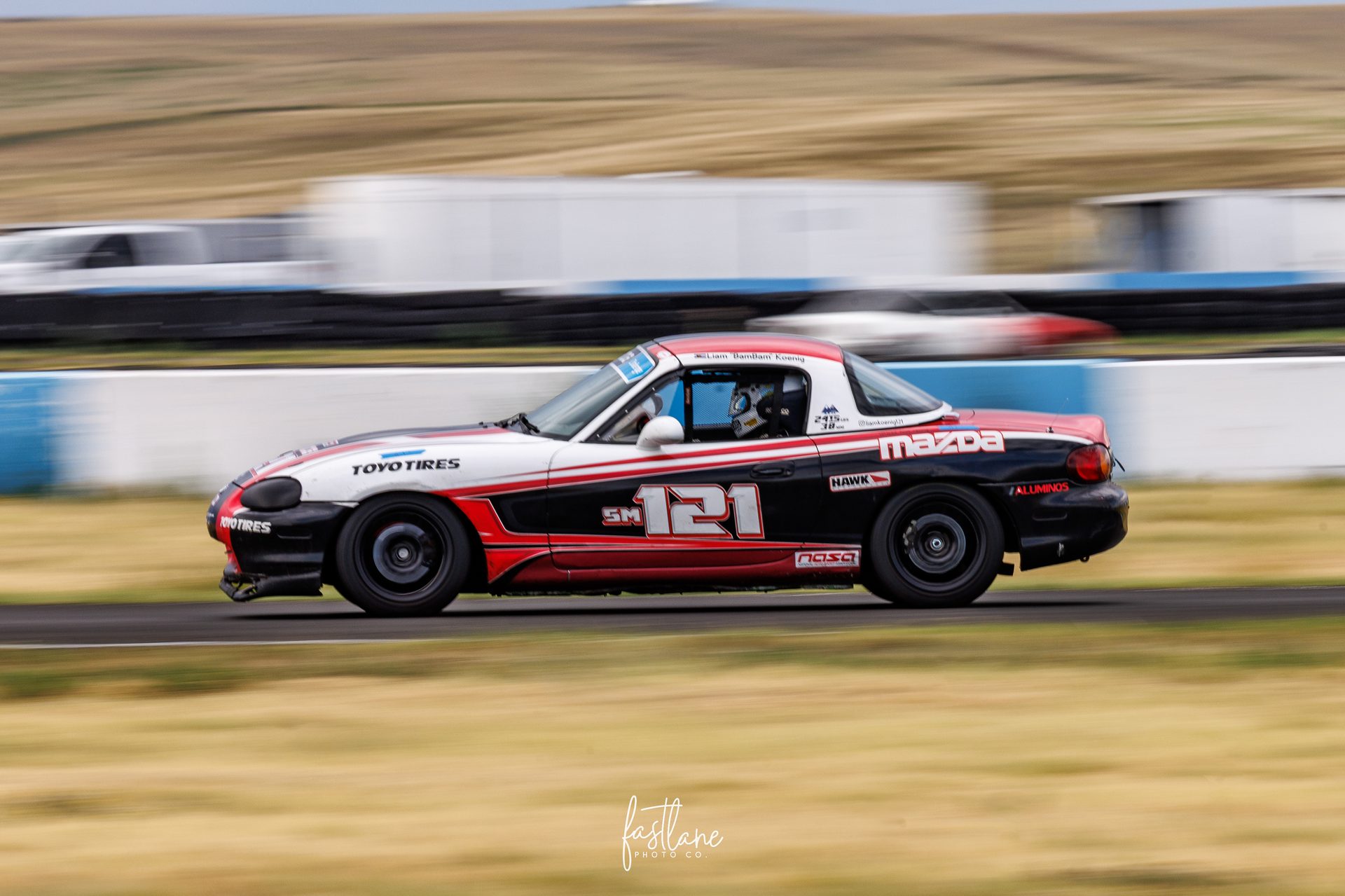
What a cool-down lap is
The checkered flag ends the session. You do not stop on track. You finish one more lap at a calm pace, then enter the pits.
Pocono Raceway's HPDE rules put it in one line: "Checkered flag ends session. Cool down lap, enter pits safely, obey speed limits, raise fist before entering." Speed Ventures says the same thing in fewer words: complete the cool-down lap and return to the pits.
Some organizers call it a half lap. Others expect a full lap. Your driver's meeting will tell you which one your event uses.
How fast to go
Slower than racing pace, but not a crawl. Speed Ventures asks for about 80 percent speed, "full control but no slower," so the track clears quickly. They also say not to lift at the flag. Drivers behind you may still be on a fast final lap.
So keep your pace until the straight ends, then ease off. Stay on your line. Do not stop, wave, or drift to the middle of the track to take a photo.
Passing is the part that varies. Speed Ventures says point-by passing is allowed on the checkered flag lap. Other organizers may not allow it. Ask at the driver's meeting, and give a point-by if you get one.
Why it helps
Brakes are the big reason. After a hard session your pads and rotors are very hot. Moving air pulls heat out much faster than a car sitting still. One guide says a lap at moderate speed with light braking "lets the rotors and pads cool evenly, reducing the risk of warping."
Racers on a PistonHeads thread add a few points:
- Parking right after fast laps puts heat into caliper seals and wheel bearings.
- One poster says he stopped hot without a cool-down lap and cracked both front rotors.
- Turbo cars benefit too, since oil and water temperatures settle.
Not everyone agrees on the engine side. One poster reported that at one track a cool-down lap barely changed oil or water temperature, though it helped the brakes. That is forum experience, not a measurement you can bank on, but it matches common sense. The brakes are the main reason.
Use the lap to stay off the brake pedal. Lift early, coast, and brake lightly only when you need to.
Entering the pits
Pit entry is where new drivers get sloppy. A few habits help:
- Raise a fist before you enter, if your event uses it. Pocono does. It tells the crew behind you that you are slowing.
- Obey the pit speed limit the moment you cross the line. Pocono lists 10 mph in its paddock. Your track will have its own number.
- Watch for people on foot. Corner workers, crew, and instructors all walk here.
Parking with hot brakes
This is where racers argue. Many drivers avoid the parking brake on hot rotors, and park in gear or with wheel chocks instead. The worry is that hot pads clamped on a hot rotor can leave pad material or heat the rotor unevenly. Others point out that many cars have a separate drum or small caliper for the parking brake, so the risk is small.
I could not find a test that settles it. Treat it as common practice, not a rule. On a Miata, a manual gearbox in first or reverse and a chock under a tire is easy, and it costs nothing.
Then leave the hood and hot parts alone for a few minutes, and check your tire pressures once the car is parked. After that, you can take your hands off the wheel and breathe.
What I couldn't verify
I did not find NASA's or SCCA's own rulebook language on cool-down laps, so what is above comes from track operators and driver experience. Your organizer and your driver's meeting are the authority.
Sources: Pocono Raceway: HPDE Track Day Rules and Regulations, Speed Ventures: Track Flags, Automotive World News: Track Day Brake Maintenance Guide, PistonHeads: Cooling down lap(s), reasons?. Checked November 2026. Forum posts are driver experience, not rules.
Want one checklist for everything you do before, during, and after a session? The free Race Day Ready Pack has it.
Do you believe?