
Case Studies
Sim Racers Who Made It to Real Cars: A Case Study
Jett Johnson10 min read
The short answer
- Lucas Ordóñez won the first GT Academy in 2008 and stood on a Le Mans class podium in 2011.
- Rudy van Buren's World's Fastest Gamer prize was a McLaren F1 simulator job, not a race seat.
- We found no peer-reviewed proof that sim training transfers, and no SCCA or NASA rule that counts sim time toward a license.
A LeadFoot Racing case study. Everything here comes from public sources: manufacturer press releases, official blogs and motorsport magazines. LFR did not interview any of these drivers, and none of them is affiliated with LFR. Sources are numbered [S1]–[S8] and listed at the bottom of the page.
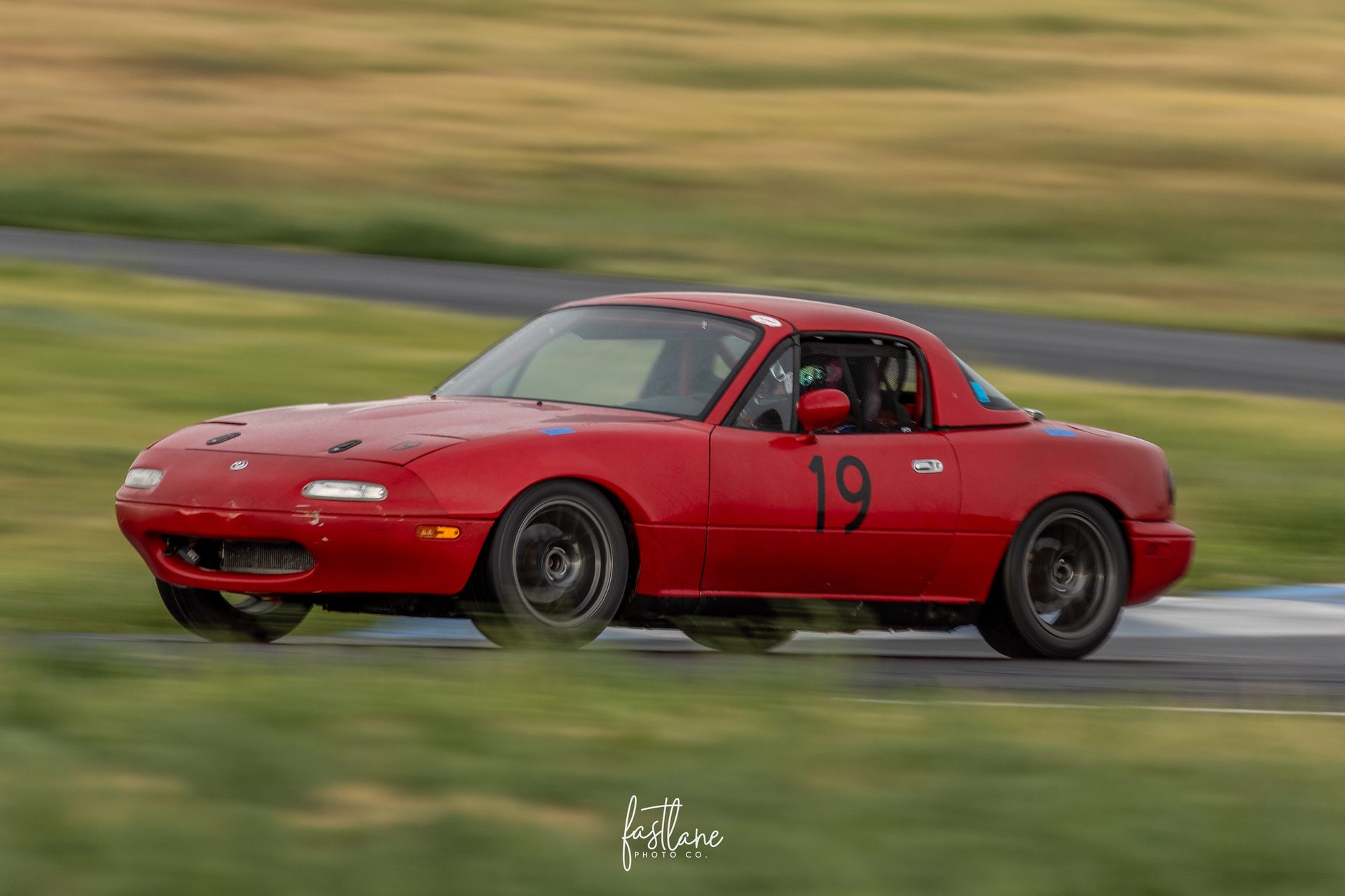 LeadFoot Racing's own photo. The people in this case study are not pictured.
The situation
In 2008, Nissan and PlayStation ran what Nissan itself called "an experiment": could a Gran Turismo player become a real racing driver? [S1] They called it GT Academy. By 2015 it had drawn more than five million entrants. [S1]
The idea didn't stay with one game. McLaren's World's Fastest Gamer drew more than 30,000 contestants in 2017. [S4] In 2026, Porsche's new talent shoot-out is sending up to two sim racers to a real on-track test. [S7] Sim racers have been getting real chances for almost twenty years.
This study follows five racers who made the jump:
- Lucas Ordóñez was an MBA student from Spain who played Gran Turismo in his spare time. He won the first GT Academy in 2008. [S1][S2]
- Jann Mardenborough, from Cardiff, Wales, won GT Academy in 2011. [S1][S3]
- Rudy van Buren raced karts from age eight and won the Dutch Karting Championship in 2003. He quit at 16 because he didn't have the financial backing. He won World's Fastest Gamer in 2017. [S4]
- James Baldwin had raced karts and Formula Ford until his Formula Ford drive ended over budget. He won the second World's Fastest Gamer in 2019. [S5][S6]
- Joshua Rogers is a three-time iRacing world champion who now also races real Porsches in Britain. [S7]
The challenge
Sim laps are cheap. Real laps are not. Baldwin put the difference plainly: in real racing "there is limiting running," while in a sim "you can go round as much as you want." [S6]
The doubt is real too. Motor Sport opened its 2020 Baldwin story by naming it: the usual line is that a sim racer turning pro "isn't possible." [S6]
And the odds are long. Millions entered GT Academy over the years, and the 2011 edition came down to a race camp of 12 finalists and one winner. [S1][S3] World's Fastest Gamer 2 came down to Baldwin and nine others. [S5] Most sim racers will never win a big competition seat.
So the useful question isn't "can a gamer make it?" They have. The useful question is what the ones who made it actually did, and what a normal sim racer can take from it.
The path: what actually happened
They were tested on more than speed
GT Academy's 2011 race camp at Silverstone looked more like a selection course than a time trial. [S3]
- Finalists went through punishing physical tests run by ex-military instructors.
- They spent a full day in Nissan 370Z and GT-R road cars. Each set a baseline lap at the start and repeated it later, so the judges could see who improved the most.
- A professional driver chased them down in a GT-R to show the judges how they handled pressure.
- On the last day they drove a Renault Clio race car and a 350Z GT4, a race version of the Nissan sports car.
In the final race, Mardenborough started on pole and led. Then he missed a gear and got passed on the last turn of a lap. He kept a cool head, reeled the leader back in, and won by eight seconds. [S3]
They got real seat time fast, next to pros
Ordóñez "quickly secured his international racing licence." [S2] His first race was the Dubai 24 Hour, alongside former F1 driver Johnny Herbert. [S2] He finished second overall in the 2009 European GT4 Cup. [S2] In 2011 he and his two more experienced teammates finished second in the LMP2 class at Le Mans, the second tier of prototype race cars. [S3] PlayStation's blog summed up his run as gamer to Le Mans podium "in less than three years." [S3]
They prepared on the sim, then adapted
Before his first British GT weekend, Baldwin prepared on his sim and used virtual reality to get used to a real-life driving style. Then, in his words, you "have to turn up and adapt." [S6] His team's goal for that first weekend was modest: have "a solid weekend and don't crash the car." [S6]
They knew what the sim can't teach
Rogers, who races both, says what carries over is the ability to stay calm under pressure, which leaves more mental room for the cars around you and the weather. What a sim strips away is the sound and the physical feel of the car. He says fitness matters in both, mainly to fight mental fatigue, and he trains in the sim four to six hours a day, five days a week. [S7] Calm doesn't mean a resting pulse: his heart rate can reach 140–160 beats per minute in the sim, and often climbs to 180 in the real car. [S7]
He also learned from a pro inside the sim: he and Le Mans winner Nick Tandy raced a virtual 24 Hours of Le Mans together, and Rogers says Tandy taught him a lot about managing traffic. [S7]
Two of them came back through the sim after the money ran out
Van Buren and Baldwin both had real racing careers stop for money. [S4][S6] Talking about quitting, van Buren said: "You search for a replacement because you've still got that racing feeling inside you." [S4] The sim gave both of them a way back in. Baldwin's sim results earned him a funded GT drive [S5], and van Buren's earned him a job in McLaren's simulator. [S4]
The numbers
| Item | Figure | Source |
|---|---|---|
| GT Academy entrants, 2008–2015 | more than 5 million | [S1] |
| GT Academy winners' record by 2015 | 2 Le Mans 24 Hours podiums, 90 more international podiums, 22+ race wins | [S1] |
| Finalists at the 2011 GT Academy race camp | 12 | [S3] |
| Ordóñez: gamer to Le Mans class podium | "less than three years" (PlayStation's words) | [S3] |
| World's Fastest Gamer 2017 contestants | more than 30,000 | [S4] |
| World's Fastest Gamer 2 finalists / prize | 10 gamers / a "$1million value" GT drive | [S5] |
| Rogers's sim training load | 4–6 hours a day, 5 days a week | [S7] |
| Rogers's heart rate, sim vs real car | can reach 140–160 vs often 180 beats per minute | [S7] |
| Porsche 2026 shoot-out | up to 5 assessed in Cologne, up to 2 to an on-track test, 1 winner supported in a 2027 Porsche series where everyone drives the same model | [S7] |
| Real seat time in Colorado: SCCA Rocky Mountain Solo autocross | $60 | [S8] |
| Real seat time in Colorado: winter open lapping | $140 (Pueblo Motorsports Park) to $159–$179 (High Plains Raceway) | [S8] |
The outcome
- Ordóñez stood on the Le Mans class podium in 2011. [S3]
- Mardenborough had moved on to GP3 single-seaters by 2015. [S1]
- Van Buren became an official McLaren F1 simulator driver for the 2018 season. [S4] His prize was a job in the simulator, not a race seat, and that's worth knowing.
- Baldwin, aged 22, won on his British GT debut at Oulton Park in 2020 with teammate Michael O'Brien, a former GT4 racer, in a McLaren 720S. [S6] Honest detail: they took the win after a late penalty to the leading McLaren, and Baldwin himself called it "a borderline miracle." [S6]
- Rogers took pole at Silverstone in the Porsche Sprint Challenge in 2026. He won the final round and missed the championship by five points. [S7]
What the evidence doesn't say
- We found no peer-reviewed study proving that sim training transfers to real racing. What exists is the drivers' own experience and the programs' results. That's real evidence, but it isn't lab proof.
- We found no SCCA or NASA rule that counts sim time toward a competition license. A sim can make you better, but the expensive part of getting licensed is real seat time, not the license paperwork. [S8]
- These are the winners. Nobody publishes a list of the sim racers who tried the jump and didn't make it, so treat these stories as proof that it can happen, not as the odds.
Lessons
- The sim gets you ready. It doesn't replace seat time. Real laps are limited; sim laps aren't. [S6] Use the cheap laps to build what transfers, like staying calm under pressure. Rogers says he might try 15 variations of one corner in the sim. [S7] Then your expensive laps go further.
- Show progress, not one hero lap. GT Academy measured who improved most from a baseline lap and watched how drivers handled pressure. [S3] Mardenborough missed a gear while leading and still won. [S3] Recovering is a skill.
- Get fit. GT Academy put its finalists through punishing physical tests [S3], and Rogers says fitness matters in both sim and real racing. [S7]
- Plan the money, not just the lap times. Two of these five careers stopped for money. [S4][S6] Being fast didn't pay for Baldwin's comeback season; a competition prize did. [S5] Most racers won't win one, so plan how you'll pay for real seat time.
- You don't need a million-dollar competition to start. In Colorado, real seat time starts at $60 for an autocross and about $140–$179 for a winter lapping day. [S8] Your first step can be this winter, not "if I win."
How LeadFoot Racing helps
We're a grassroots team out of Colorado Springs, and we don't pretend the sim replaces the car. These racers' records don't either.
If you've got sim hours banked and want to know what actually transfers, start with our free guide From Sim to Seat, in our Racer Toolbox. It covers what your sim laps buy you, and what they don't.
The rig got you this far. Real laps are the next step.
Do you believe?
Sources
All web sources accessed 2026-11-14.
- [S1] Nissan, GT Academy press release, 2015-09-15. https://italy.nissannews.com/releases/release-137173
- [S2] PlayStation.Blog, "Lucas Ordoñez: From Gran Turismo To Le Mans Via GT Academy", 2011-03-03. https://blog.playstation.com/archive/2011/03/03/lucas-ordoez-from-gran-turismo-to-le-mans-via-gt-academy
- [S3] PlayStation.Blog, "Britain's Jann Mardenborough Wins GT Academy 2011", 2011-06-17. https://blog.playstation.com/archive/2011/06/17/britains-jann-mardenborough-wins-gt-academy-2011
- [S4] McLaren, "Rudy van Buren wins World's Fastest Gamer to become official McLaren simulator driver", 2017-11-21. https://www.mclaren.com/racing/gaming/worlds-fastest-gamer/2017/rudy-van-buren-wins/
- [S5] The Race, "How World's Fastest Gamer took Baldwin straight into GTs", 2020-03-21. https://www.the-race.com/gaming/how-worlds-fastest-gamer-took-baldwin-straight-into-gts
- [S6] Motor Sport Magazine, "From World's Fastest Gamer to British GT winner on debut", 2020-08-14. https://www.motorsportmagazine.com/articles/sports-cars/from-worlds-fastest-gamer-to-british-gt-winner-on-debut
- [S7] Porsche Newsroom, "Sim vs real racing: what transfers from screen to track", 2026-10-14. https://newsroom.porsche.com/en/2026/motorsports/porsche-sim-vs-real-racing-joshua-rogers-nick-tandy-43511.html
- [S8] Colorado prices from LFR's verified cost file: SCCA Rocky Mountain Solo listing on MotorsportReg; highplainsraceway.com/open-lapping-days; racepmp.motorsportreg.com (verified Sept–Oct 2026; re-check before publishing). Season-program contents from LFR's own published program description.

About the author
Jett Johnson
Founder of LeadFoot Racing, a Spec Miata race team in Colorado Springs that races in the NASA Rocky Mountain region. Jett holds degrees in mechanical engineering, mathematics and aerospace engineering, has raced since 2022 and has spent years working with sponsors in motorsport. What you read here comes from building the team's race cars, running race weekends and writing real sponsorship proposals.
Meet the team