
Case Studies
First Year of Karting Cost: A Colorado Family Example
Jett Johnson8 min read
The short answer
- The Reyes family is an illustrative example. Every cost and rule comes from a named source.
- Most of year one is the startup: a used kart, gear and tools run $4,000–$8,000 in one Oregon kart shop's estimate.
- Year one lands around $5,200–$10,400 by our math, before travel, practice days and club membership.
- Rules differ by club, so read the rulebook before you buy anything.
This is an illustrative example. The Reyes family is not real. Every cost, rule and fact in their story comes from a named source, numbered [FK1]–[FK4] and listed at the bottom of the page.
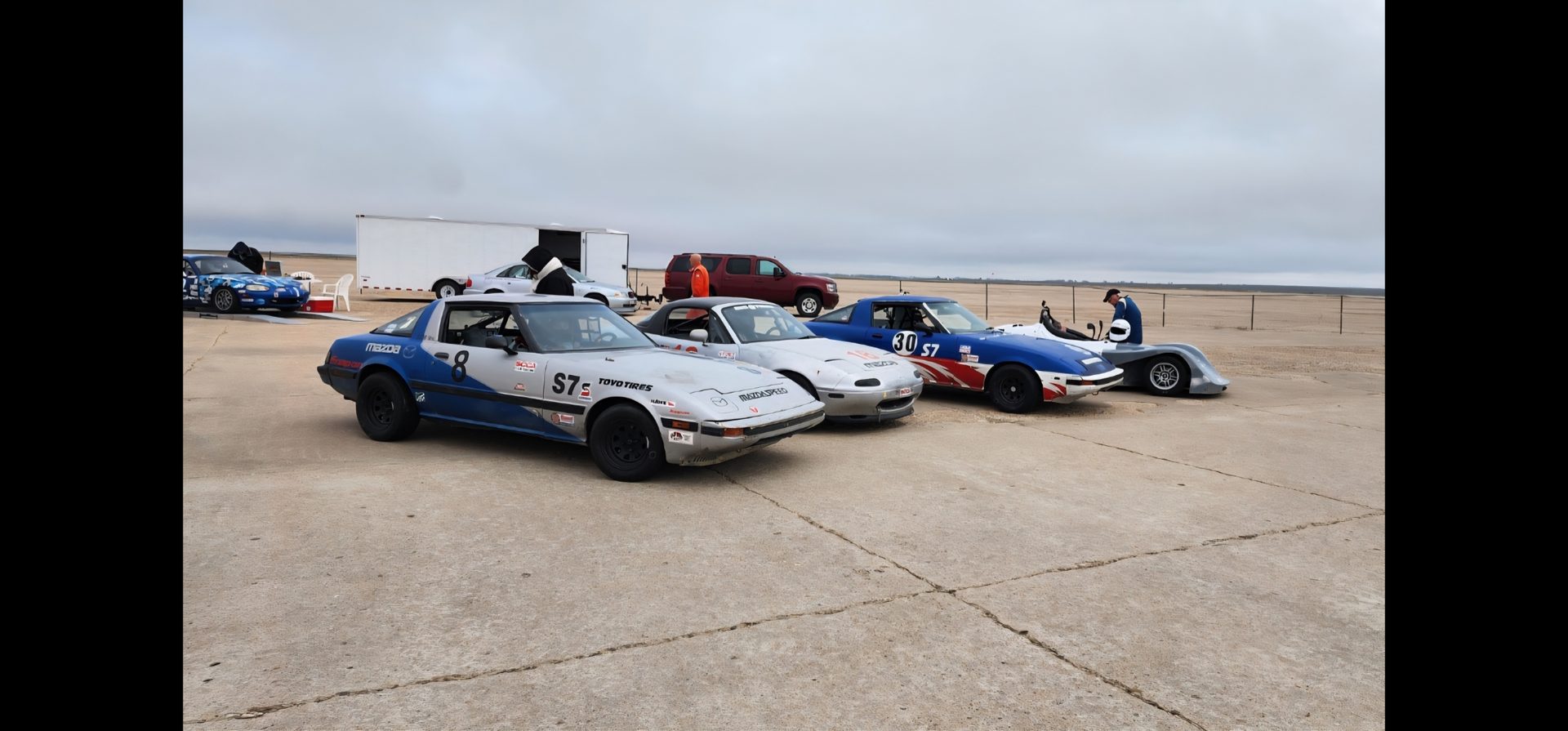 LeadFoot Racing's own photo. The people in this case study are not pictured.
The situation
Maya Reyes is 9 and lives in Colorado Springs. After a birthday party at an indoor rental-kart track, she won't stop talking about it. Her parents don't know anything about racing, but they want to know two things: how does a kid go from a rental kart to real racing, and what does the first year cost?
The challenge
Karting looks simple from the outside. It isn't, for three reasons.
- The rules change from club to club. Classes, ages and required gear are set by each club's rulebook.
- The gear has to match those rules. Buy the wrong suit and you buy it twice.
- The costs come in two piles: a one-time startup (kart, gear, tools) and a bill for every race weekend.
The path: Maya's first year
Step 1: find the club and read its rulebook first
The Reyes family finds the Colorado Karting Circuit (CKC). Its 2026 supplemental ruleset, published August 5, 2026, runs two series: the CKC Karting Championship (6 races, 1 drop, meaning your worst result doesn't count) and the Alpine Racing Series (5 races, 1 drop). [FK1] CKC's main rulebook is the NKA rulebook, a national karting rulebook; CKC's own supplemental rules override it where they differ. [FK1]
CKC's classes for the Briggs & Stratton LO206 (a sealed four-stroke engine that one kart shop calls the best budget class [FK2][FK3]) are set by age: [FK1]
- Kid Kart: 5–8. A driver "must have attained the age of 5, without exception."
- LO206 Cadet: 7–12.
- LO206 Junior: 12–15.
At 9, Maya should fit Cadet. CKC uses the NKA rulebook's "competition age" rules, so the family confirms her class with the club. [FK1]
Here's why you read your club's rulebook, not someone else's. At the Road America Karting Club in Wisconsin, the 2026 Briggs 206 Cadet class is for ages 7–10, and a separate Sportsman class covers 8–12. [FK2] Same engine family, but a different restrictor, age range and class name depending on the club. [FK1][FK2]
Step 2: buy the gear the club requires
For safety gear, CKC follows the NKA rulebook's list, then adds its own rules: suits must be one-piece and CIK Level 2 certified (an international kart-suit standard), jackets are not allowed, and shoes must be closed-toe high-tops that cover the ankle. [FK1] Read the full NKA list before you buy.
That matters, because other leagues allow cheaper options. WKA, a national karting organization, accepts a racing jacket with long pants, according to a 2026 league roundup in our cost research. [FK4] A family that buys a jacket first, then joins CKC, buys gear twice.
Rib protection is another rule to check. Two other national karting organizations require it for young drivers: SKUSA for drivers 12 and under, and USPKS for drivers under 13. [FK4] Both rules would cover a 9-year-old. Ask your club what it requires; the Reyes family buys a rib protector either way.
What the gear costs:
| Item | Cost | Source |
|---|---|---|
| All safety gear combined (one kart shop's estimate) | $800–$1,500 | [FK3] |
| Example youth helmet (Zamp RZ-42Y, rated Snell CMR2016, a youth helmet standard; check that your club accepts it) | $237.45 on sale / $249.95 list | [FK4] |
| Example youth rib vest (Valhalla Armadillo) at OG Racing* | $138 | [FK4] |
*OG Racing is an LFR partner.
Step 3: buy a used kart, not a new one
Word Racing, a kart shop in Oregon, publishes a 2026 cost breakdown for LO206 club racing. [FK3]
| Startup item | Cost |
|---|---|
| Used complete LO206 kart with engine ("a nice competitive kart") | $2,500–$4,500 |
| New chassis only (no engine or tires) | $4,000–$6,000 |
| LO206 engine | $759 bare; about $1,500 with accessories |
| Set of tires | $262 |
| Safety gear | $800–$1,500 |
| Tools and rolling kart stand | $350–$800 |
| Total startup (the shop's own figure) | $4,000–$8,000 |
All figures from [FK3]. The rows are options, not a sum: a used kart or a new chassis plus an engine.
For a first year, the Reyes family buys used. It's the cheaper path, and the shop notes that good brands are easier to sell when it's time to move on. [FK3]
Step 4: the race-weekend bill
The same breakdown puts an LO206 race weekend at $200–$400: entry $70–$120, fuel about $20, tires averaging $270 new (half that if a set lasts two weekends), and maintenance about $20–$50. [FK3]
Those are Oregon numbers. At CKC, Cadet karts run 87 ethanol-free fuel bought from CKC, and tires are CKC's spec Shinkos, bought through CKC or an approved dealer, so Colorado prices may not match. [FK1] We didn't find CKC's 2026 entry fees published, so we haven't quoted them. Call the club.
Step 5: spend less without cutting safety
Word Racing says most racers, especially in their first year, spend less than its listed numbers. They run tires for multiple races, skip some events and do some of the mechanical work themselves, which it says cuts costs by 20–40%. [FK3]
The numbers
| Item | Figure | Source |
|---|---|---|
| CKC LO206 Cadet age range | 7–12 | [FK1] |
| Road America Karting Club Briggs 206 Cadet age range | 7–10 | [FK2] |
| LO206 startup: kart, gear, tools | $4,000–$8,000 | [FK3] |
| LO206 cost per race weekend (Oregon) | $200–$400 | [FK3] |
| Word Racing's 10-race LO206 season | $2,300–$4,700 | [FK3] |
| Word Racing's year-one total, kart and equipment included | $7,000–$12,000 | [FK3] |
| A 6-race CKC championship at $200–$400 a race | $1,200–$2,400 | our math from [FK1] and [FK3]'s Oregon per-race estimate |
| Startup plus that 6-race season | $5,200–$10,400 | our math from [FK3] |
| Savings from reusing tires, skipping events, doing your own work | 20–40% | [FK3] |
The outcome: what the math says
The Reyes family isn't real, so there are no race results to report. Here's what the math says.
- Most of year one is the startup. A used kart, gear and tools run $4,000–$8,000. [FK3]
- A Colorado club season adds a smaller number. At the shop's per-race estimate, CKC's 6-race championship comes to $1,200–$2,400, before travel. [FK1][FK3] Colorado fees and tire prices may differ from Oregon's.
- Year one lands around $5,200–$10,400 by our math, before travel, practice days and any club membership. That's below the shop's own $7,000–$12,000 year-one figure, which assumes 10 races. [FK3]
- Year two should cost less. The kart, gear and tools are already bought. What's left is the weekend bill, upkeep and any gear Maya outgrows.
What this case doesn't say
- These are one kart shop's numbers, and that shop sells karts. Word Racing is in Oregon. Colorado prices, fees and travel will differ.
- We haven't priced Colorado entry fees. We didn't find them published, so we didn't guess.
- Rules change every year. The ages and gear rules here are from the 2026 rulebooks. Check the current version before you buy anything.
Lessons
- Read your club's rulebook before you spend a dollar. Ages, classes and gear rules differ by club. [FK1][FK2]
- Buy gear for the strictest rule you'll race under. CKC doesn't allow jackets; some leagues do. [FK1][FK4]
- Buy used for year one. A used, race-ready LO206 kart costs less than a new chassis plus an engine. [FK3]
- Budget the startup and the weekend separately. The startup is a one-time check. The weekend bill is what keeps you racing. [FK3]
- Save on tires, labor and how often you race, not safety. Word Racing says reusing tires, skipping some events and doing some of your own mechanical work can cut costs by 20–40%. [FK3]
How LeadFoot Racing helps
We're a grassroots team out of Colorado Springs, and a lot of the parents we talk to are right where the Reyes family is: excited kid, no racing background, and a lot of questions.
Karting is the start of a longer road. When your racer starts eyeing cars, our free guide From Kart to Car, in our Racer Toolbox, covers what carries over from karts, what to unlearn, and why braking is the biggest change.
Every racer starts somewhere. For a lot of them, it's a kid who couldn't stop talking about a birthday party.
Do you believe?
Sources
All web sources accessed 2026-11-14.
- [FK1] Colorado Karting Circuit, "2026 CKC Karting Championship & Alpine Racing Series Supplemental Ruleset", version 2026.6, published 2026-08-05 (PDF). https://irp.cdn-website.com/7ce125dc/files/uploaded/CKC+2026.6+Supplemental+Ruleset.pdf
- [FK2] Road America Karting Club, "2026 Class Structure & Rules" (PDF dated 2026-01-09; the file name says 2025). https://roadamerica.com/sites/main/files/file-attachments/2025_rakc_class_structure.pdf
- [FK3] Word Racing (a kart shop in Canby, Oregon), "How Much Does It Cost to Race Go Karts in 2026?" https://www.wordracing.com/pages/how-much-does-it-cost-to-race-karts
- [FK4] LFR's verified cost file, from: fastracer.com (Zamp RZ-42Y youth helmet) and ogracing.com (Valhalla Armadillo rib vest, OG Racing is an LFR partner) product pages, and FAST RACER's 2026 karting league rules roundup (SKUSA, USPKS and WKA gear rules). Verified Oct 2026; re-check before publishing.
About the author
Jett Johnson
Founder of LeadFoot Racing, a Spec Miata race team in Colorado Springs that races in the NASA Rocky Mountain region. Jett holds degrees in mechanical engineering, mathematics and aerospace engineering, has raced since 2022 and has spent years working with sponsors in motorsport. What you read here comes from building the team's race cars, running race weekends and writing real sponsorship proposals.
Meet the team