
Your teammate walks over between sessions. "Hey — think your oil sponsor would put a decal on my car too?"
It feels like the easiest yes in racing. You're on the same team, same paddock, same tent. And it's the fastest way to quietly cut your own deal in half.
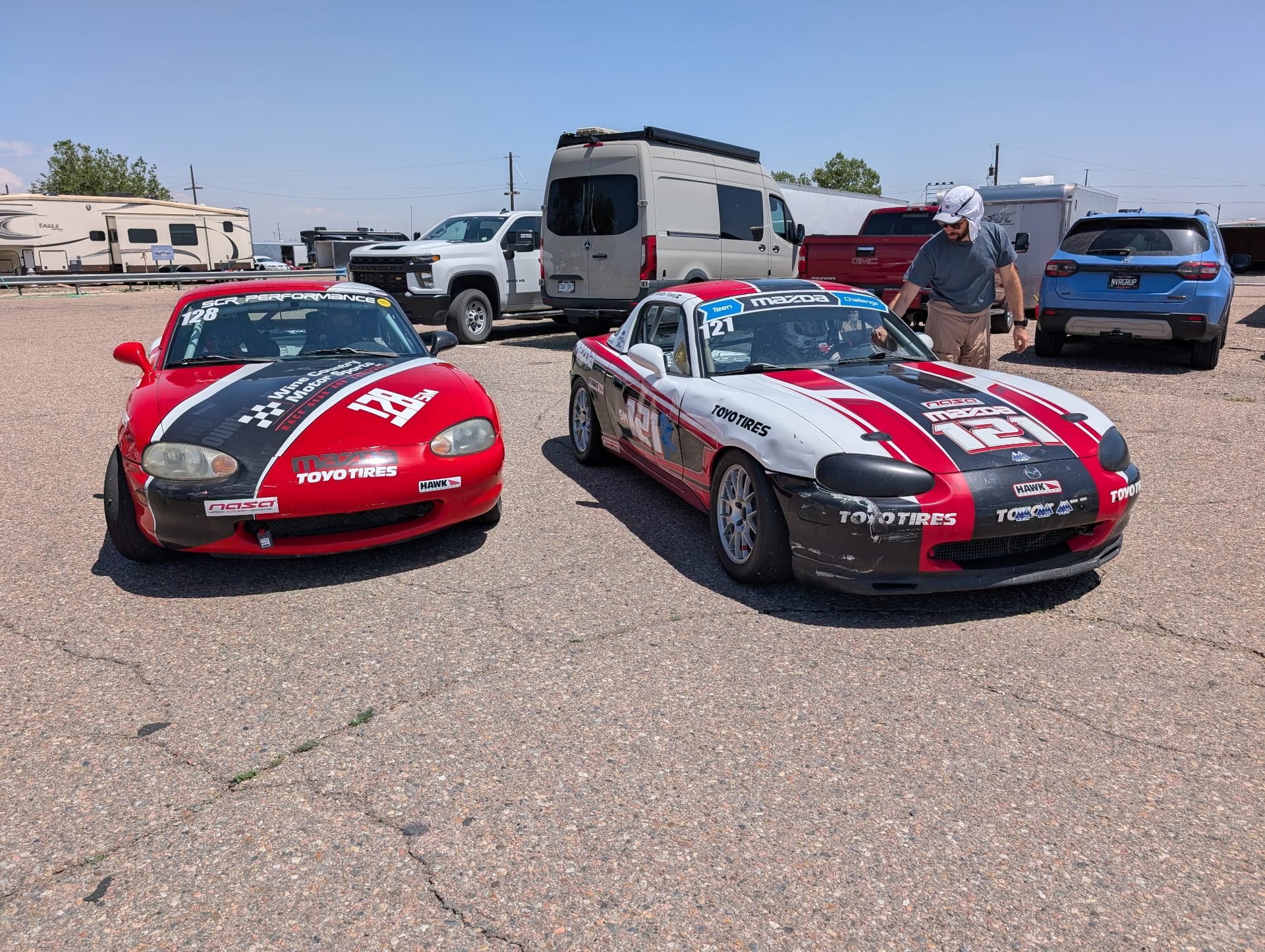 The #121 parked up next to another Spec Miata at the end of a day. Two cars in one paddock is exactly where this problem starts.
The mistake almost everyone makes
Here's how it usually goes. You've got a sponsor paying you a number. Your teammate has nothing. So you go back to the brand and say, "For a little more, you could be on both cars."
The brand says yes at a small bump. Maybe 20 percent. Now there are two cars, two drivers, two sets of obligations — and the money barely moved.
You didn't grow the deal. You doubled the delivery and left the price where it was.
Worse, you just told that brand what a race car is worth to you. Next season, when your teammate's car is the one asking, they already know the going rate is "cheap if you ask nicely." That's the informal version of a most favored nation clause — the standard commercial term where a buyer is entitled to terms at least as favorable as any other buyer gets. Grassroots racers almost never have one written down. It bites anyway, because sponsors talk and sponsors remember.
The second car isn't a discount opportunity. It's a different product.
Price it like one and a two-car team becomes the best thing that ever happened to your program. Price it like a favor and you've capped your own ceiling. The pricing worksheet inside The Get-Funded System exists because this exact moment is where most small teams give away a season of revenue in a single text message.
Two cars do not mean two audiences
This is the part racers get wrong on the value side, and it's the part a marketing person on the sponsor's end will spot immediately.
Advertising has a name for it: incremental reach — the unique people a new placement reaches who weren't already reached by everything else. Perion's explainer uses a clean example. If channel A reaches a million people and channel B reaches a million, combined reach might only be 1.5 million because 500,000 of them overlap. Channel B's real contribution was 500,000, not a million.
Now apply that to your team.
Two cars in the same class, at the same six weekends, photographed by the same photographers, posted to two follower lists that heavily overlap because you tag each other constantly. The second car is not a second audience. It's more frequency against mostly the same audience.
Which means "put it on both cars for double the money" is a pitch you will lose. And "put it on both cars for 20 percent more" is a pitch you shouldn't win.
The honest version sits in the middle, and it depends on knowing what your own program is worth before anybody adds a second car to it. If you haven't done that math yet, start with how to price racing sponsorship and build the base number first.
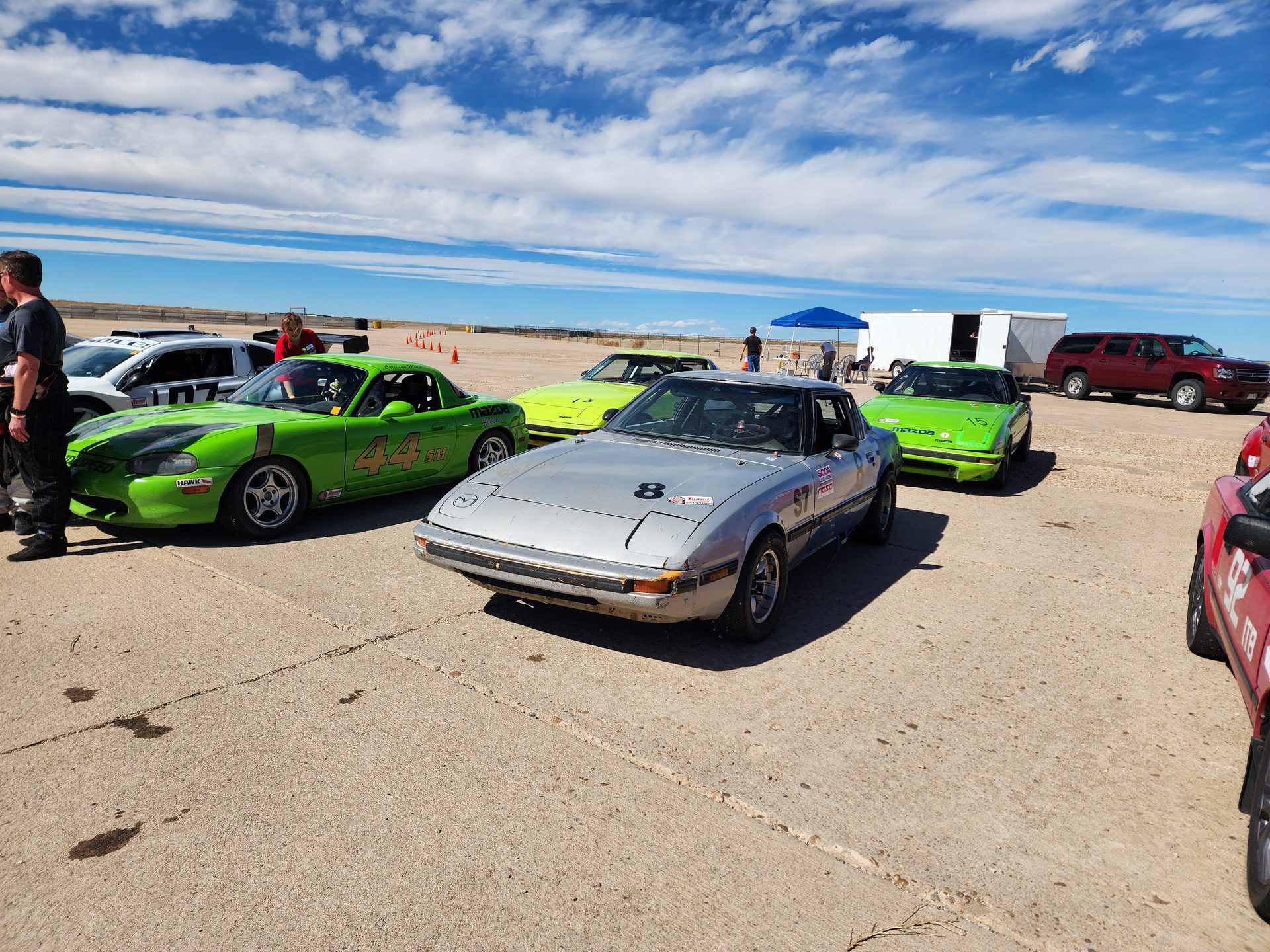 Our own two-car reality. Once there's more than one car, sponsorship stops being a decal conversation and starts being an inventory conversation.
Sell the team as the property, cars as the tiers
The structural fix is simple and it's how every professional series already works.
Stop selling "my car." Start selling the team as the property, with the cars as inventory inside it. RTR Sports lays out the standard motorsport ladder — title, primary, associate, technical — and notes that associate placement is the smart entry point for new sponsors, the secondary positions that let a brand in at a fraction of primary money.
Translate that to a two-car grassroots program:
- Primary on one car. Hood, doors, the photos that get used. One brand. Full price.
- Associate across both cars. Rear quarter, mirrors, the team hauler, the shirts. A smaller number, but it's genuinely different inventory — not your primary sold twice.
- Technical / supplier. They provide product, they get product-validation content and a small placement. This is how Engine Ice and OG Racing work with us, and it's a real tier, not a consolation prize.
Now your teammate's car isn't competing with your deal. It's a lower rung on the same ladder — and a brand that can't afford primary has somewhere to land instead of walking away.
That inventory map, tier by tier with a price next to each line, is the single most useful document a small team can build. It's the same one we walk through in The Get-Funded System — because once you can hand a brand a menu instead of a favor, the second car stops being a threat to the first.
Four rules that keep your own deal whole
1. Different categories on different cars. Category exclusivity means one sponsor per product category, and categories run as a hierarchy — category, macro class, class, sub-class. Your engine-oil partner on car one does not block a tire shop on car two. It absolutely blocks a competing oil brand. Map your open categories before you promise anyone anything.
2. Offer it to your existing sponsor first — with a deadline. A right of first refusal gives the incumbent a chance to match before you take the opportunity elsewhere. Best practice is to spell out what "matching" means: fee, term, deliverables and payment profile, not price alone. Give them a real window. Then move on when it closes.
3. Never quote the second car below your own floor. If your teammate's seat goes out at half of what you charged, you have re-priced yourself and every future deal on the team. Same tier, same price. Cheaper only buys a genuinely smaller tier.
4. Write down who owns which asset. This is where multi-car teams actually break. When rights get granted at team level and driver level at the same time, contracts have to define the scope and how conflicts get managed. Who owns the helmet? The personal Instagram? The team page? Decide before the money lands, not after a post goes up with the wrong logo on it.
If a real two-car offer is already sitting in your inbox and you'd rather not learn this on your own deal, Proposal Review is $147 and we go through your actual package before you send it.
If your teammate races for someone else
Same rules, one extra step: check the other team's category conflicts first.
A driver's personal sponsor can quietly violate their team's existing exclusivity. You do not want to be the reason a 17-year-old loses a ride because a decal breached somebody's contract. One email to the team manager before the pitch solves it.
And if the brand only has budget for one car this year? Take the deal you have, deliver it hard, and use the results to open the door next season. Your second sponsor is easier than your first — and that math works for the second car too.
Two cars should double your inventory, not halve your rate.
If you want the whole system — the inventory map, the tier pricing, the Before You Sign contracts module that covers scope and exclusivity in plain English — The Get-Funded System is $67 and it's built for exactly this. Small team, real cars, no agency.
Do you believe?
Sources: RTR Sports — Tiers and Types of Motorsport Sponsorship, RTR Sports — Sponsorships and Product Categories: The Guarantee of Exclusivity, Perion — Incremental Reach, fynk — Most Favored Nation Clause, Contracko — Matching Rights and Right of First Refusal, IR Global — Navigating Multi-Layered Commercial Partnerships in Formula 1. Sponsorship tier pricing figures in those sources are Formula 1 and NASCAR numbers and are not grassroots benchmarks — no published grassroots two-car pricing benchmark exists that I could verify, so this post gives structure rather than dollar figures. This is general information from a racer and team owner, not legal advice. No LFR customer, sales, or survey data is claimed anywhere in it.